How To Buy Hathor (HTR)?

A common question you often see on social media from crypto beginners is “Where can I buy Hathor?” Well, you’ll be happy to hear it is actually quite a simple and straightforward process.
Step 1: Create an account on an exchange that supports Hathor (HTR)
First, you will need to open an account on a cryptocurrency exchange that supports Hathor (HTR).
We recommend the following based on functionality, reputation, security, support and fees:
1
Gate.io

Fees (Maker/Taker) 0.2%*-0.2%*
Cryptocurrencies
Available for Trade 1000+
Sign-up bonus
Up to $100 in USDT vouchers*
Available in
North America, South America, Europe, Asia, Oceania, Africa
2
Kucoin

Fees (Maker/Taker) 0.1%*-3%*
Cryptocurrencies
Available for Trade 250+
Sign-up bonus
Up to $500 in USDT vouchers*
Available in
North America, South America, Europe, Asia, Oceania, Africa
In order to sign up, you will need to enter some basic information, such as your email address, password, full name and, in some cases, you might also be asked for a phone number or address.
Note: On specific exchanges, you might need to complete a Know Your Customer (KYC) procedure in order to be able to purchase cryptocurrency. This is most commonly the case with licensed and regulated exchanges.
Step 2: Deposit funds into your account
Many cryptocurrency exchanges will allow you to purchase Hathor (HTR) with fiat currencies, such as EUR, USD, AUD and others. Furthermore, they will also provide you with multiple deposit methods through which you can fund your fiat account, such as credit and debit cards, ewallets or direct bank transfers.
Note: Some payment methods will have higher fees than others, such as credit card payments. Before funding your fiat account on your chosen exchange, make sure to do your due diligence to find out the fees involved with each payment method to avoid unnecessary costs.
Step 3: Buy Hathor (HTR)
This process is similar across almost every cryptocurrency exchange. All you have to do is find a navigation bar or a search bar, and search for Hathor (HTR) or Hathor (HTR) trading pairs. Look for the section that will allow you to buy Hathor (HTR), and enter the amount of the cryptocurrency that you want to spend for Hathor (HTR) or the amount of fiat currency that you want to spend towards buying Hathor (HTR). The exchange will then calculate the equivalent amount of Hathor (HTR) based on the current market rate.
Note: Make sure to always double-check your transaction details, such as the amount of Hathor (HTR) you will be buying as well as the total cost of the purchase before you end up confirming the transaction. Furthermore, many cryptocurrency exchanges will offer you their own proprietary software wallet where you will be storing your cryptocurrencies; however, you can create your own individual software wallet, or purchase a hardware wallet for the highest level of protection.
How to create a Gate.io account

Step 1: Go to the Gate.io website.
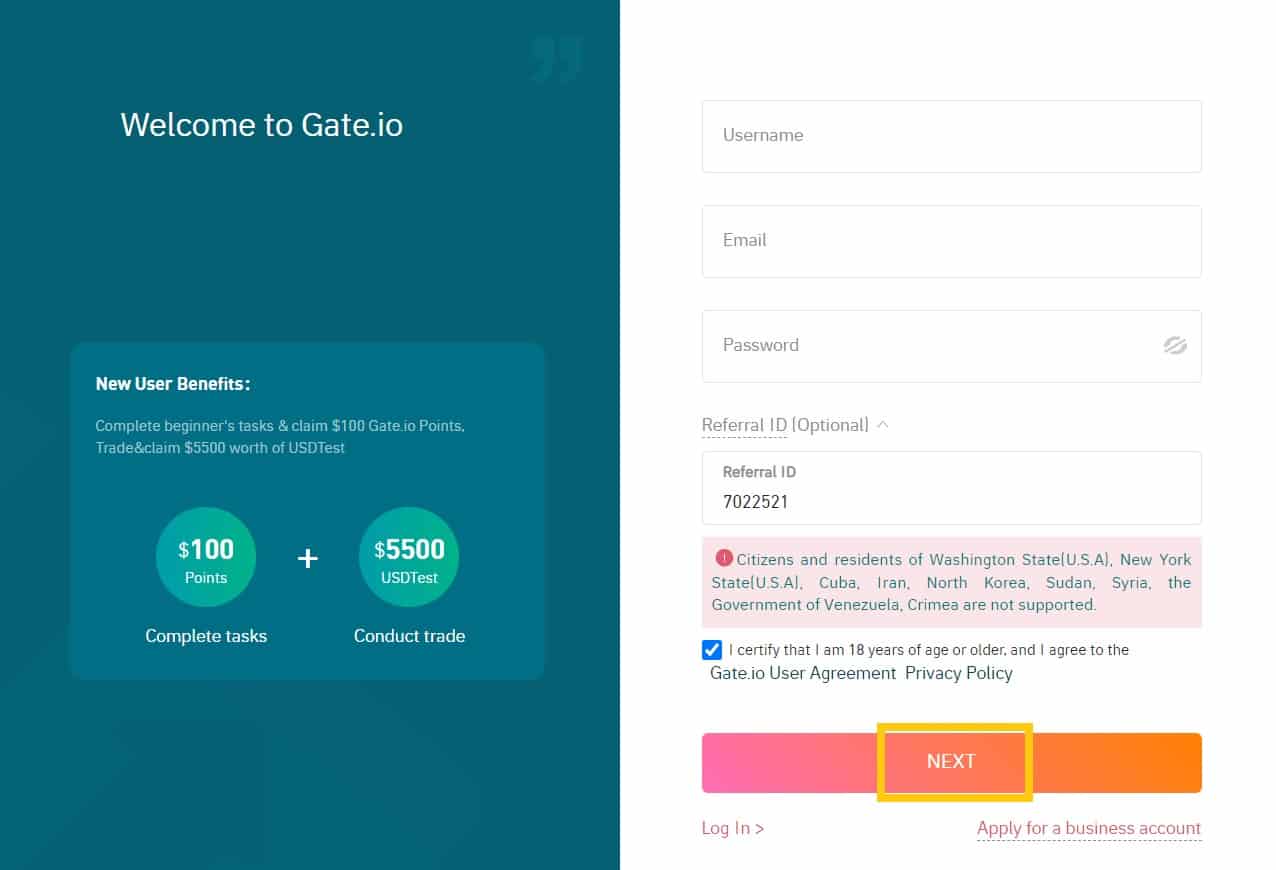
Step 2: Choose your username, your email address and your password. Then check “I certify that I am 18 years of age or older, and I agree to the Gate.io User Agreement Privacy Policy” and click “NEXT”.
Step 3: Set your fund password and click “Create account”.
Note: Your fund password must contain at least 6 characters and can not be the same as your login password.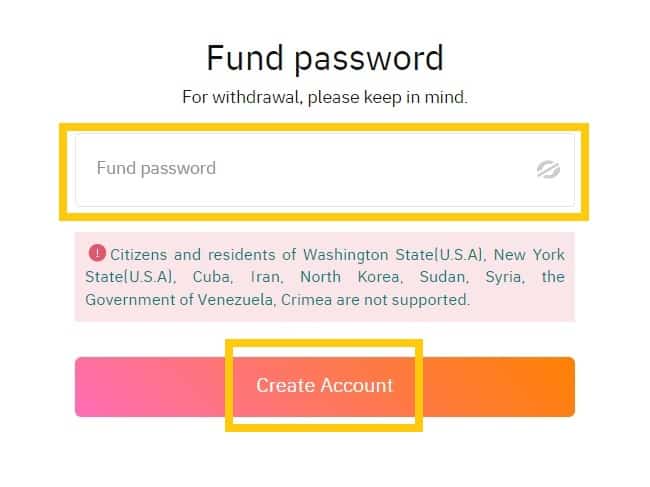
Step 4: An activation email will be sent to your email address. Complete the rest of the registration process by following the instructions in the email to activate your account. Once this is done done, click “Email activated, please log in”.

How to complete KYC (ID Verification) on Gate.io
In order to ensure the safety of your assets, and to reduce fraud, money laundering, blackmail, and other illegal activities, Gate.io makes it mandatory that all users obtain KYC ID Verification. Only after your account has obtained KYC ID verification, can you withdraw funds or use credit cards or debit cards to buy cryptocurrencies.
Step 1: Log in to your Gate.io account.
Place your cursor on the top-right profile icon and go to “KYC (ID Verification)”
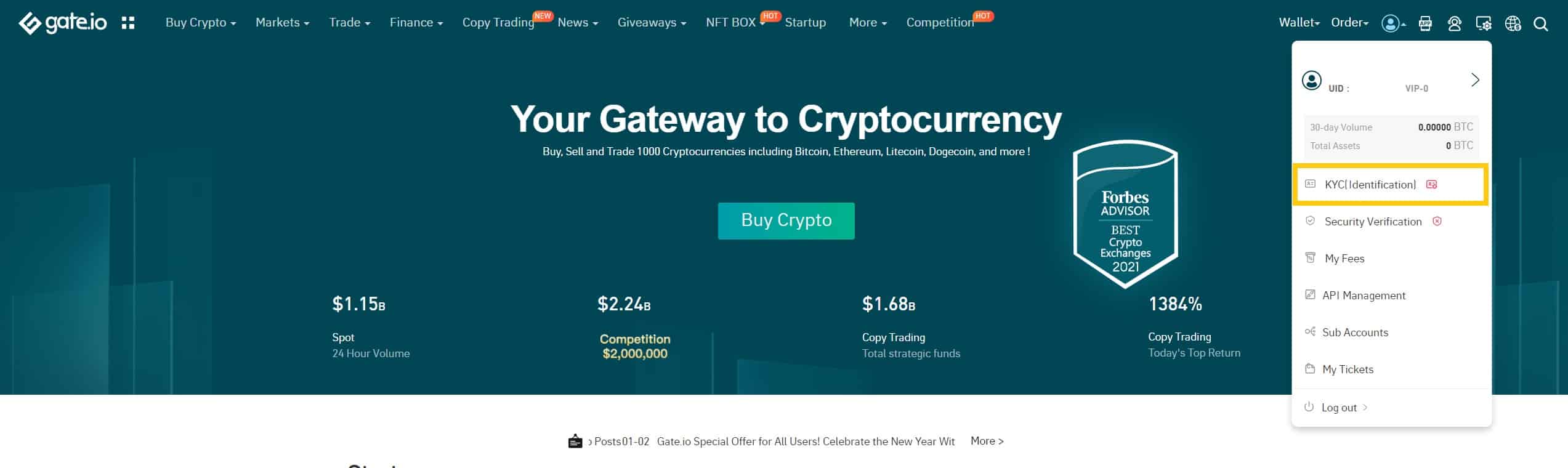
Step 2: Click “Individual (Verify now)”
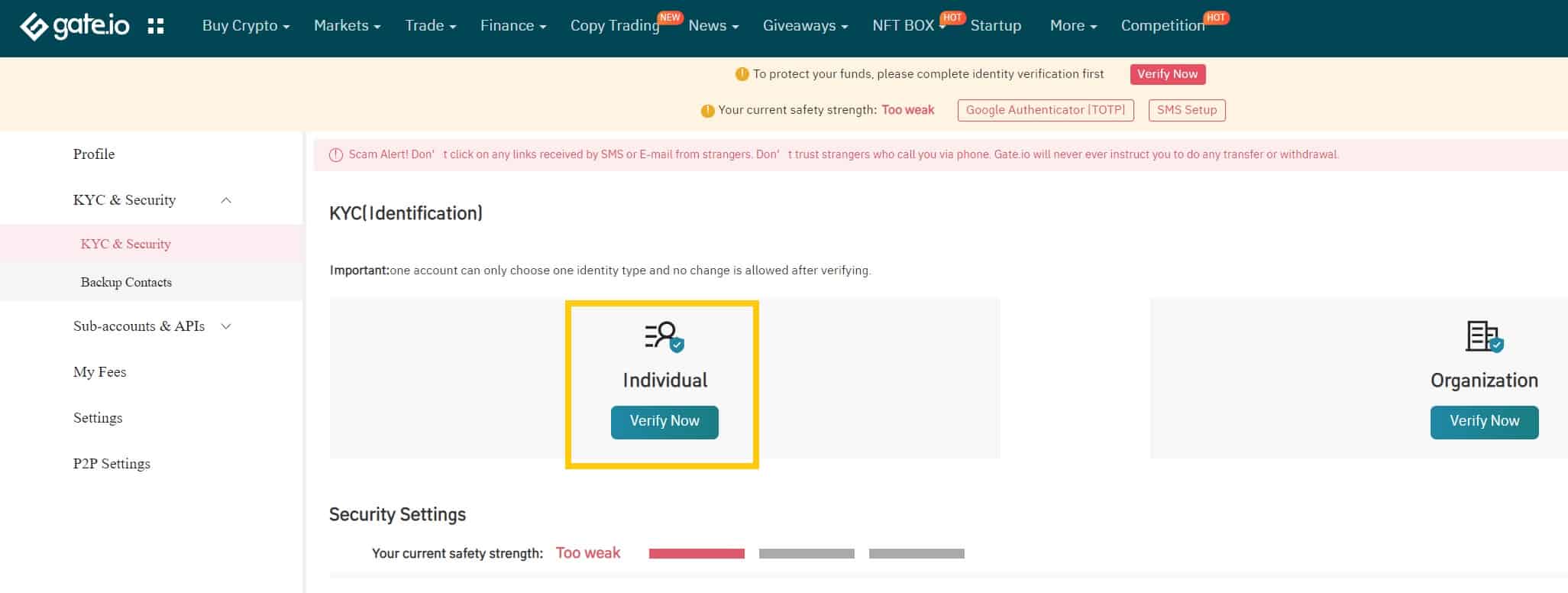
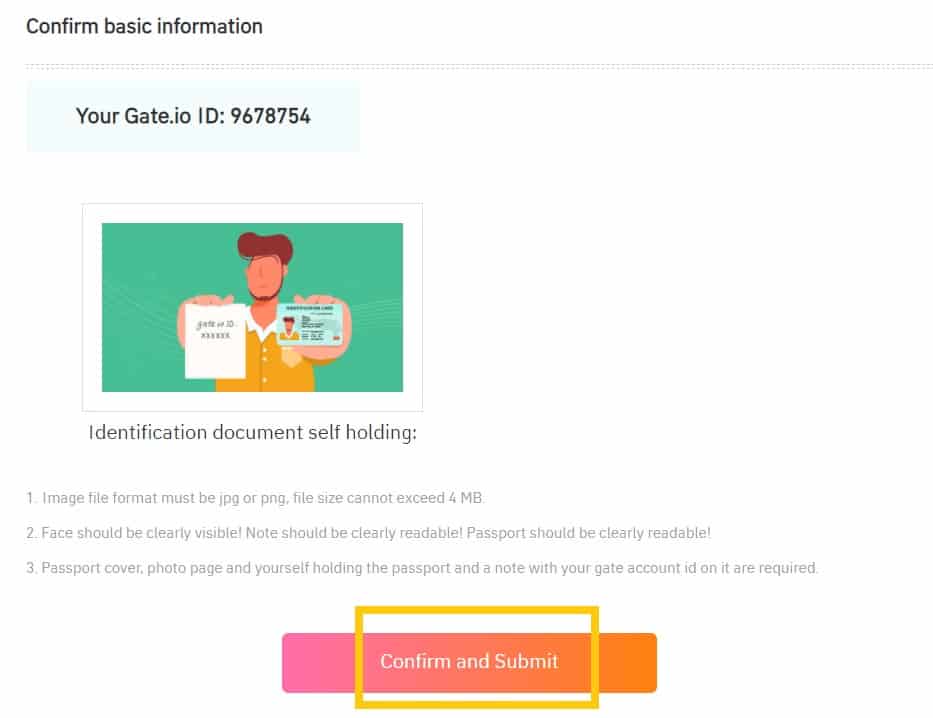
Step 3: Select your country, input your full legal name (twice), fill in your ID information, upload photos of both sides of your ID card, and a photo of you holding your ID together with your User ID (UID) for Gate.io. You will see your User ID by placing the cursor on the top-right profile icon on the main page. Make sure everything is filled in correctly and then click on “Confirm and Submit”.

Step 4: After you have submitted all the requested information, you will see the pending approval.
Approval can take anywhere from a few hours to a few days to complete.
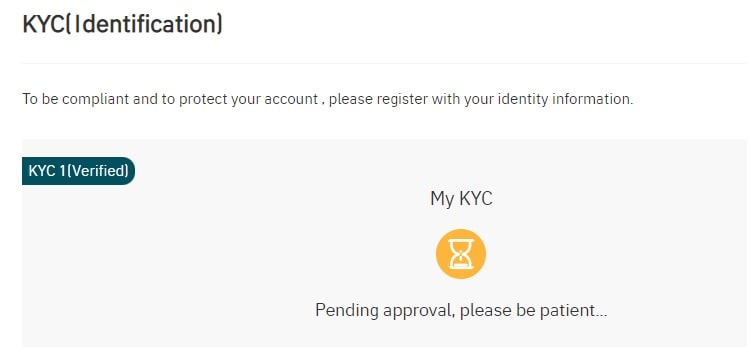
Once the KYC is approved, you’re ready to make your first cryptocurrency purchase.
How to buy cryptocurrency on Gate.io
Step 1: Log in to your Gate.io account.
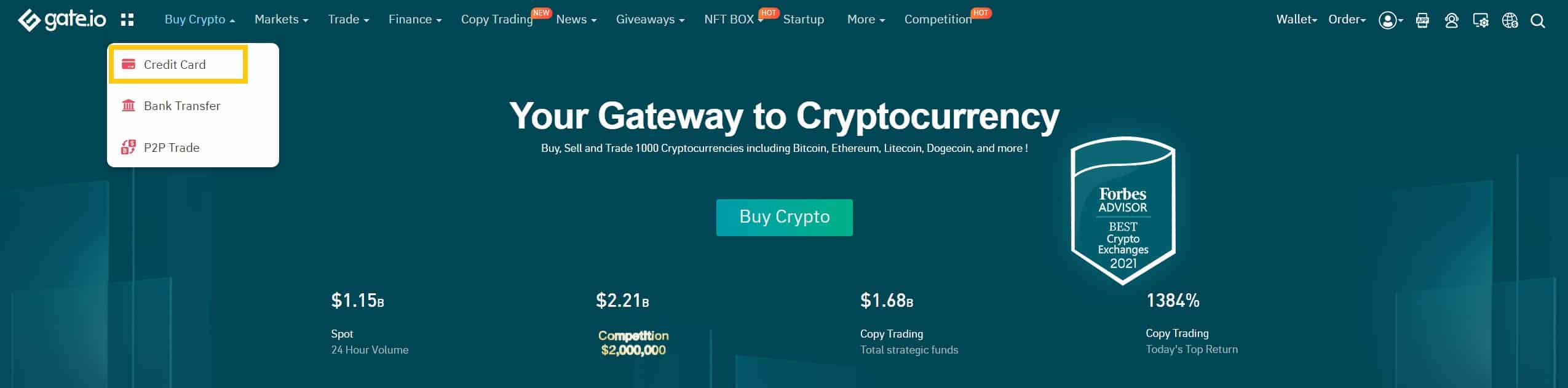
Then in the Menu Bar at the top of the page, click “Buy Crypto” and select “Credit Card”.
Step 2: Enter the amount you wish to spend in the “Buy with Fiat Currency” tab and select the cryptocurrency that you want to buy under the “Currency Purchased” field. Then select one of the “Service Providers” below and click the “Place Order” button to enter the confirmation page.
Note: You might not be able to purchase every cryptocurrency directly using fiat, if you’re looking to purchase something that isn’t offered in the currency list on this page, then you will want to purchase USDT. We will then show you how to exchange that on the spot-market for the cryptocurrency that you want in the next section of this guide.
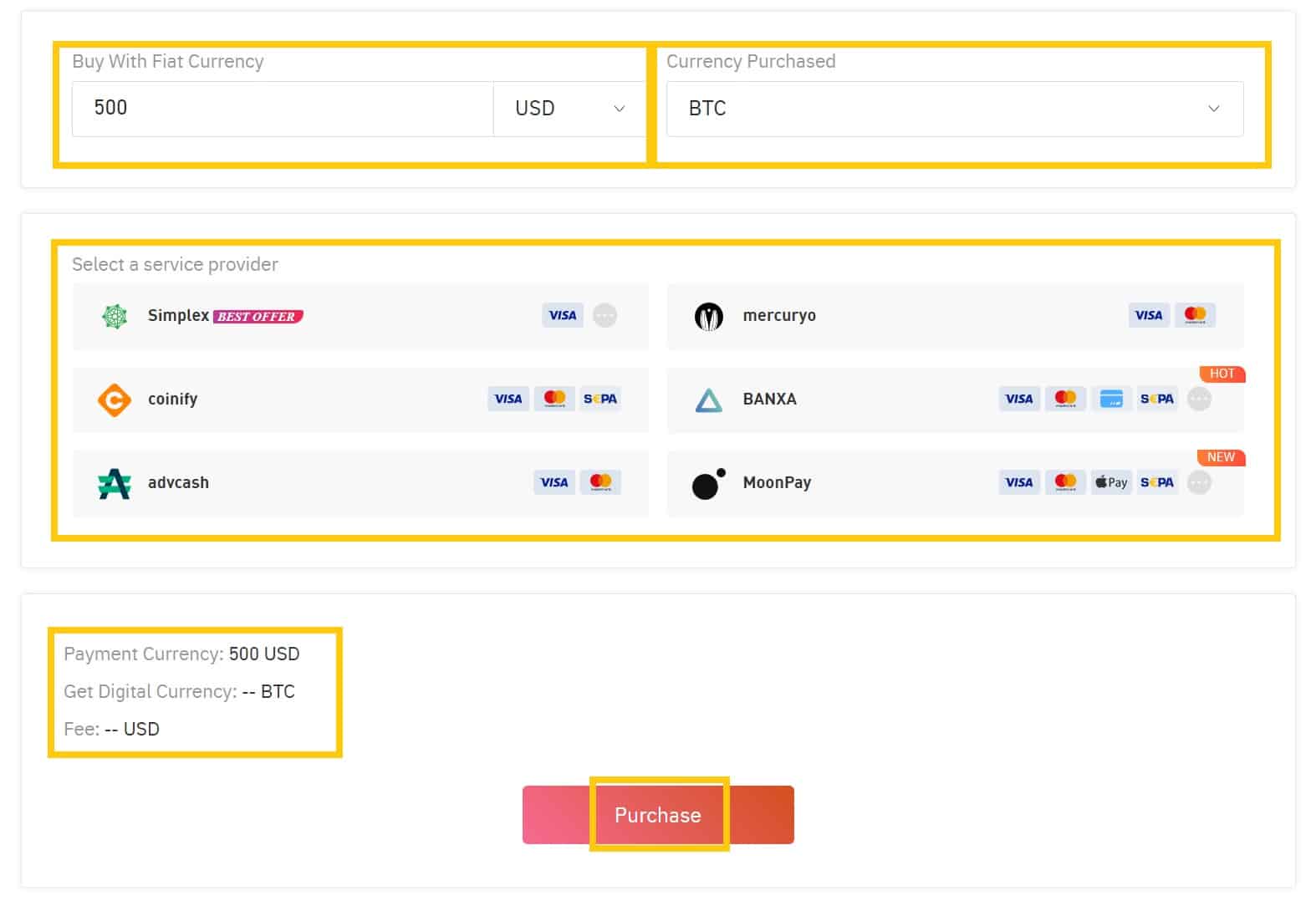
Step 3: On the confirmation page, select “Buy Crypto” or the “Create Order” button to complete the payment.
Note: To ensure a quick and secure way of receiving the order, users might need to conduct an additional Identity Verification (KYC) with a third-party service provider. Once successfully verified, the service provider will immediately transfer the cryptocurrencies to your Gate.io account.
How to Conduct Spot Trading on Gate.io
Step 1: Log in to your Gate.io account.
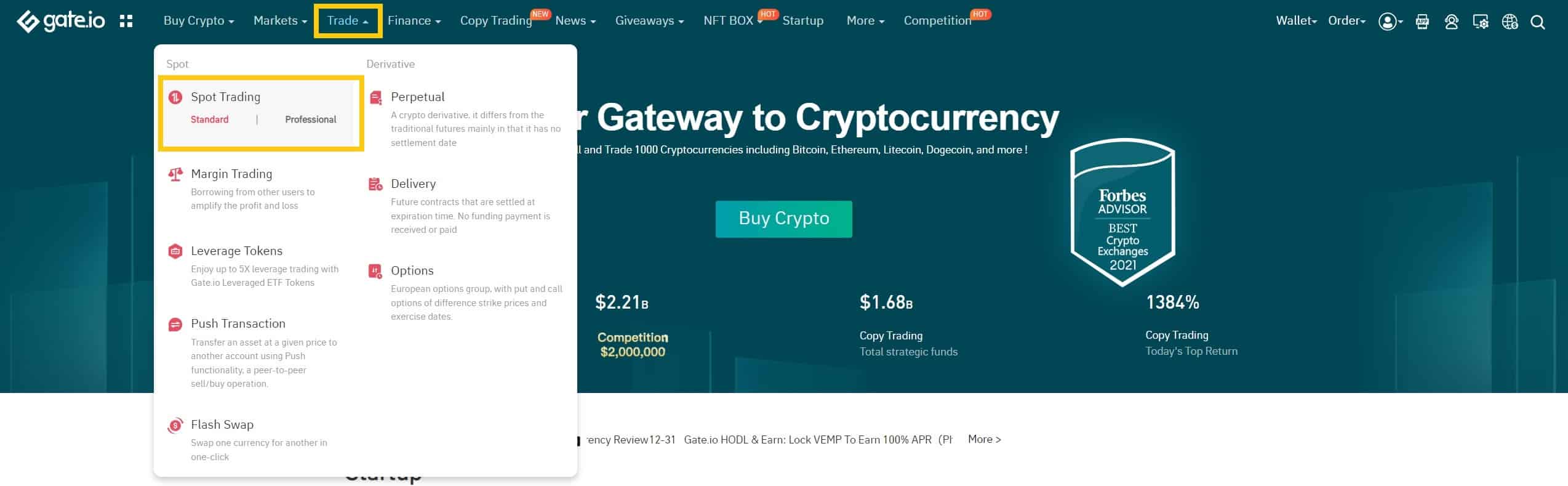
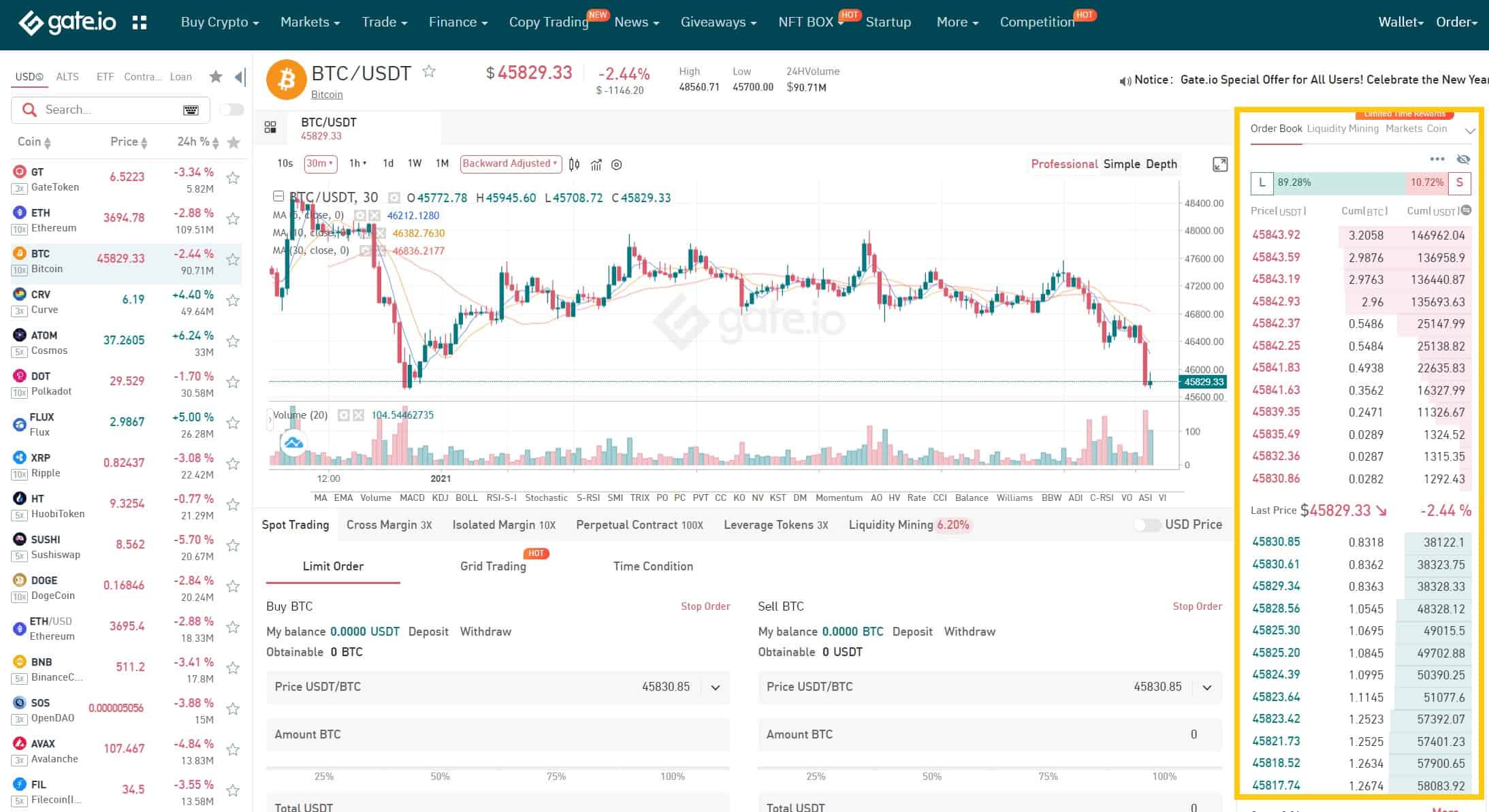
Click on “Spot Trading” under “Trade” on the top navigation bar.
You can either choose “standard” or “professional” version. This tutorial uses the standard version.
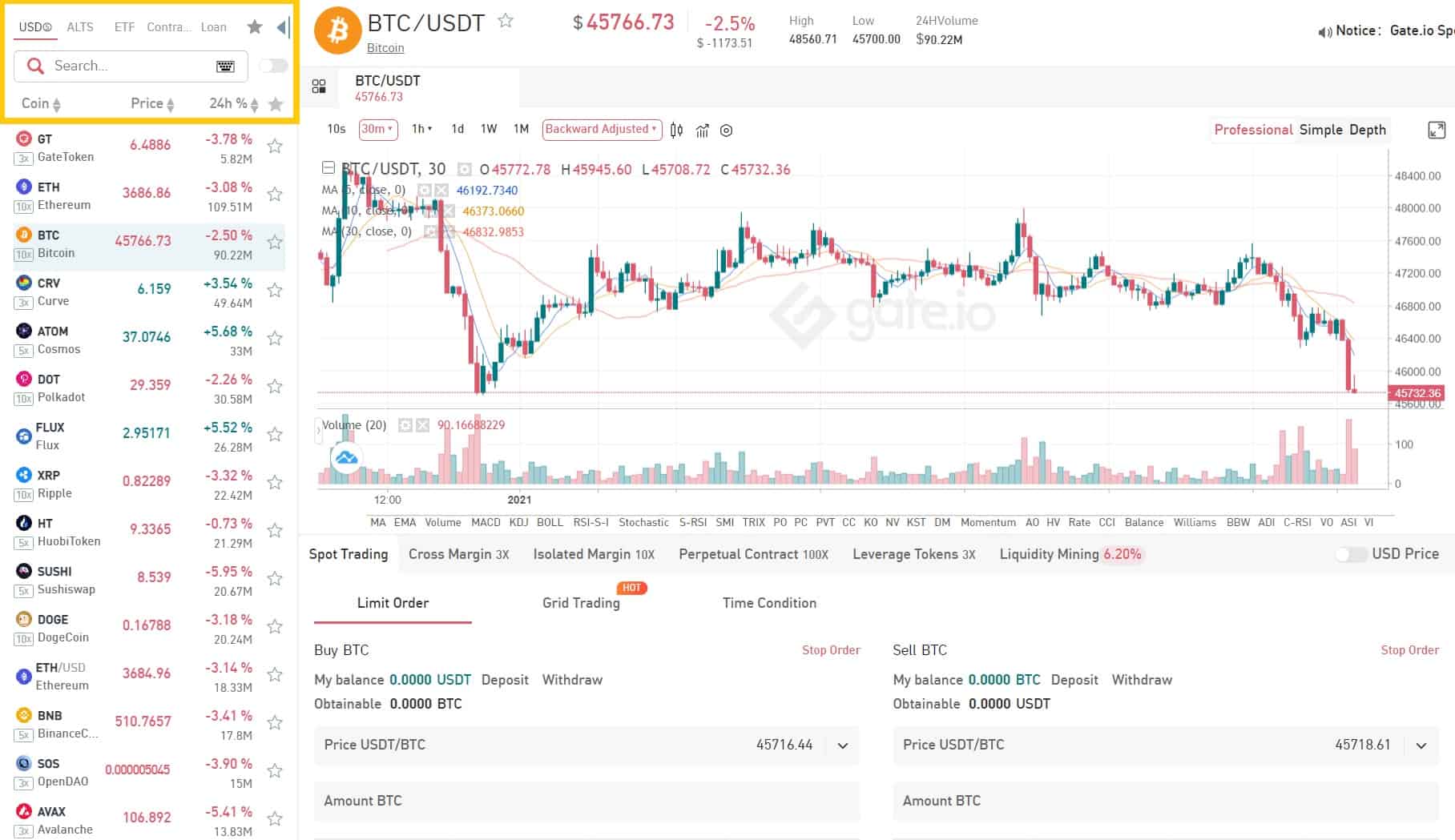
Step 2: Search and enter the cryptocurrency you want to trade.
Step 3: Set buying/selling prices and buying/selling amount (or exchange total). Then click on “Buy”/”Sell”.
(Note: The percentages under the “Amount” box refer to percentages of the total account balance.)
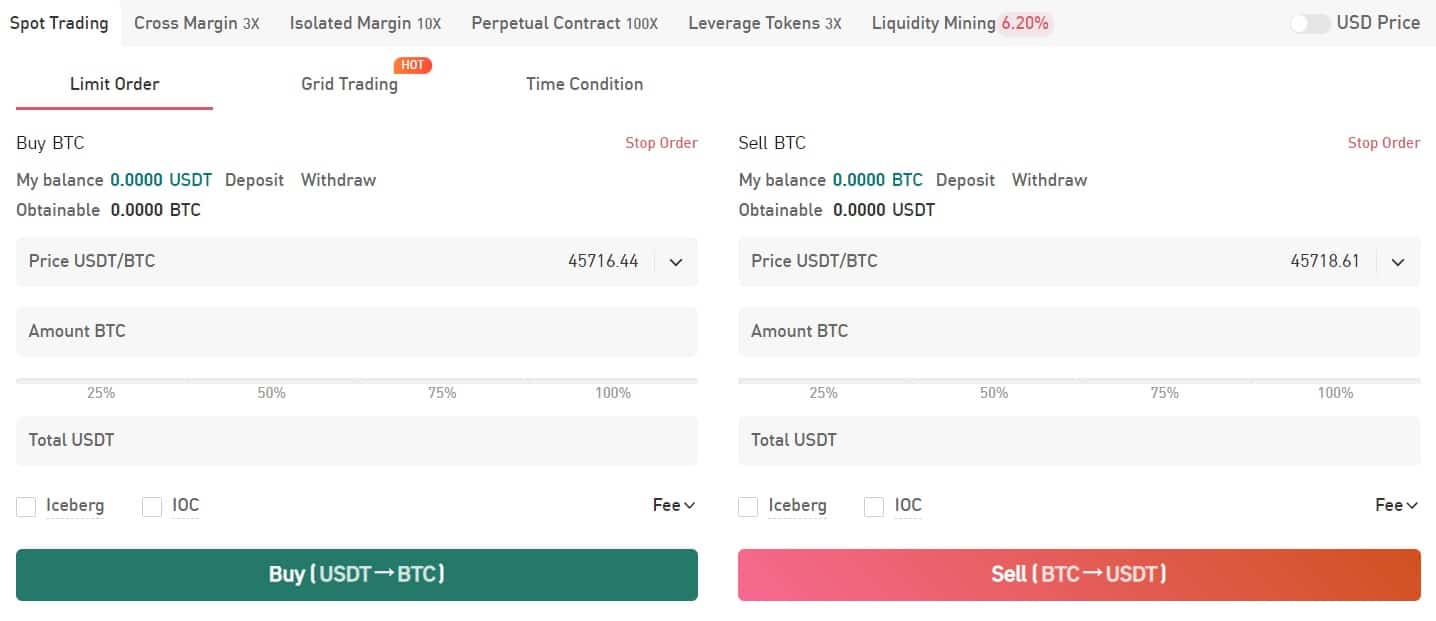
Step 4: If you don’t want to set a manual price, you can click on the last prices on the order book to set the buying/selling price automatically.
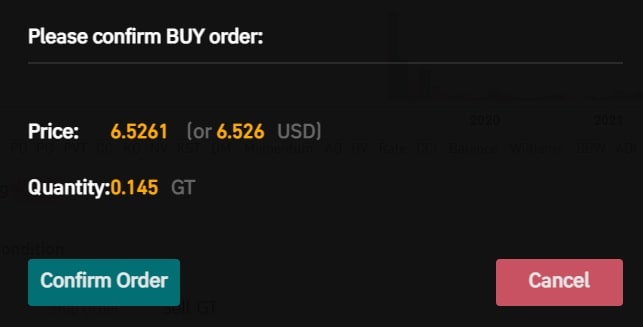
Step 5: Confirm the price and amount. Then click on “Place Order” to place the order, followed by “Confirm Order” to confirm it.
Alternative ways to buy Hathor (HTR)
Because the project is very new, it is only offered directly on a select number of exchanges. If you’re not comfortable connecting your bank account to any of these smaller exchanges, or if you cannot connect your bank account to them for geographical reasons. Then you can instead create an account on any of the major exchanges and simply transfer the funds from there.
Out of the major exchanges we recommend the following based on functionality, reputation, security, support and fees:
1
Binance

Fees (Maker/Taker) 0.075%*-0.1%*
Cryptocurrencies
Available for Trade 500+
Sign-up bonus
10% reduced trading fees*
Available in
Europe, Asia, Oceania, Africa
2
Bybit

Fees (Maker/Taker) 0.1%*-0.1%*
Cryptocurrencies
Available for Trade 400+
Sign-up bonus
$30,000 sign-up bonus*
Available in
Europe, Asia, Oceania, Africa
3
MEXC

Fees (Maker/Taker) 0.2%*-0.2%*
Cryptocurrencies
Available for Trade 1500+
Sign-up bonus
10% reduced trading fees & up to $170 in USDT vouchers*
Available in
North America, South America, Europe, Asia, Oceania, Africa
How to create a Binance account

Step 1: Go to the Binance website.
Step 2: On the registration page, enter your email address, and create a password for your account.
Then, read and agree to the Terms of Service and click “Create Account”.
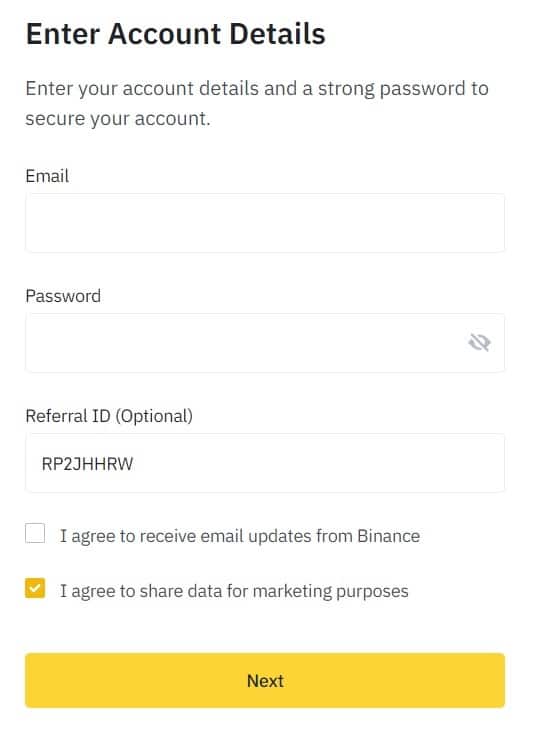
Note: Your password must be a combination of numbers and letters.
It should contain at least 8 characters, one UPPER CASE letter, and one number.
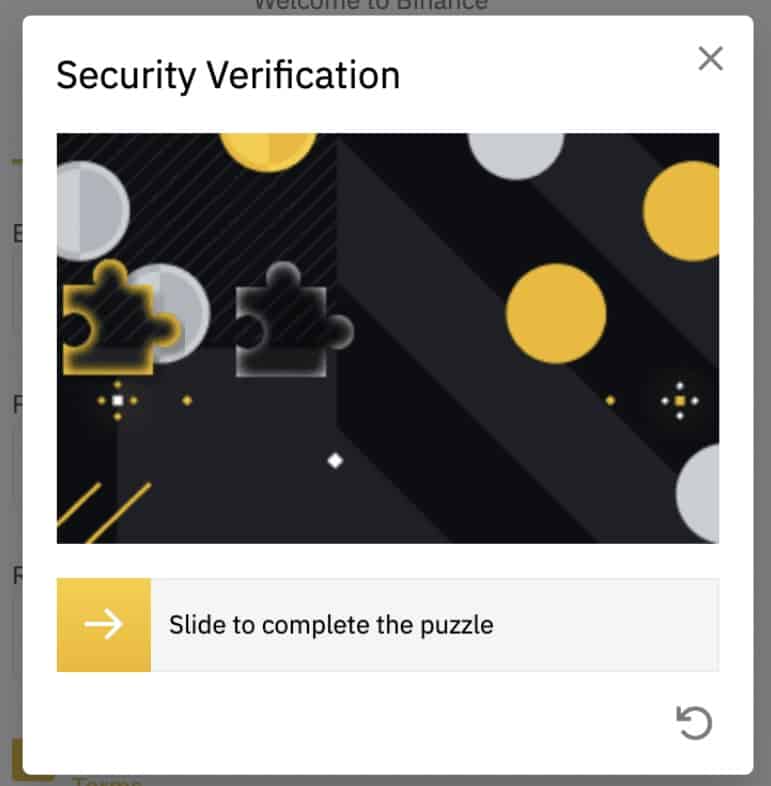
Step 3: Complete the Security Verification.
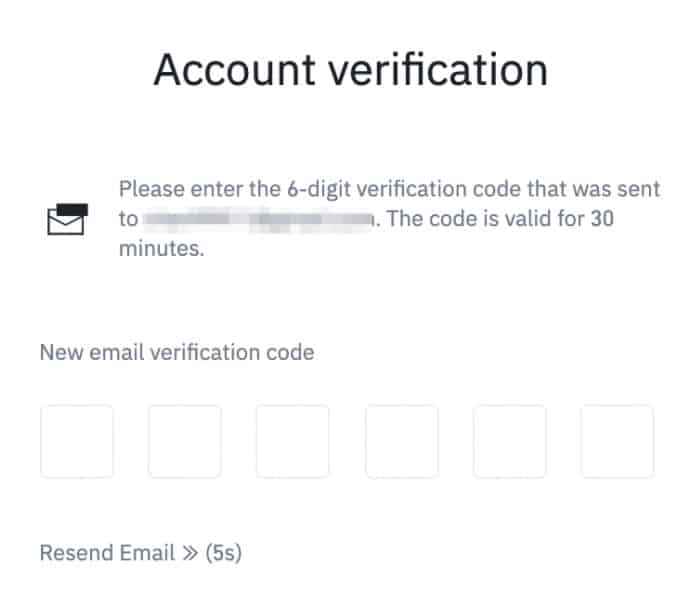
Step 4: The system will send a verification code to your email. The verification code is valid for 30 minutes. If you can’t find the email in your inbox, check your other mail folders as well, or click “Resend Email” to resend.
How to complete KYC (ID Verification) on Binance
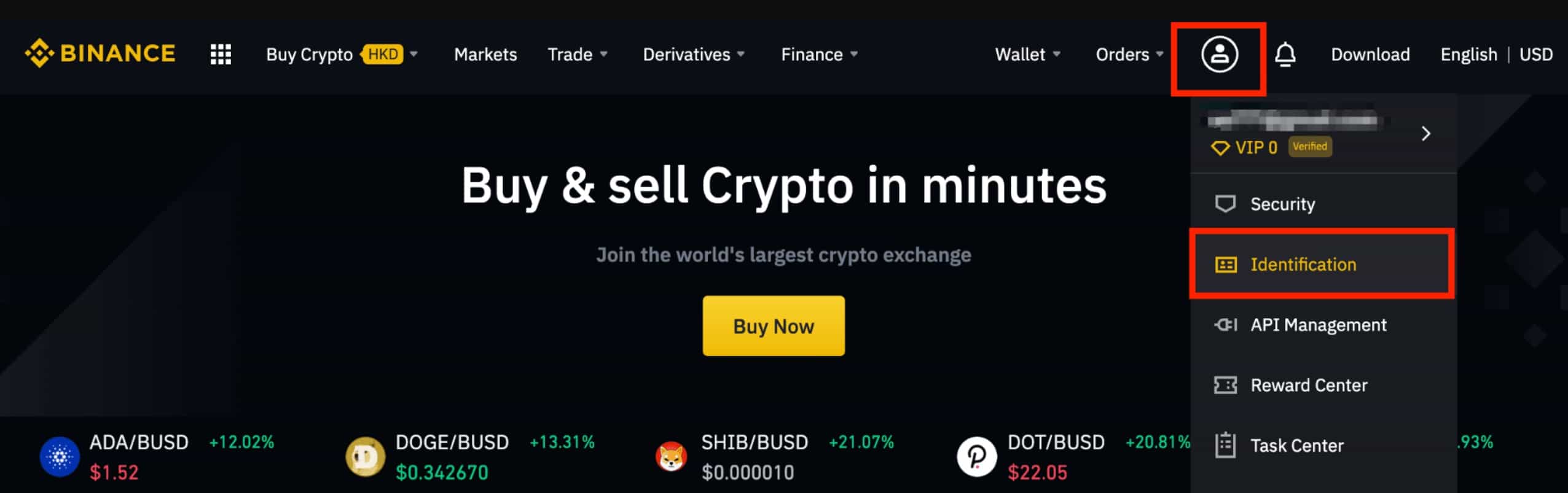
Step 1: Log in to your Binance account and click “User Center” and then “Identification”.
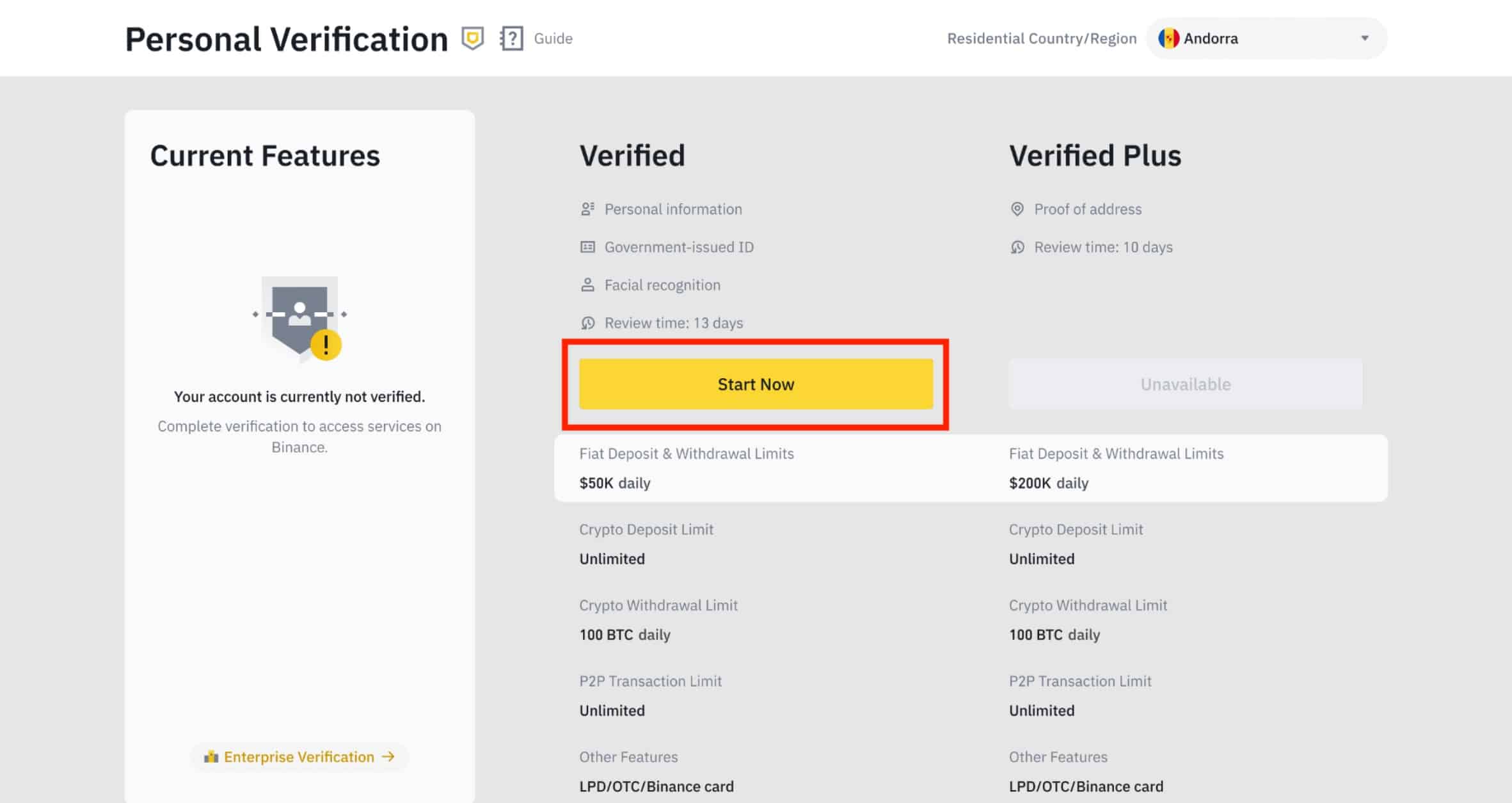
Step 2: click “Start Now” to verify your account.
Step 3: Select your country of residence.
Ensure that your country of residence is consistent with your ID documents.


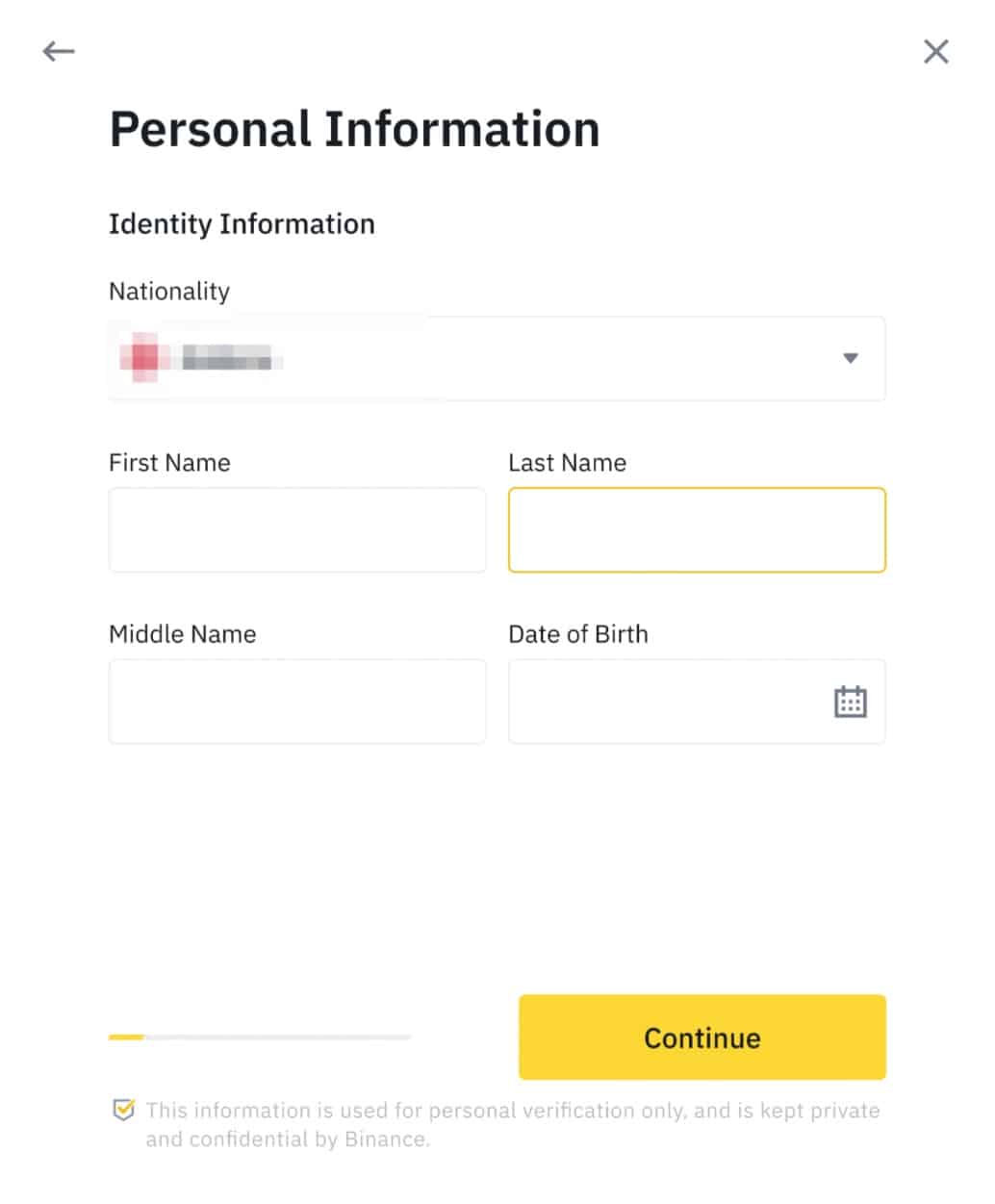
Step 5: Enter your personal information and click “Continue.”
You won’t be able to change it once confirmed.
Refer to the respective options offered for your country.

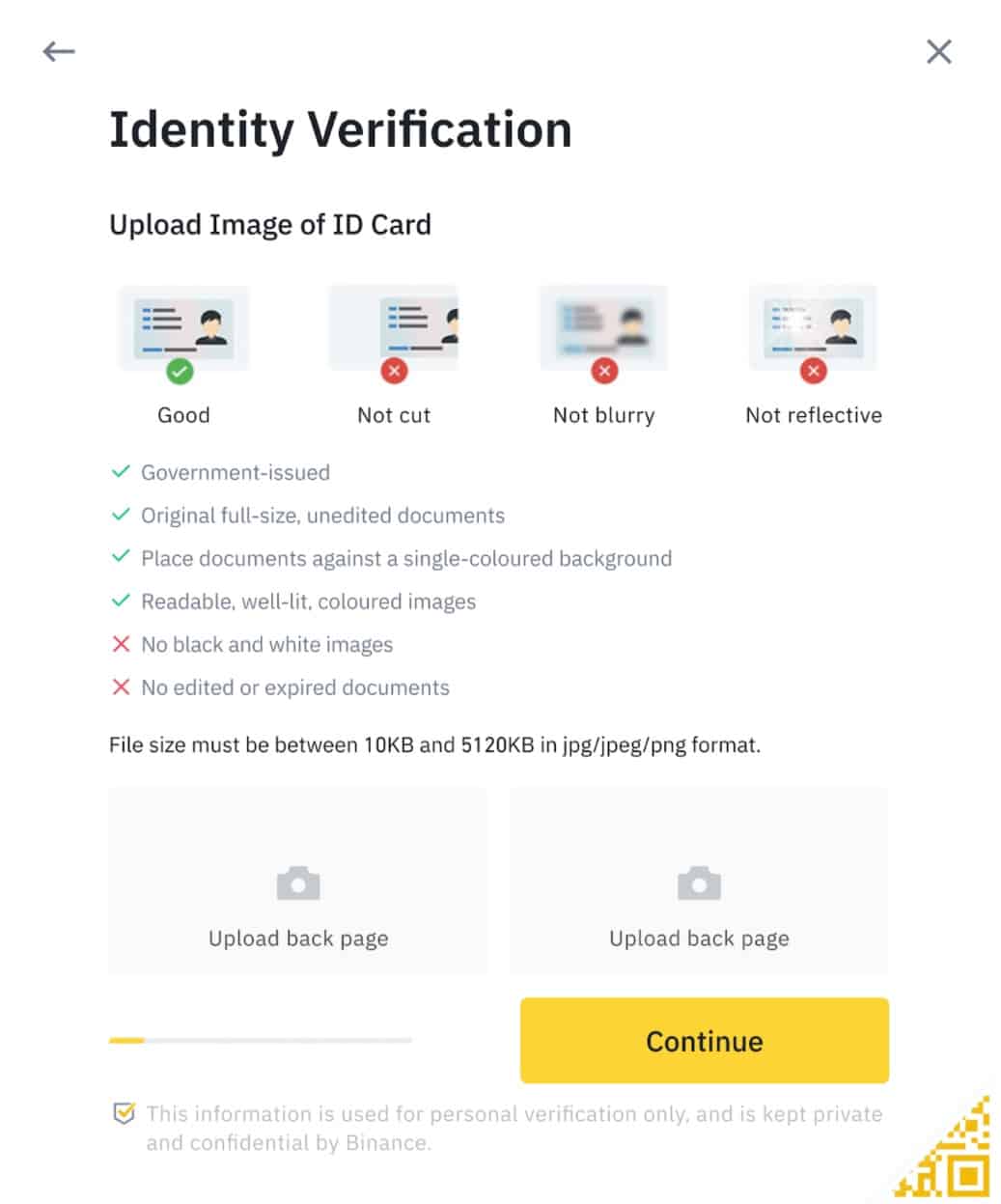
Step 7: Follow the instructions to upload photos of your document. Your photos should clearly show the full ID document.
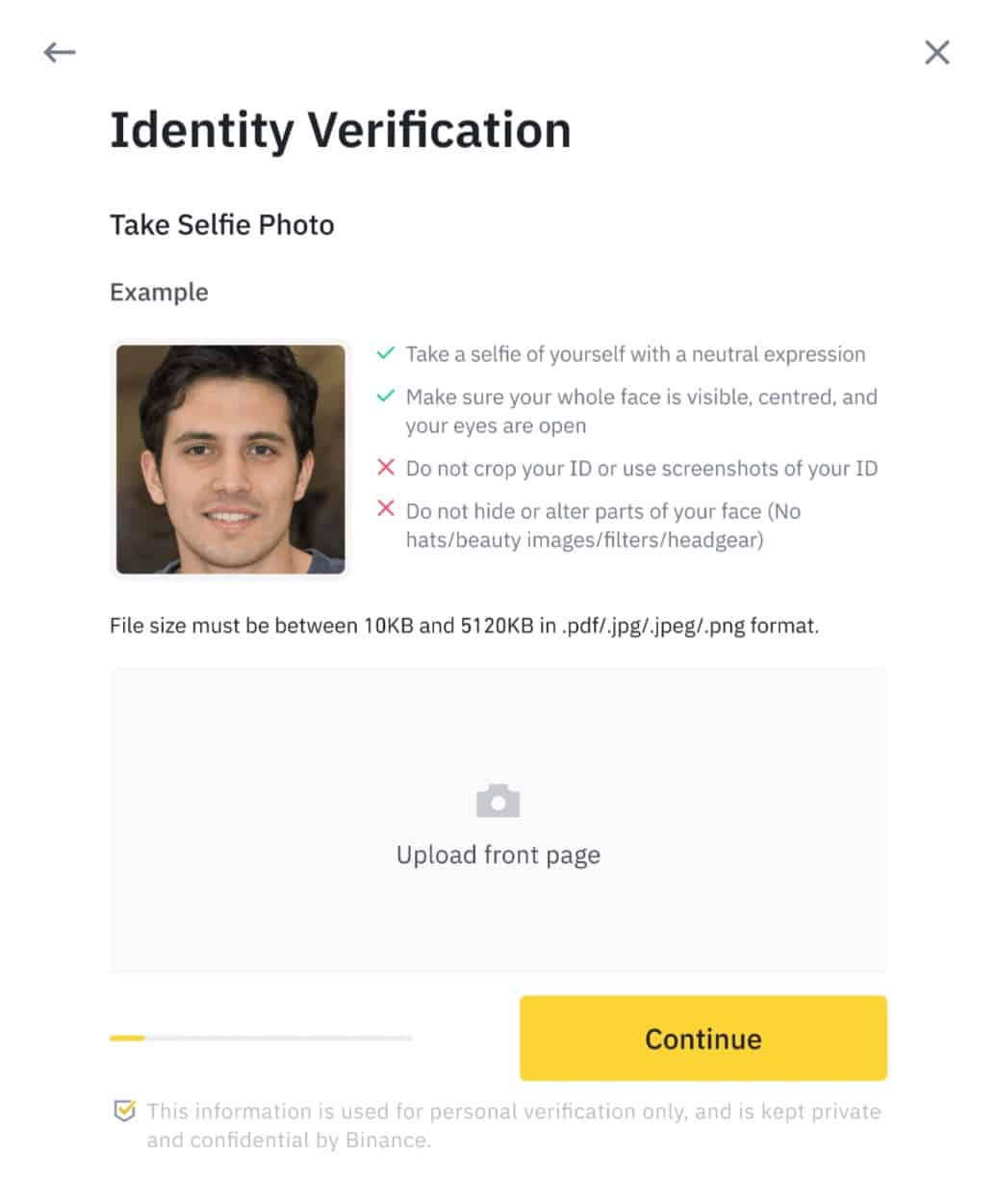
Do not wear hats, glasses, or use filters, and make sure that the lighting is sufficient.

Once your application has been verified, you will receive an email notification.
How to buy cryptocurrency on Binance
Step 1: Log in to your Binance account and click “Buy Crypto” and then “Credit/Debit Card”.
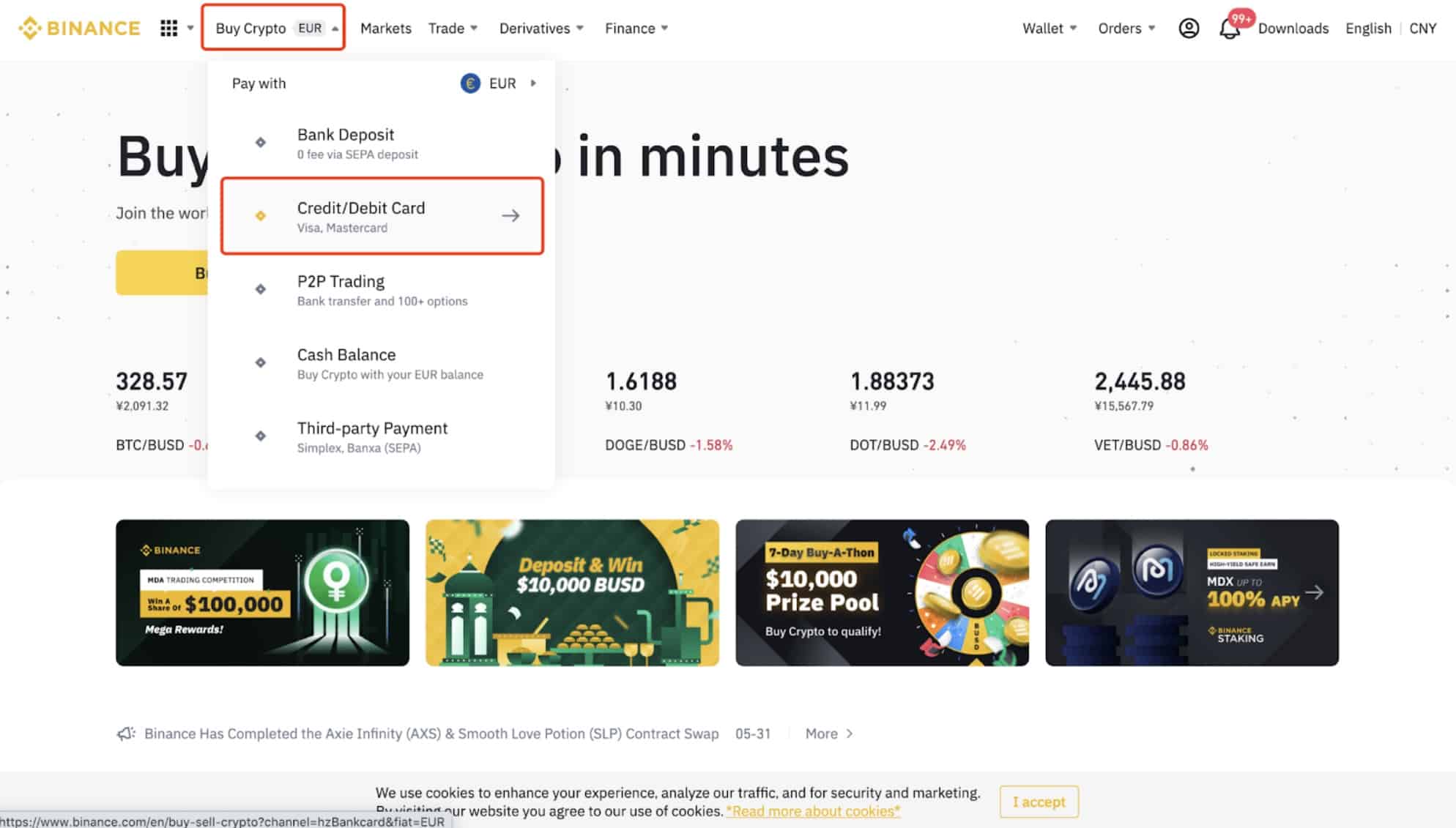
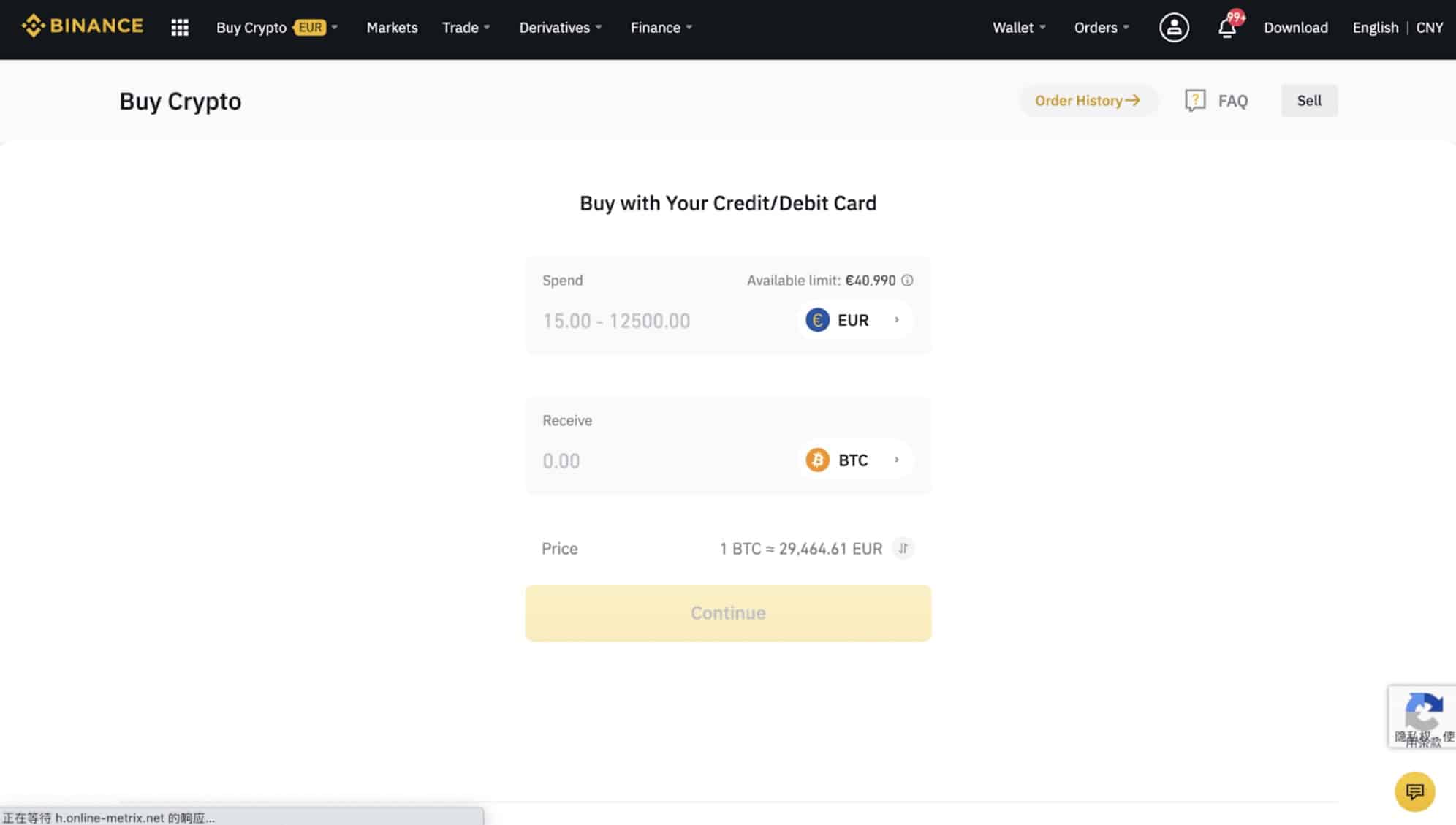
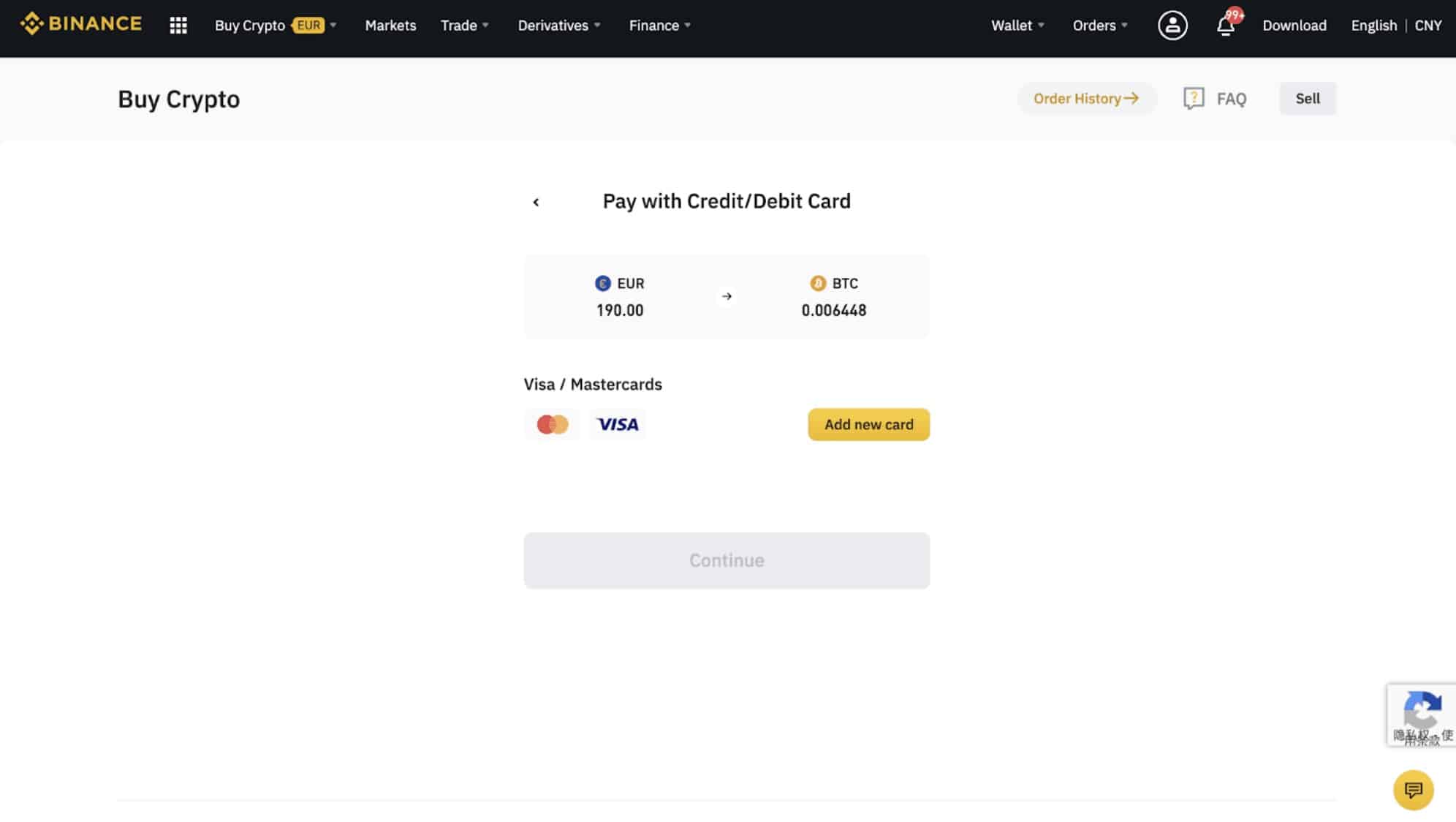
Step 2: Here you can choose to buy crypto with different fiat currencies. Enter the fiat amount you want to spend and the system will automatically display the amount of crypto you can get. When you have selected the amount you wish to spend then press “Continue”.
Note: You might not be able to purchase every cryptocurrency directly using fiat, if you’re looking to purchase something that isn’t offered in the currency list on this page, then you will want to purchase USDT. We will then show you how to exchange that on the spot-market for the cryptocurrency that you want in the next section of this guide.
Step 3: Click “Add New Card”. Then enter your credit card details and your billing address.
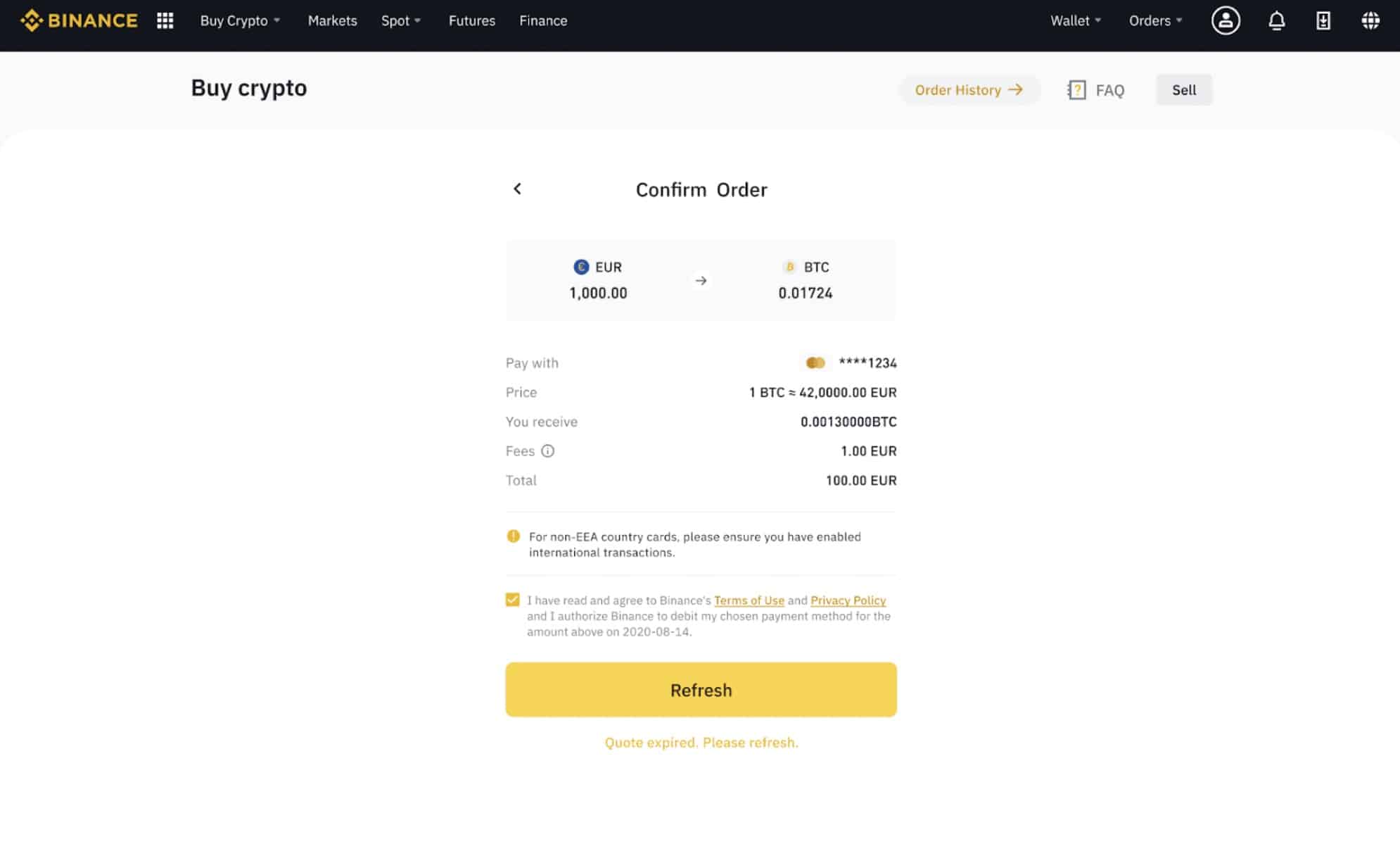
Step 4: Check the payment details and confirm your order within 1 minute. After 1 minute, the price and the amount of crypto you will get will be recalculated. You can click “Refresh” to see the latest market price. You will then be redirected to your bank’s OTP Transaction Page. Follow the on-screen instructions to verify the payment.
How to Conduct Spot Trading on Binance
Step 1: Log in to your Binance account.
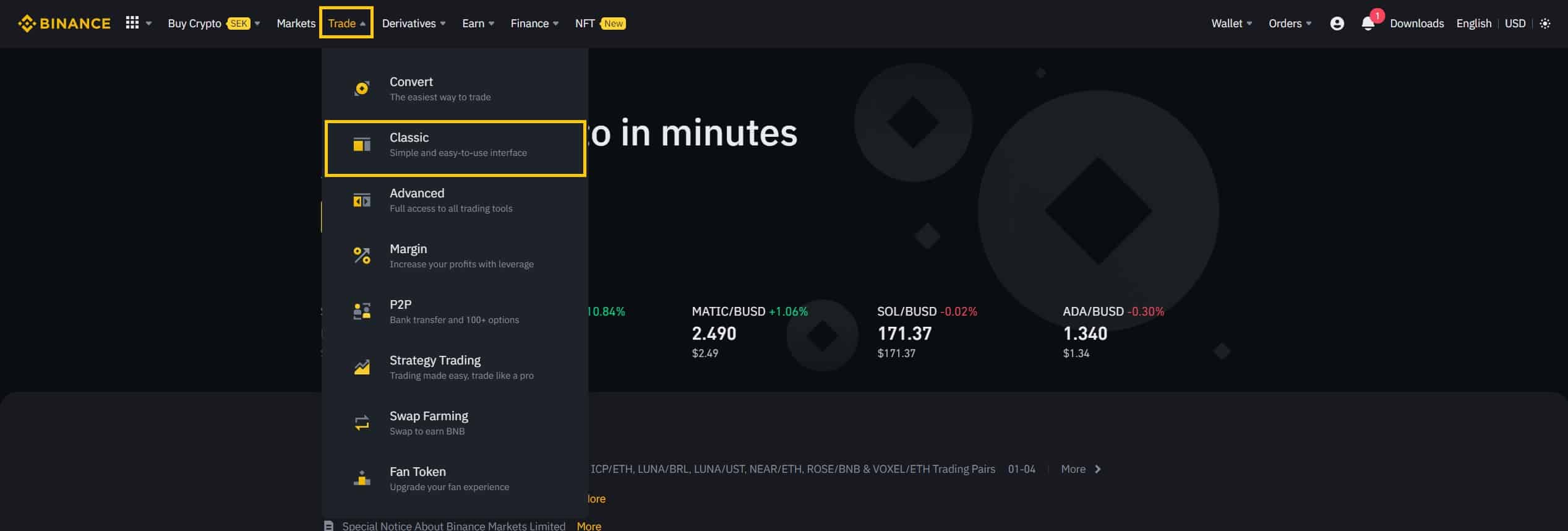
Click on “Classic” under “Trade” on the top navigation bar.
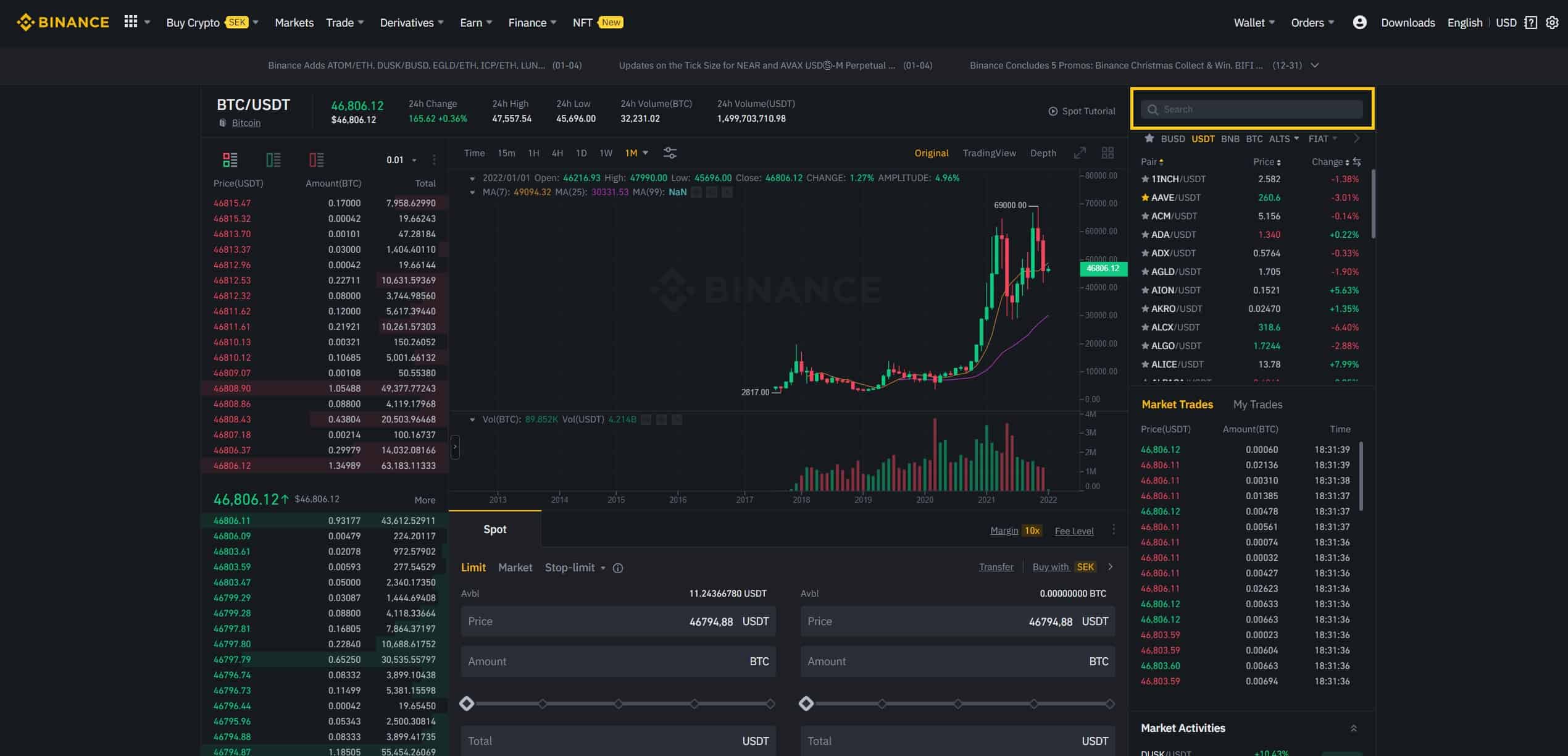
Step 2: Search and enter the cryptocurrency you want to trade.
Step 3: Set buying/selling prices and buying/selling amount (or exchange total). Then click on “Buy”/”Sell”.
(Note: The percentages under the “Amount” box refer to percentages of the total account balance.)
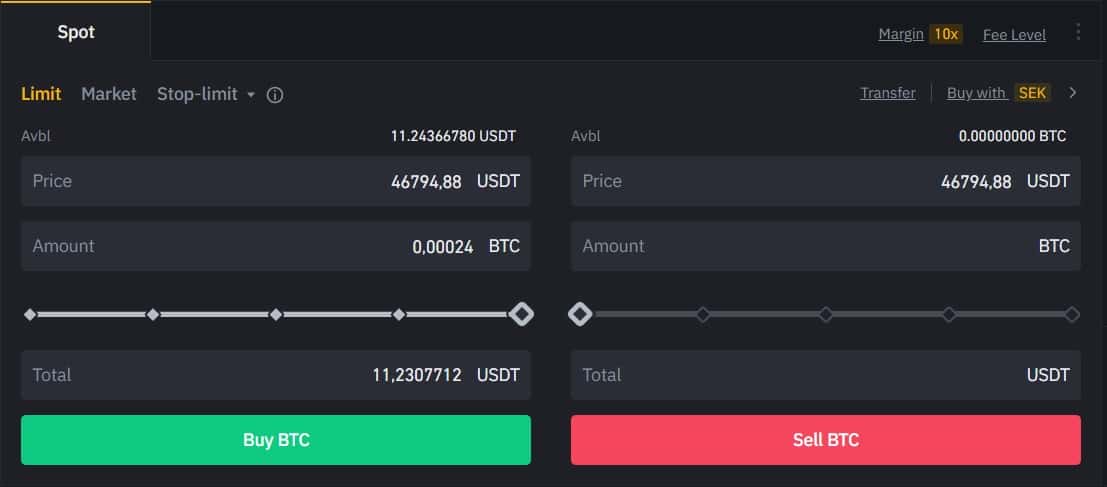
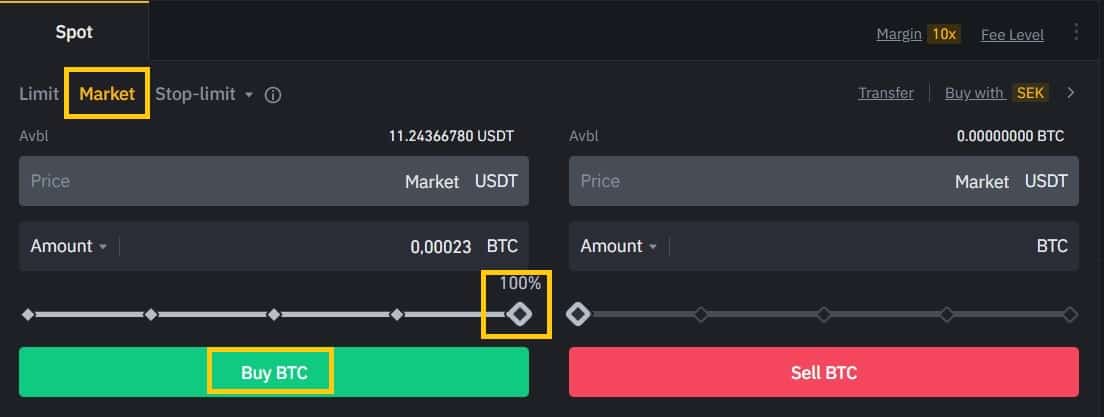
Step 4: If you don’t want to set a manual price, you can place a “Market Order” to set the buying/selling price automatically.
For more in-depth instructions, our ‘Absolute Beginner’s Guide To Cryptocurrency Investing‘ will take you through the process step-by step. In addition to providing instructions for sending and receiving your cryptocurrency.
And if you’re completely new to crypto our beginner, intermediate and advanced level articles will get you up to speed with everything you need to know about the cryptocurrency space starting out.
Simplecryptoguide.com
What Is Hathor (HTR)?
Hathor is a transactional consensus platform comprised of an entirely novel architecture, based on concepts from both directed acyclic graph (DAG) and blockchain technologies combined. They aim to solve a significant challenge in cryptocurrencies, the problems of scalability and decentralization maintenance among distributed ledger networks, by including a chain of mined blocks inside a DAG of transactions. The blockchain ensures security when the number of transactions per second is small, whereas the DAG prevails when the number increases significantly. A highly scalable distributed ledger where transactions can be processed for multiple purposes with no fees will be created through its own network. At the same time, mining rewards in the form of newly generated tokens will enforce a fair distribution of economic and computational resources through decentralization and 99.99% uptime without any form of central coordination. Hathor is the direct result of 7+ years of academic research from its founding members throughout which they have been stress-testing its assumptions and alpha versions.
- Source-code created from scratch in Python by a team of highly-skilled developers, some of whom have been researching cryptocurrencies since 2011.
- Novel distributed ledger architecture using both DAG and blockchain data structures intertwined.
- Highly scalable with no central coordinator or any single point of failure.
- Feeless and quick transactions.
- Proof of Work mining rewards economically incentivizes the network forever, with a perpetual and low emission of native HTR tokens.
- Merged Mining with Bitcoin and Litecoin.
- Custom Tokens: create your own digital token with customized specifications on Hathor Network with only a few clicks.
- Nano-contracts: a more secure and straight-to-the-point vision for embedded smart contracting capabilities.
- Created under heavy scientific and academic scrutiny, originally a research paper written by the CEO Marcelo Brogliato and published as part of his Ph.D. thesis.
What makes Hathor unique?
Source-code developed from scratch, using both DAG and blockchain technologies intertwined in a ledger. There is no other publicly known project currently developing a solution like this. As in IOTA, new transactions confirm previous ones, forming a DAG. Each transaction has its own proof-of-work which is solved by the issuer before propagating the transactions in the network. As in the case of Bitcoin, miners find new blocks which form a blockchain inside the DAG. Blocks collect newly-generated tokens and confirm all the transactions in the DAG. Each transaction has an accumulated weight which expresses the necessary effort to break the transaction, similar to the number of confirmations in Bitcoin. Hathor’s architecture lies between the ones from Bitcoin and IOTA and presents a solution to scaling, centralization, and spam issues.
Main features of Hathor
Custom Tokens
You can create your own digital token with customized specifications on Hathor Network with only one click. They will fully work under the same technical assumptions of high scalability and decentralized consensus of our native HTR tokens. These tokens will always work independently of the price of 1 HTR and they can serve multiple purposes: financial participation in a company (”stock”), mileage or loyalty points of a specific store or network, votes, ownership of digital goods such as website domains, etc.
Nano Contracts
A simplified version of Smart Contracts, in which two or more people transfer their funds to a special transaction through Hathor Network, called a Nano Contract, which is set to be resolved later. A contract is simply a set of rules applied to decide the final distribution of the funds, i.e., how many tokens each participant of the contract will receive. Another important concept in Nano Contracts are the Oracles, which are agents that submit pieces of information from the real world (outside the network) into the network.
Hathor development updates in 2023
In 2023, Hathor has made significant technological advancements and updates to its network, enhancing both its functionality and user accessibility. Here are some of the key developments:
-
Integration of Proof of Work and DAG Technology: Hathor’s architecture combines Directed Acyclic Graph (DAG) with Proof-of-Work blockchain technology. This hybrid structure allows the platform to handle transactions at high speeds akin to mainstream payment processors, maintaining both scalability and security.
-
Merged Mining for Enhanced Network Security: Hathor has implemented a novel ‘Merged Mining’ technique, enabling miners to mine both Hathor and Bitcoin simultaneously without additional energy consumption. This approach not only boosts the network’s hash rate but also underpins its security, making the blockchain more robust against potential attacks.
-
Token and NFT Minting System: A standout feature of Hathor is its user-friendly token and NFT minting system. This system enables users to create custom tokens and NFTs quickly, with minimal technical expertise required. It democratizes access to token creation, catering to a wider user base and fostering broader participation in the blockchain space.
-
Strategic Partnerships and Ecosystem Expansion: Throughout 2023, Hathor has expanded its ecosystem through strategic partnerships and the development of new projects. The network’s collaborations with entities like Chainlink and Ledger have broadened its scope and utility. The launch of HathorSwap, the first decentralized exchange on the platform, introduces DeFi functionalities such as staking, yield farming, and liquidity mining, marking a significant step in Hathor’s ecosystem development.
-
Adoption and Utility of HTR Token: The native HTR token has seen a surge in adoption, underlined by its listing on several prominent exchanges and hardware wallets. The token’s utility within the Hathor ecosystem is multi-faceted, enabling various functionalities and serving as a key component of the network’s operations.
These technological advancements and updates reflect Hathor’s commitment to innovation and user accessibility, positioning the platform as a notable player in the blockchain and cryptocurrency domains. The focus on scalable, secure blockchain infrastructure, coupled with user-friendly features, sets Hathor apart in the rapidly evolving blockchain landscape.
Official website: https://hathor.network/
Best cryptocurrency wallet for Hathor (HTR)
There are plenty of different crypto wallets available. The best one for you depends on your general trading habits and which provides the most security in your situation. There are two main types of wallets: hot storage wallets (digital) and cold storage or hardware wallets (physical). Both have their pros and cons, and there is not necessarily a right or wrong answer when it comes to figuring out which crypto wallet is best for you.
HOW DO I DECIDE WHICH cryptocurrency WALLET TO USE for Hathor (HTR)?
Deciding which type of wallet to use depends on a variety of factors, including:
- How often you trade. In general, hot wallets are better for more active cryptocurrency traders. Quick login ability means you are only a few clicks and taps away from buying and selling crypto. Cold wallets are better suited for those looking to make less frequent trades.
- What you want to trade. As mentioned earlier, not all wallets support all types of cryptocurrencies. However, some of the best crypto wallets have the power to trade hundreds of different currencies, providing more of a one-size-fits-all experience.
- Your peace of mind. For those worried about hacking, having a physical cold wallet stored in a safe deposit box at the bank or somewhere at home, provides the safest, most secure option. Others might be confident in their ability to keep their hot wallets secure.
- How much it costs. It is important to investigate the costs associated with each wallet. Many hot wallets will be free to set up. Meanwhile, cold wallets, like any piece of hardware, will cost money to purchase.
- What it can do. While the basics of each cryptocurrency wallet are the same, additional features can help set them apart. This is especially true of hot wallets, many of which come with advanced reporting features, insights into the crypto market, the ability to convert cryptocurrencies and more. Security features can also be a good differentiator.
For a more in-depth overview of cryptocurrency wallets visit our “Cryptocurrency Wallets Explained” guide.
If you’re going to be dealing in larger volumes of crypto, investing in cold storage might prove advantageous.
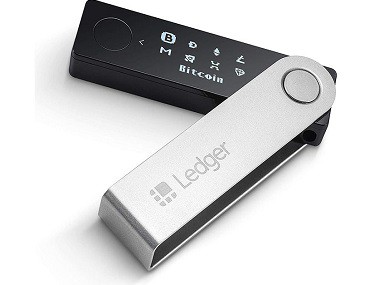
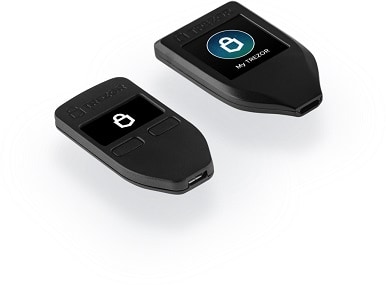
Most widespead examples of this being the Ledger Nano and the Trezor.
Ledger manufactures cold storage wallets designed for users who want increased security. Their wallets are a physical device that connects to your computer. Only when the device is connected can you send your cryptocurrency from it. Ledger offers a variety of products, such as the Ledger Nano S and the Ledger Nano X (a bluetooth connected hardware wallet).
Trezor is a pioneering hardware wallet company. The combination of world-class security with an intuitive interface and compatibility with other desktop wallets, makes it ideal for beginners and experts alike. The company has gained a lot of the Bitcoin community’s respect over the years. Trezor offers two main models – The Trezor One and Trezor Model T (which has a built in touch screen).
Market Overview
Coinmarketcap.com
Coinmarketcap will be your cryptocurrency go-to for just about everything. Here you can see the following:
Market Capitalization And Daily Trading Volume
Current Market Price Of Every Cryptocurrency Relative To USD (And Some Local Currencies)
Circulating And Total Supply
Historical Charts With Prices Relative To USD, Bitcoin (BTC), And Ethereum (ETH).