How To Buy IOST (IOST)?

A common question you often see on social media from crypto beginners is “Where can I buy IOST?” Well, you’ll be happy to hear it is actually quite a simple and straightforward process.
Step 1: Create an account on an exchange that supports IOST (IOST)
First, you will need to open an account on a cryptocurrency exchange that supports IOST (IOST).
We recommend the following based on functionality, reputation, security, support and fees:
1
Binance

Fees (Maker/Taker) 0.075%*-0.1%*
Cryptocurrencies
Available for Trade 500+
Sign-up bonus
10% reduced trading fees*
Available in
Europe, Asia, Oceania, Africa
2
MEXC

Fees (Maker/Taker) 0.2%*-0.2%*
Cryptocurrencies
Available for Trade 1500+
Sign-up bonus
10% reduced trading fees & up to $170 in USDT vouchers*
Available in
North America, South America, Europe, Asia, Oceania, Africa
3
Gate.io

Fees (Maker/Taker) 0.2%*-0.2%*
Cryptocurrencies
Available for Trade 1000+
Sign-up bonus
Up to $100 in USDT vouchers*
Available in
Europe, Asia, Oceania, Africa
In order to sign up, you will need to enter some basic information, such as your email address, password, full name and, in some cases, you might also be asked for a phone number or address.
Note: On specific exchanges, you might need to complete a Know Your Customer (KYC) procedure in order to be able to purchase cryptocurrency. This is most commonly the case with licensed and regulated exchanges.
Step 2: Deposit funds into your account
Many cryptocurrency exchanges will allow you to purchase IOST (IOST) with fiat currencies, such as EUR, USD, AUD and others. Furthermore, they will also provide you with multiple deposit methods through which you can fund your fiat account, such as credit and debit cards, ewallets or direct bank transfers.
Note: Some payment methods will have higher fees than others, such as credit card payments. Before funding your fiat account on your chosen exchange, make sure to do your due diligence to find out the fees involved with each payment method to avoid unnecessary costs.
Step 3: Buy IOST (IOST)
This process is similar across almost every cryptocurrency exchange. All you have to do is find a navigation bar or a search bar, and search for IOST (IOST) or IOST (IOST) trading pairs. Look for the section that will allow you to buy IOST (IOST), and enter the amount of the cryptocurrency that you want to spend for IOST (IOST) or the amount of fiat currency that you want to spend towards buying IOST (IOST). The exchange will then calculate the equivalent amount of IOST (IOST) based on the current market rate.
Note: Make sure to always double-check your transaction details, such as the amount of IOST (IOST) you will be buying as well as the total cost of the purchase before you end up confirming the transaction. Furthermore, many cryptocurrency exchanges will offer you their own proprietary software wallet where you will be storing your cryptocurrencies; however, you can create your own individual software wallet, or purchase a hardware wallet for the highest level of protection.
How to create a Binance account

Step 1: Go to the Binance website.
Step 2: On the registration page, enter your email address, and create a password for your account.
Then, read and agree to the Terms of Service and click “Create Account”.
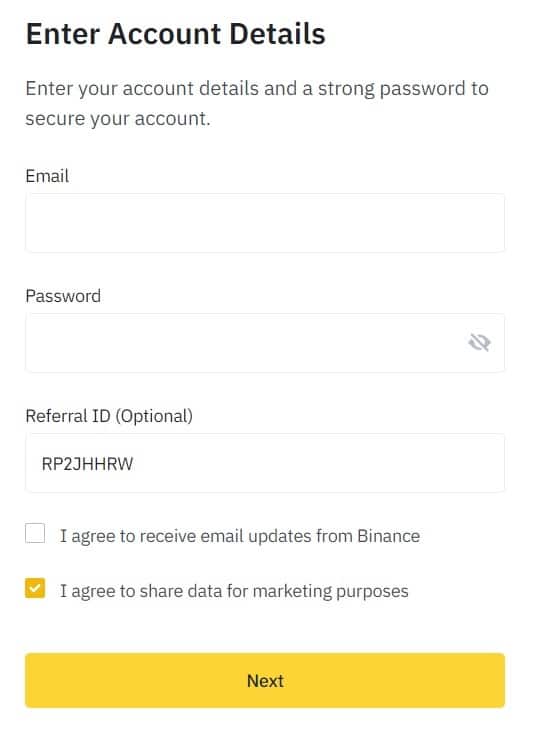
Note: Your password must be a combination of numbers and letters.
It should contain at least 8 characters, one UPPER CASE letter, and one number.
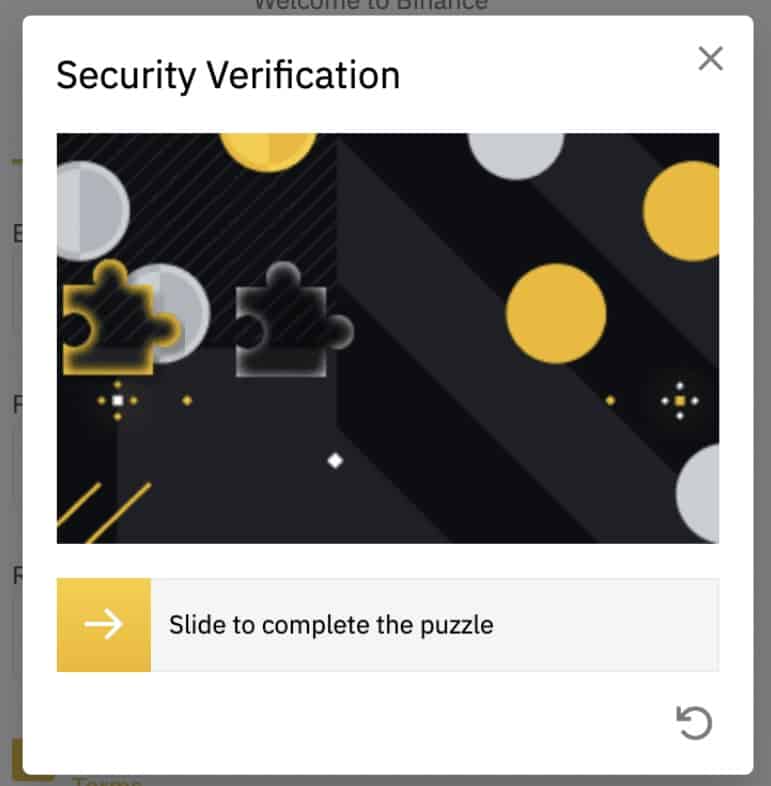
Step 3: Complete the Security Verification.
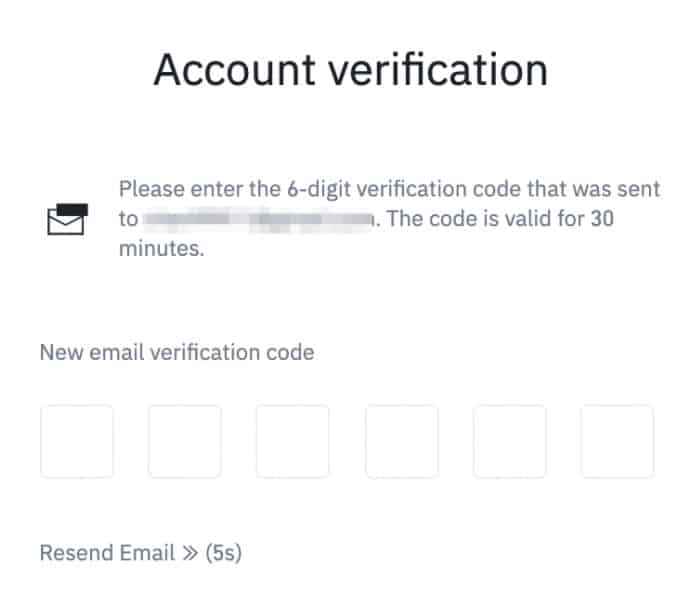
Step 4: The system will send a verification code to your email. The verification code is valid for 30 minutes. If you can’t find the email in your inbox, check your other mail folders as well, or click “Resend Email” to resend.
How to complete KYC (ID Verification) on Binance
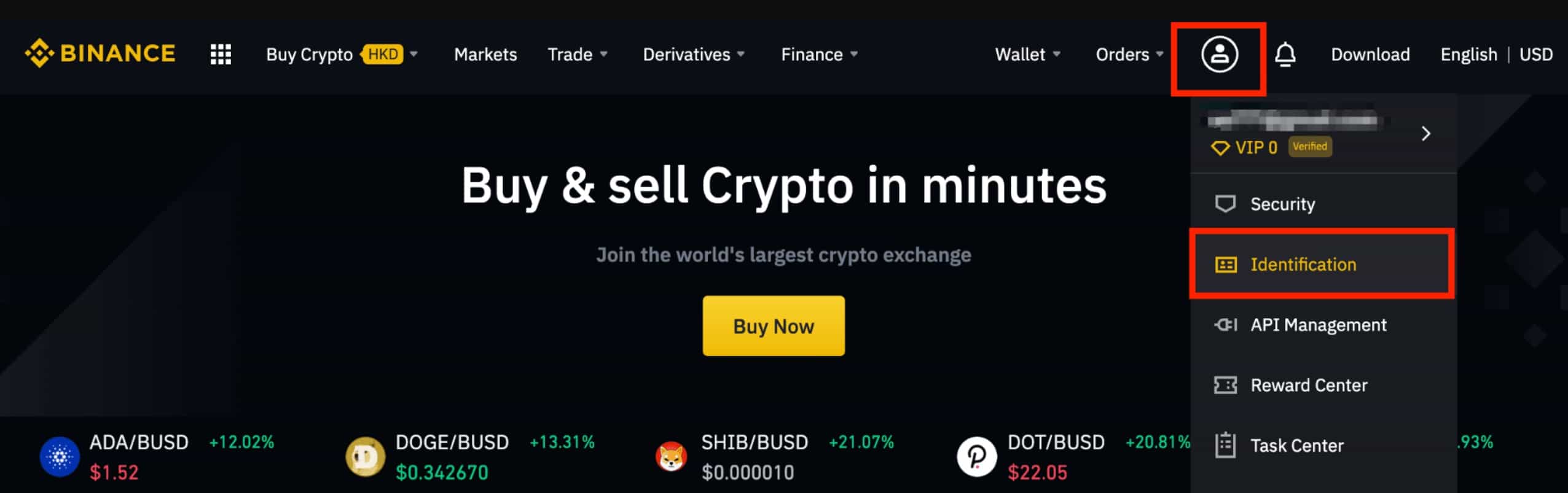
Step 1: Log in to your Binance account and click “User Center” and then “Identification”.
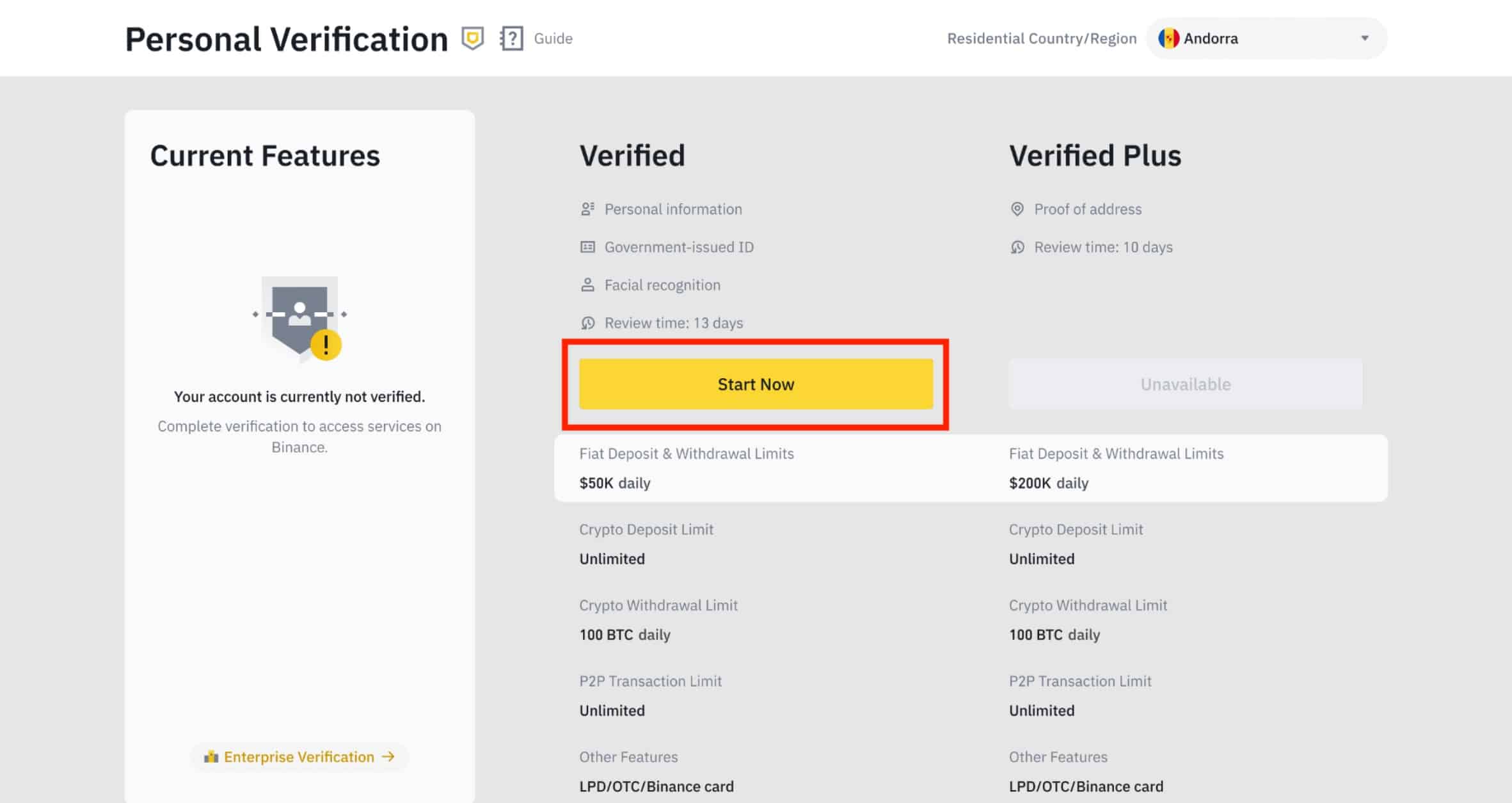
Step 2: click “Start Now” to verify your account.
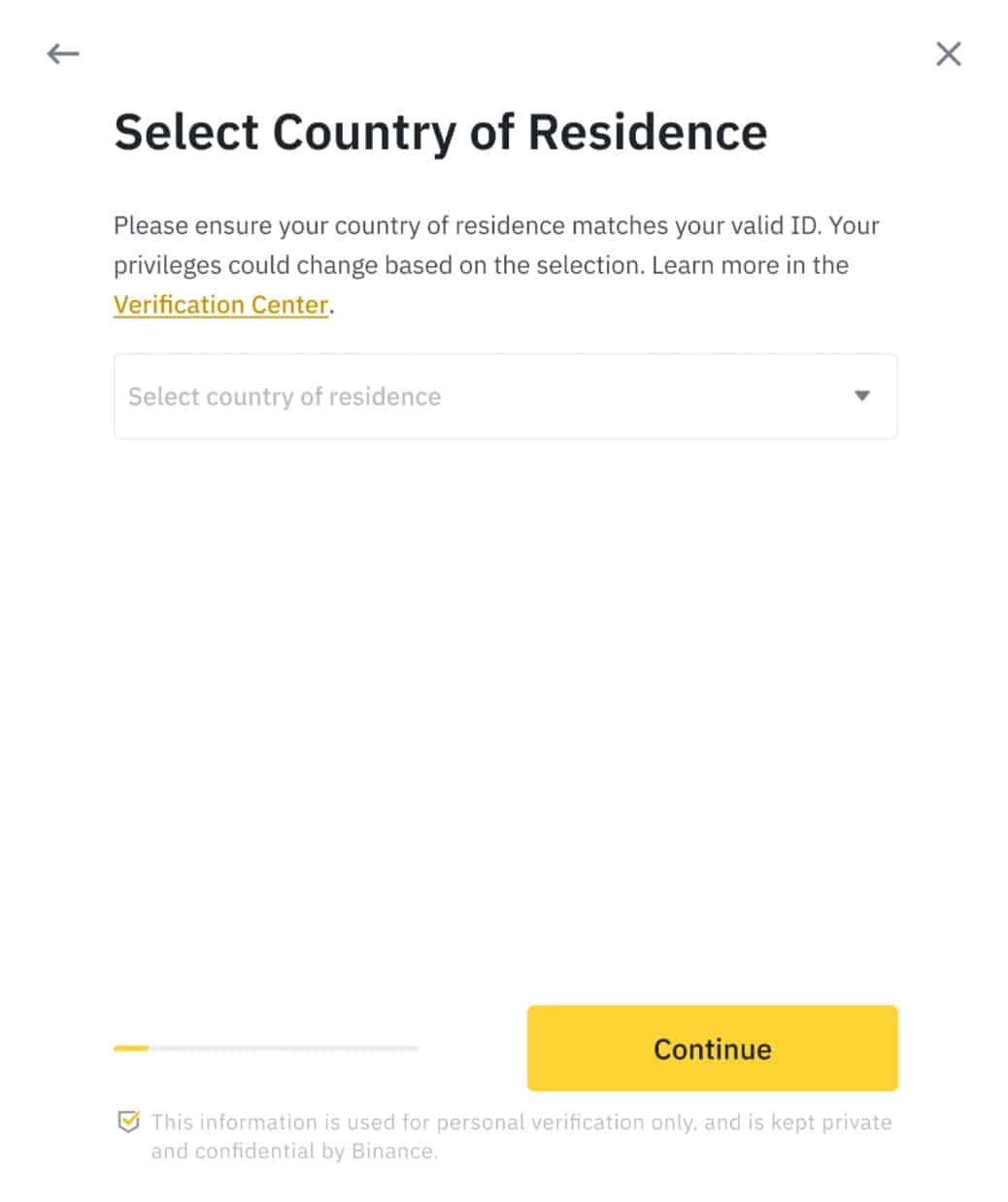
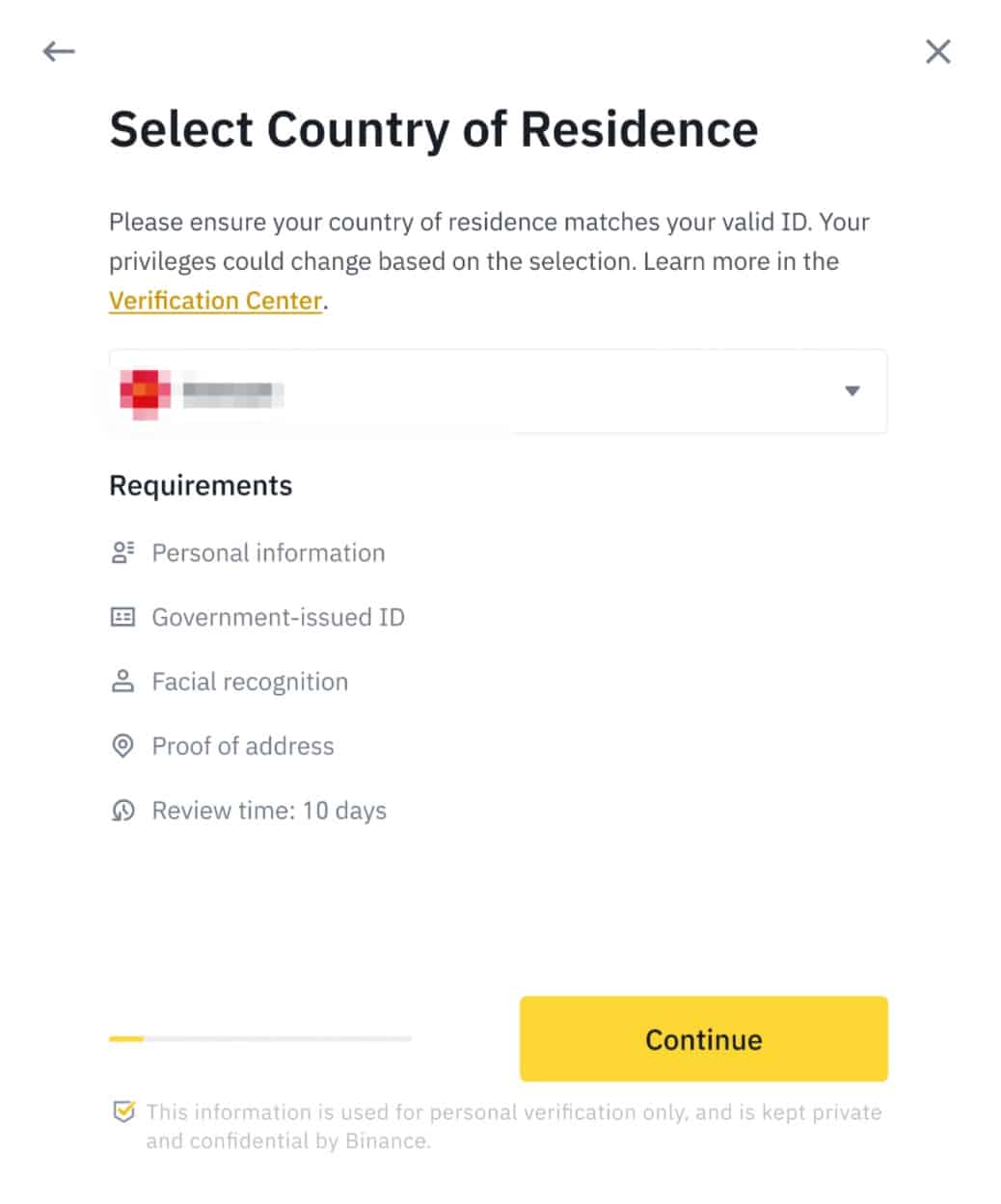
Step 3: Select your country of residence.
Ensure that your country of residence is consistent with your ID documents.
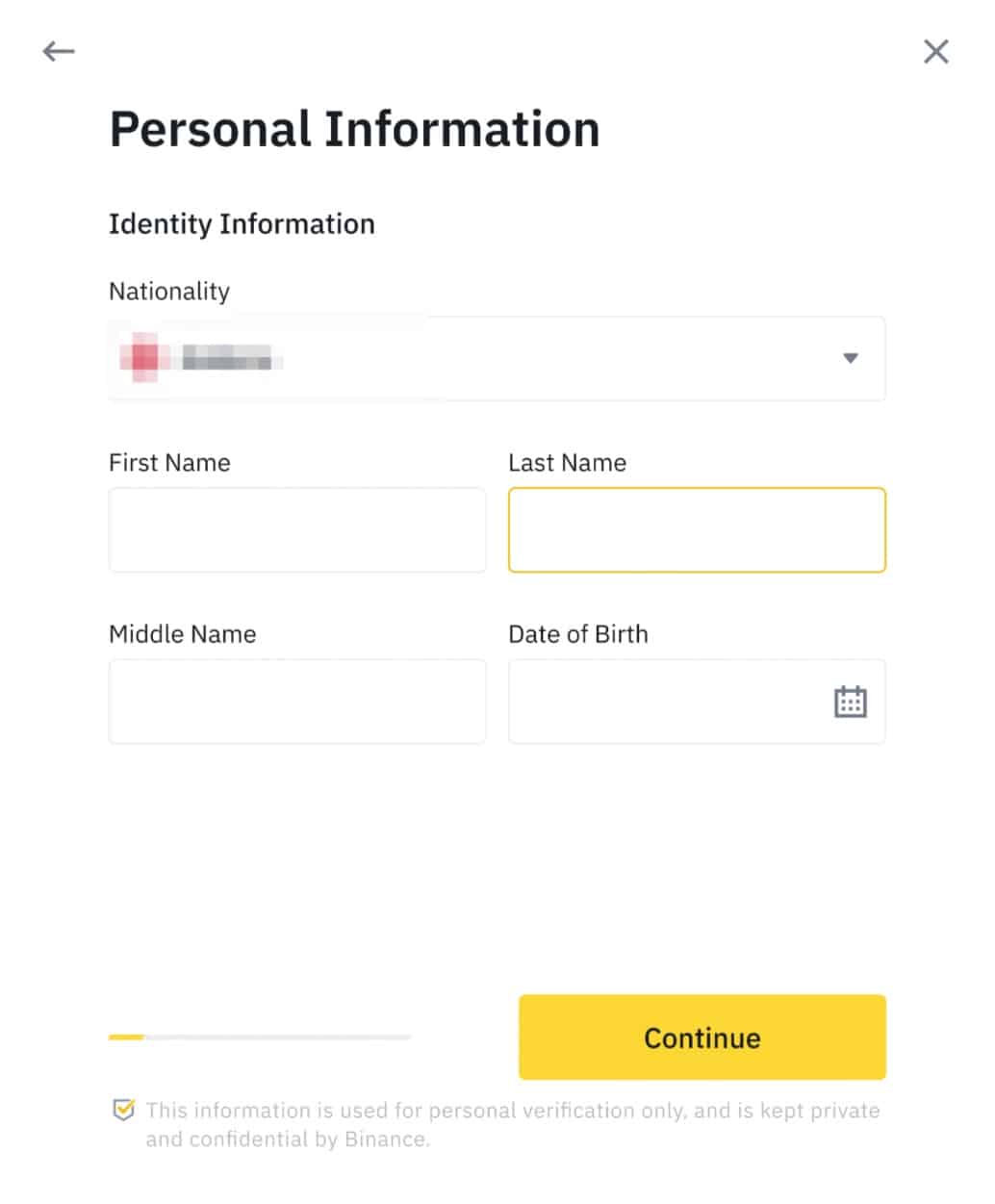
Step 5: Enter your personal information and click “Continue.”
You won’t be able to change it once confirmed.
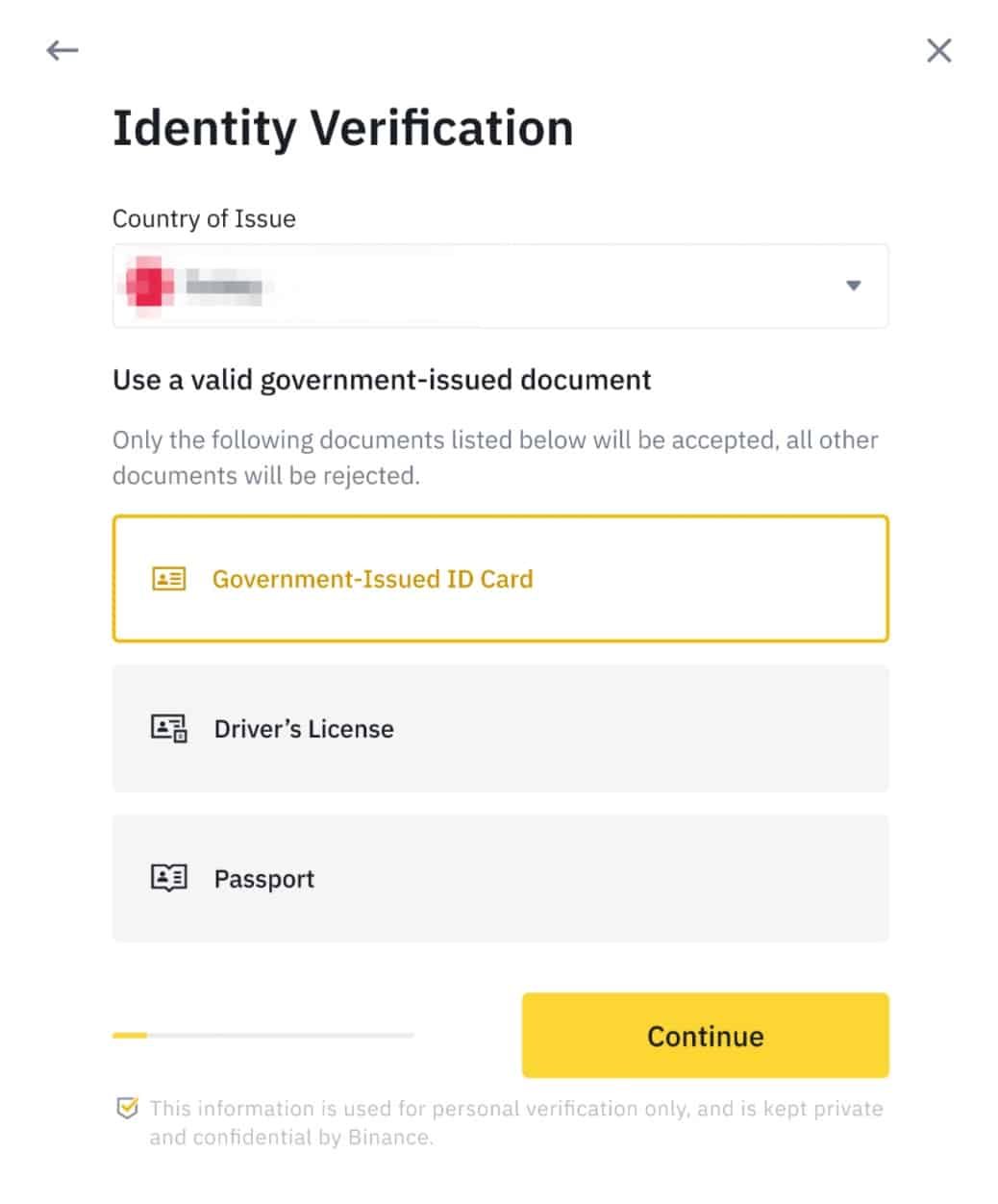
Refer to the respective options offered for your country.
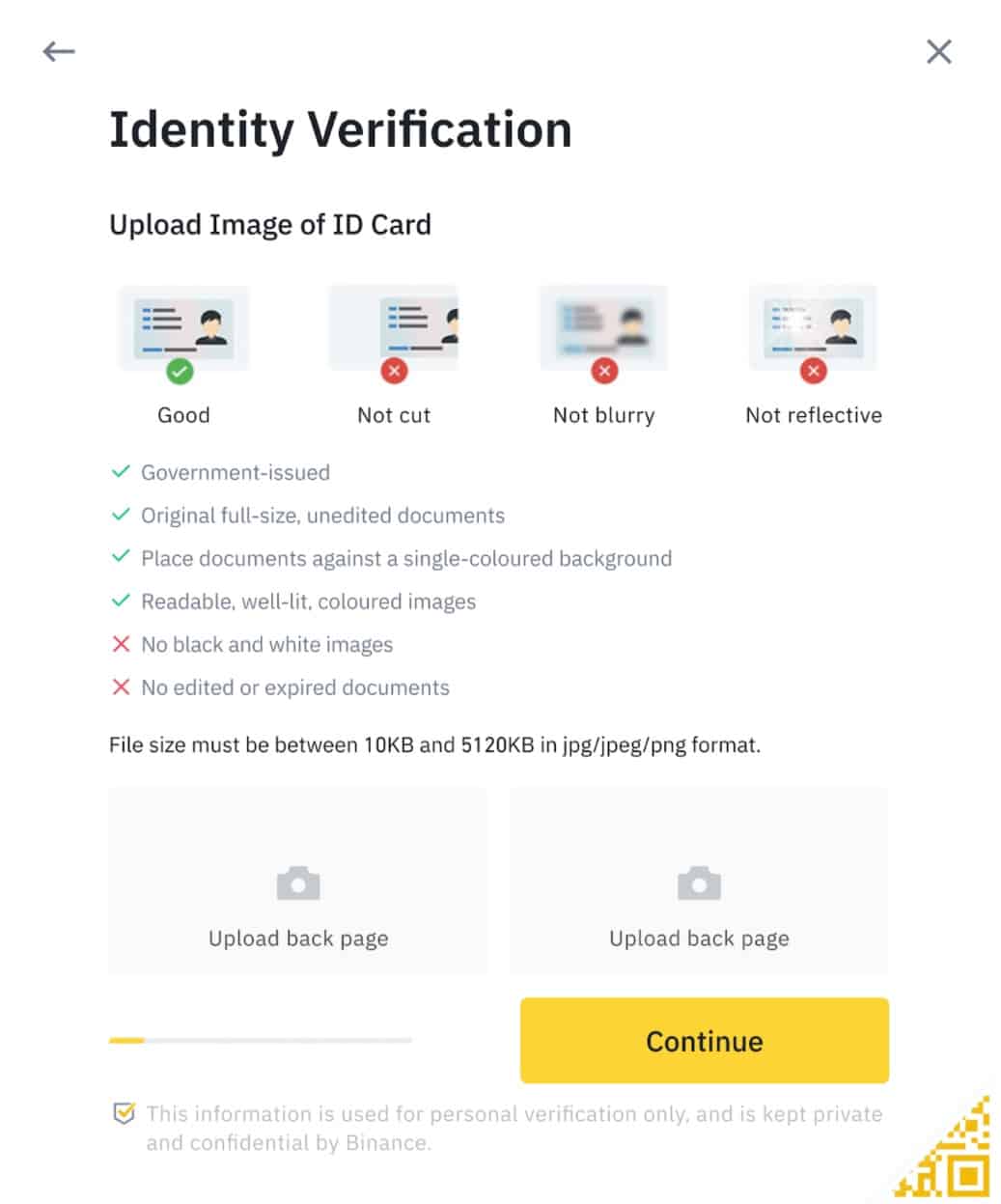
Step 7: Follow the instructions to upload photos of your document. Your photos should clearly show the full ID document.
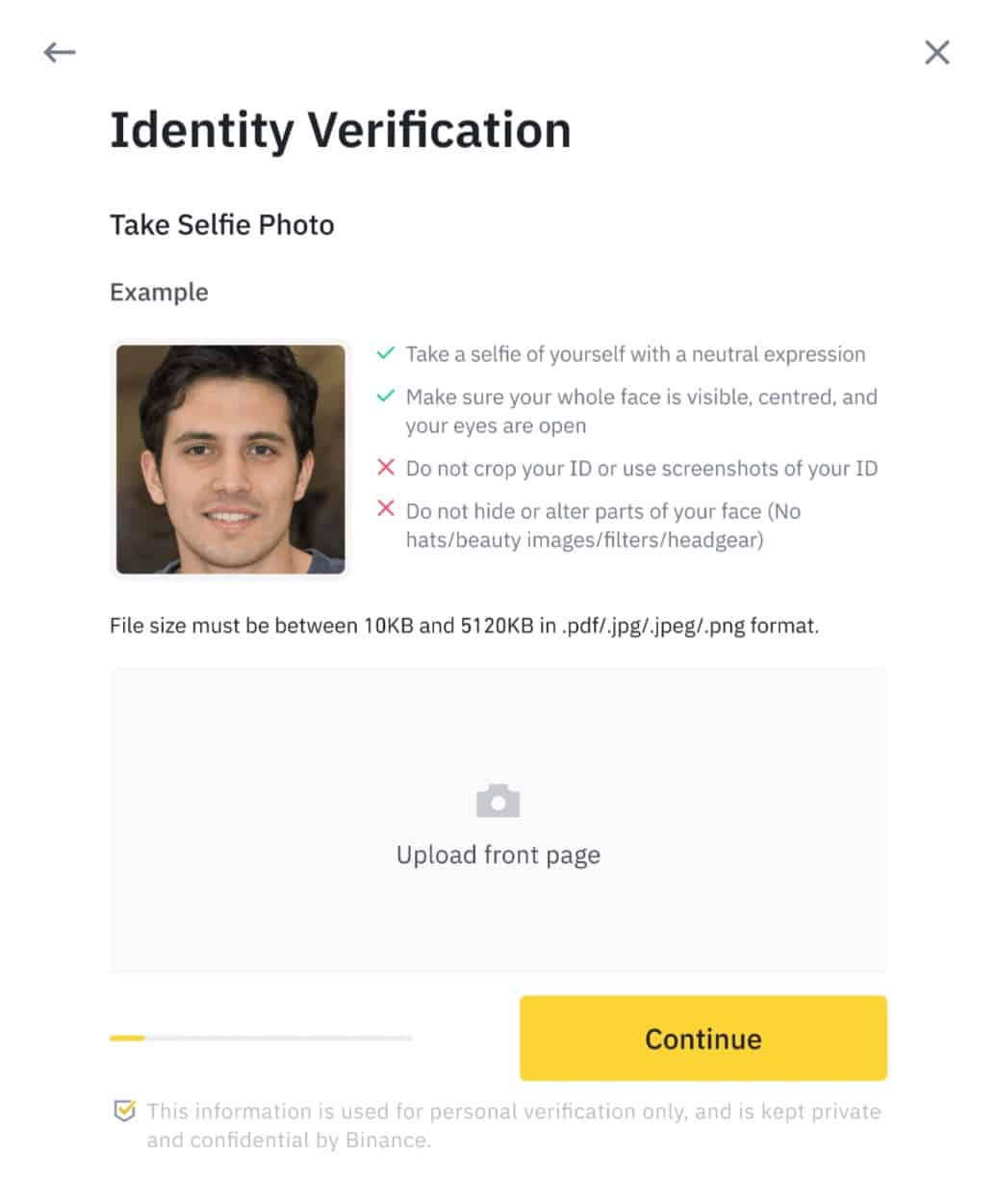
Do not wear hats, glasses, or use filters, and make sure that the lighting is sufficient.
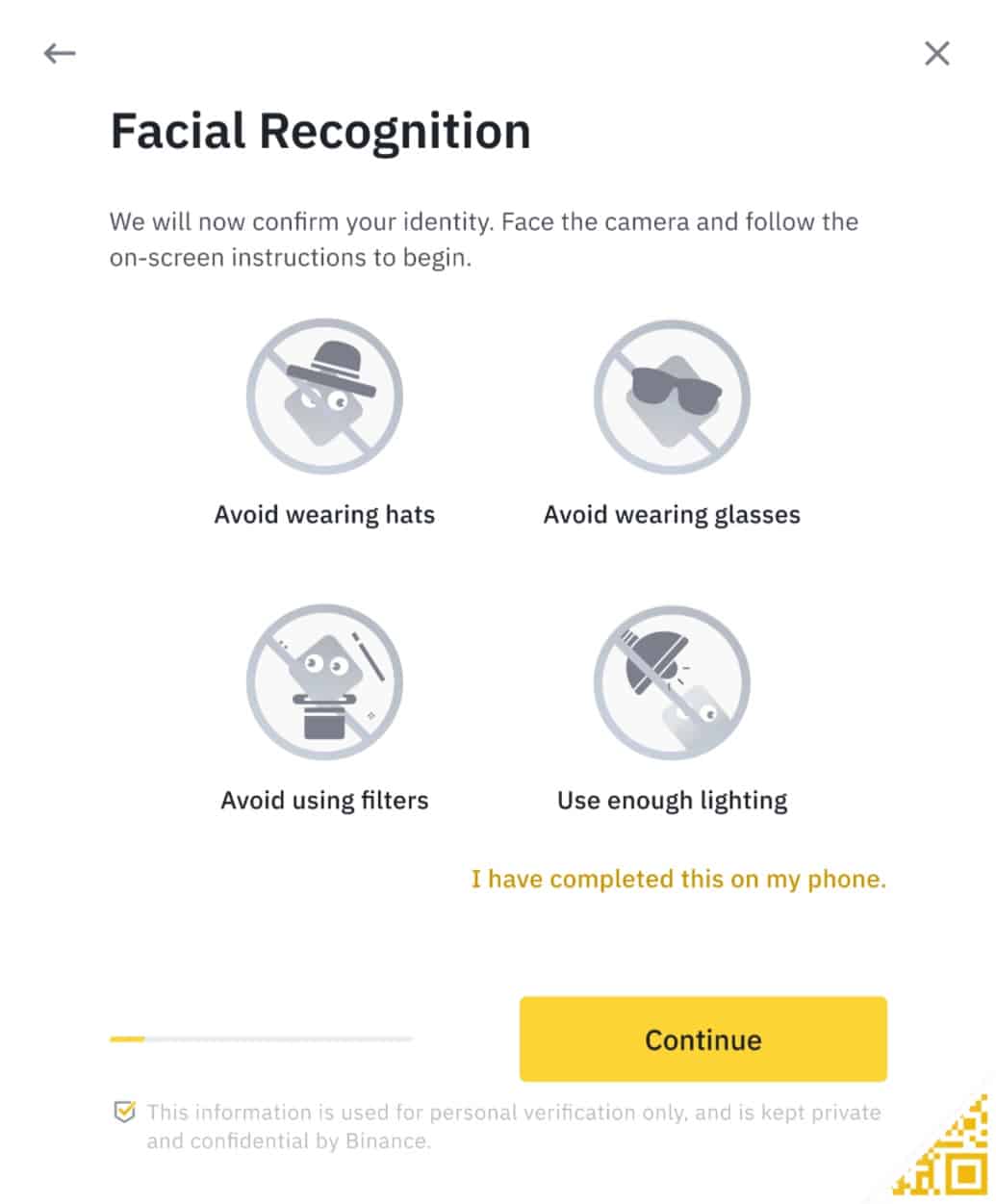
Once your application has been verified, you will receive an email notification.
How to buy cryptocurrency on Binance
Step 1: Log in to your Binance account and click “Buy Crypto” and then “Credit/Debit Card”.
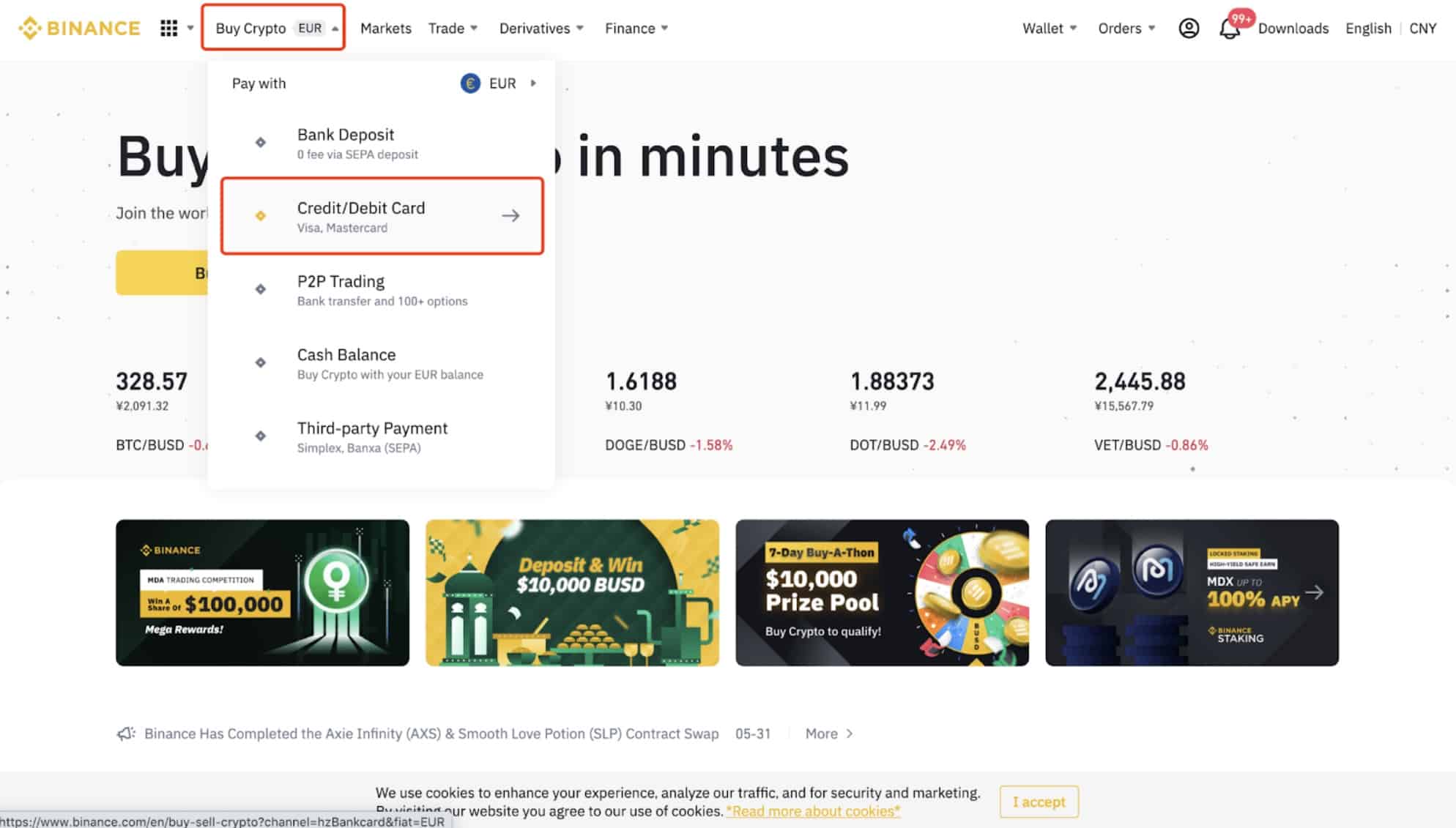
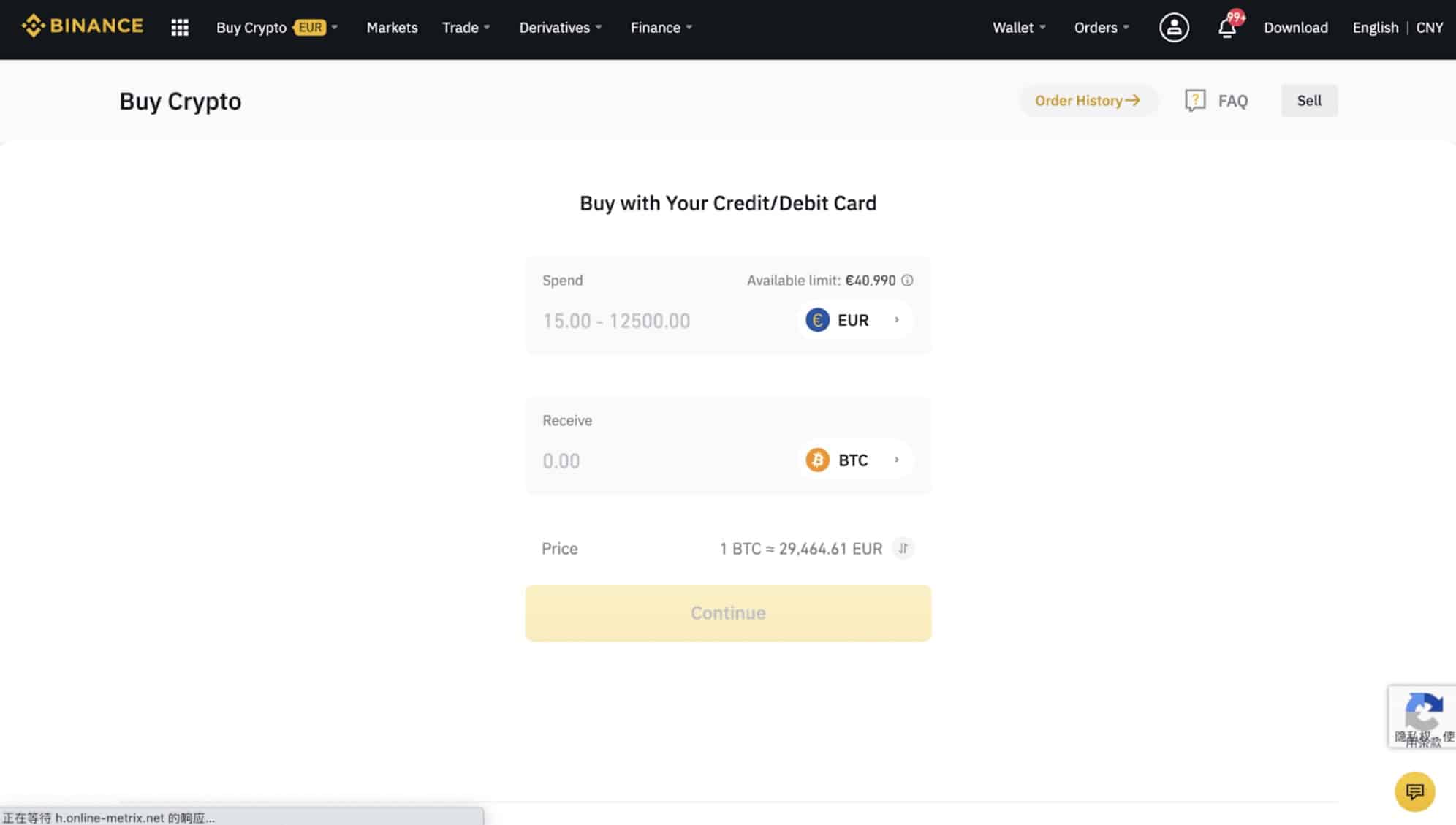
Step 2: Here you can choose to buy crypto with different fiat currencies. Enter the fiat amount you want to spend and the system will automatically display the amount of crypto you can get. When you have selected the amount you wish to spend then press “Continue”.
Note: You might not be able to purchase every cryptocurrency directly using fiat, if you’re looking to purchase something that isn’t offered in the currency list on this page, then you will want to purchase USDT. We will then show you how to exchange that on the spot-market for the cryptocurrency that you want in the next section of this guide.
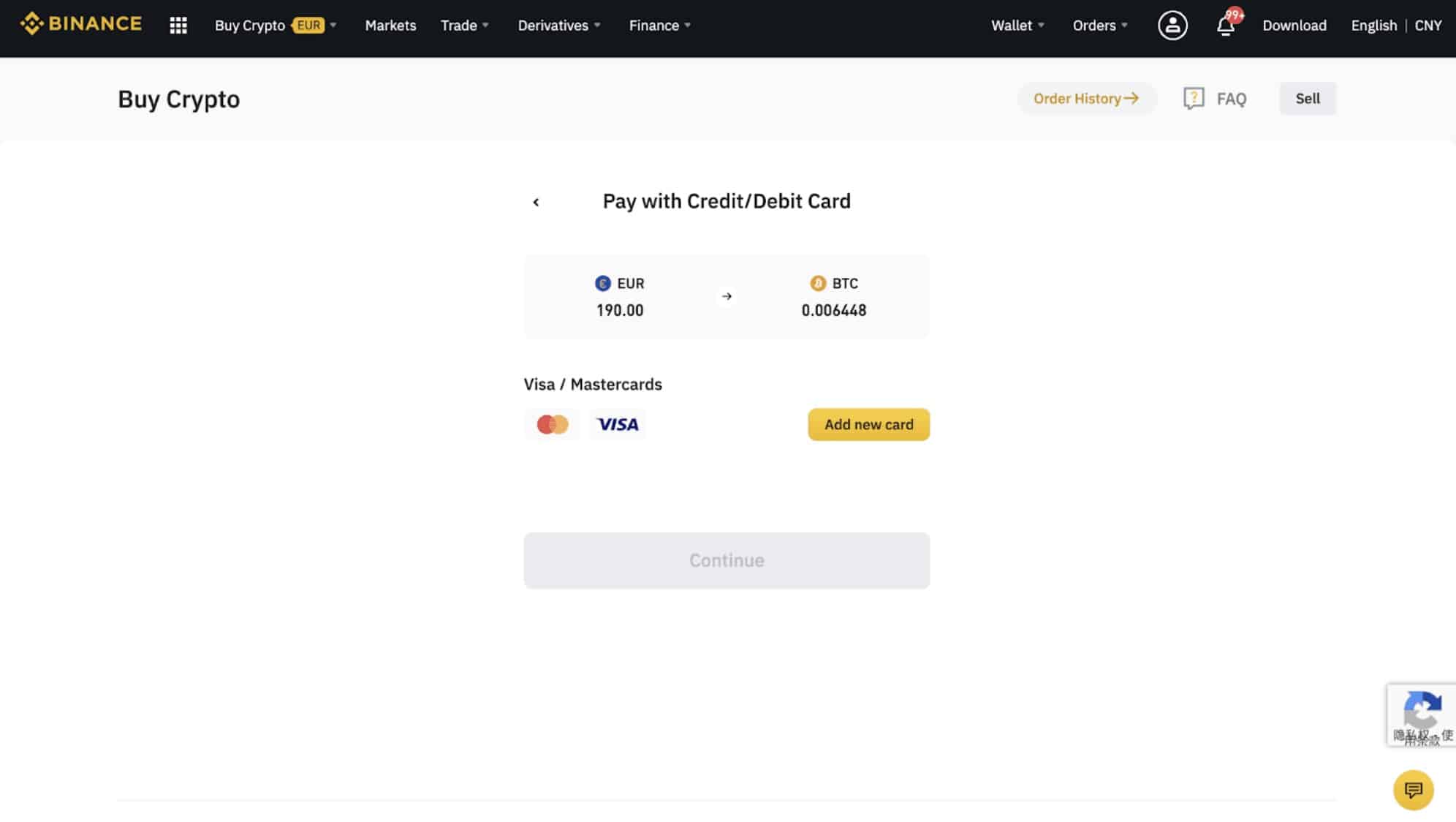
Step 3: Click “Add New Card”. Then enter your credit card details and your billing address.
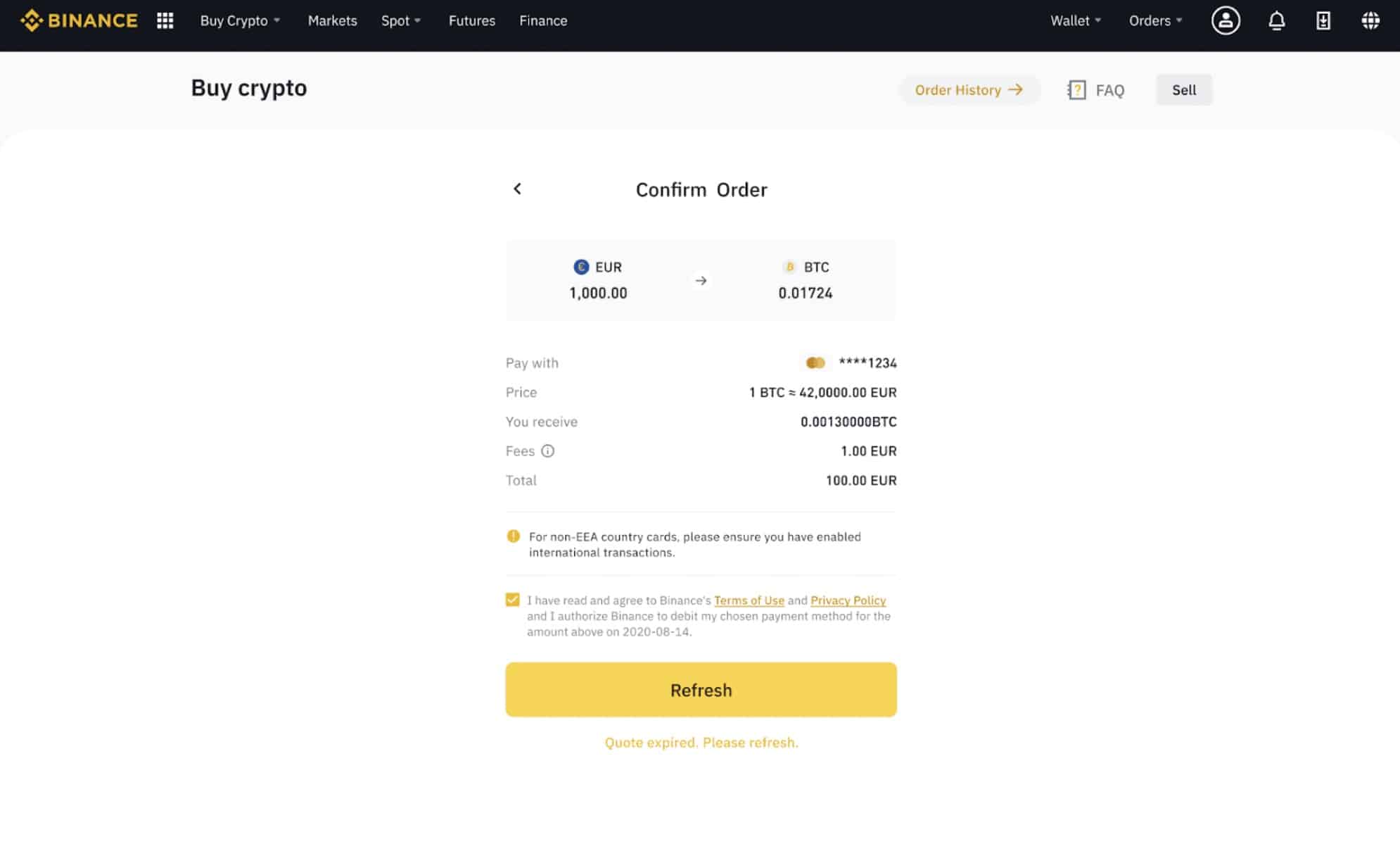
Step 4: Check the payment details and confirm your order within 1 minute. After 1 minute, the price and the amount of crypto you will get will be recalculated. You can click “Refresh” to see the latest market price. You will then be redirected to your bank’s OTP Transaction Page. Follow the on-screen instructions to verify the payment.
How to Conduct Spot Trading on Binance
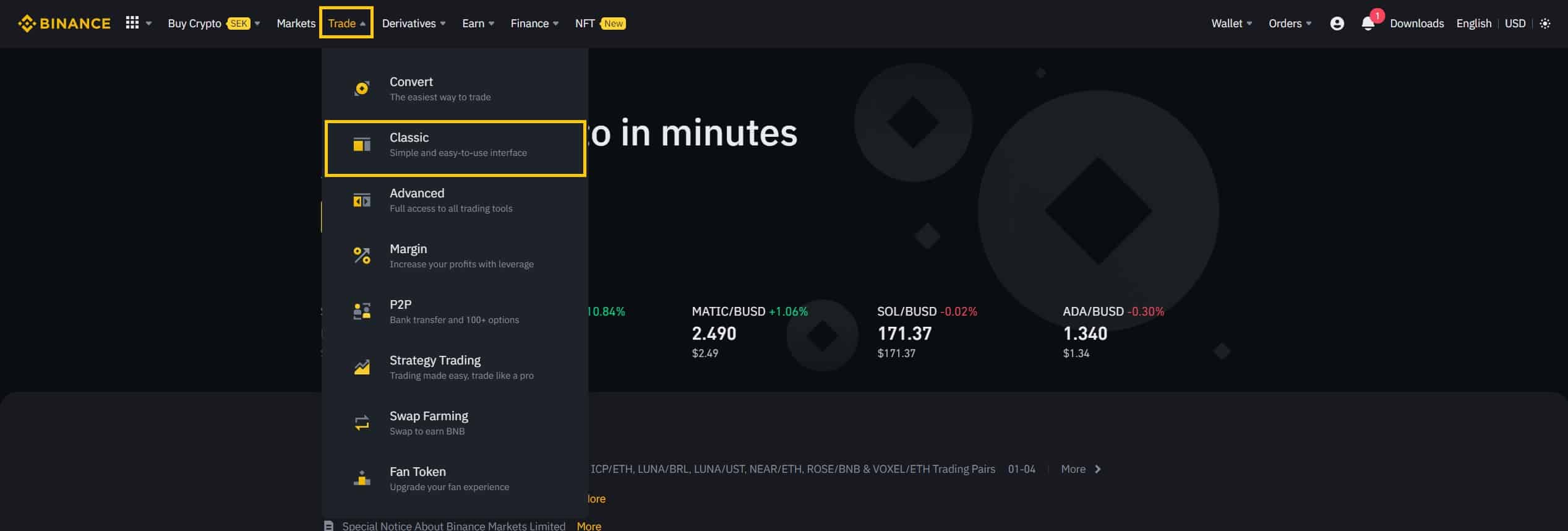
Step 1: Log in to your Binance account.
Click on “Classic” under “Trade” on the top navigation bar.
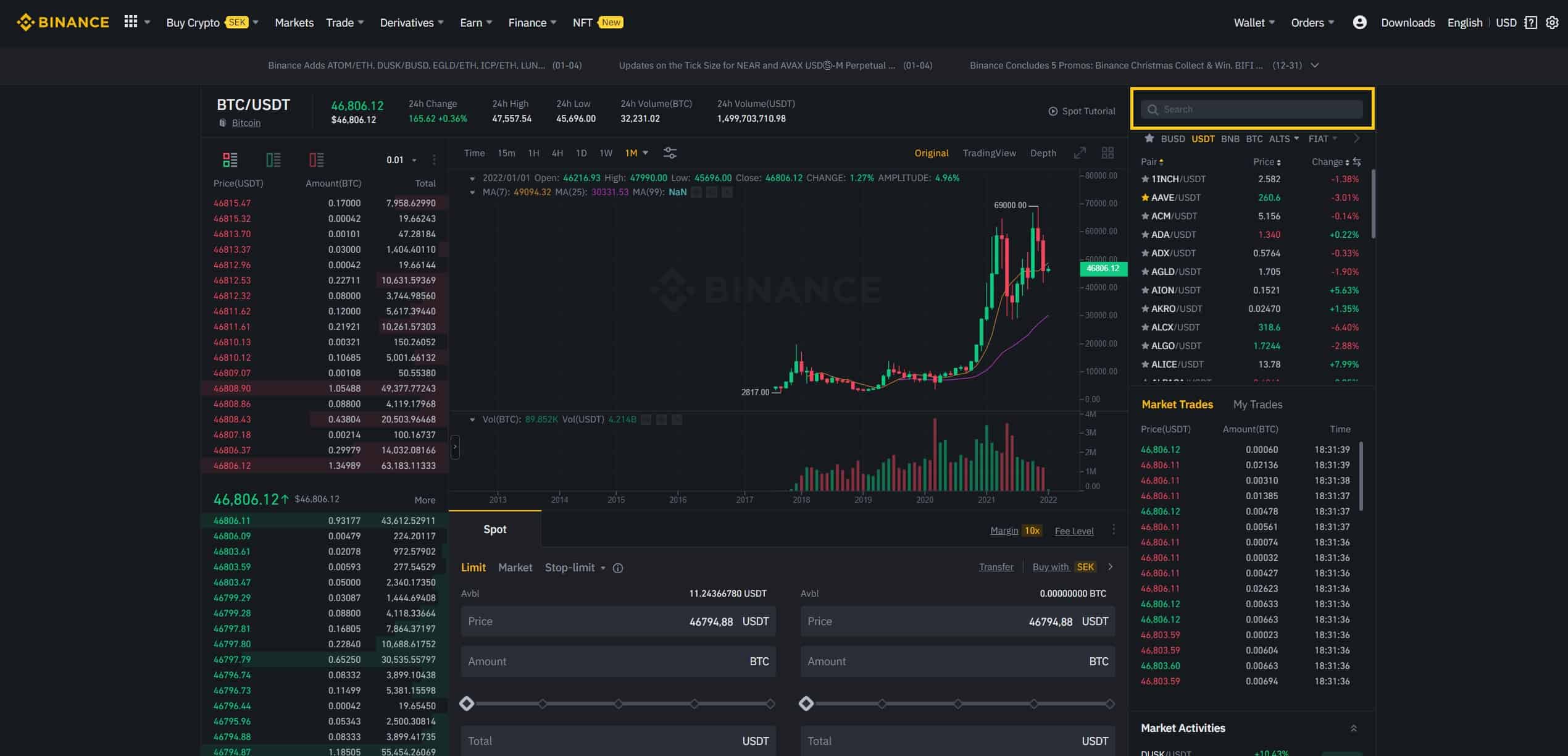
Step 2: Search and enter the cryptocurrency you want to trade.
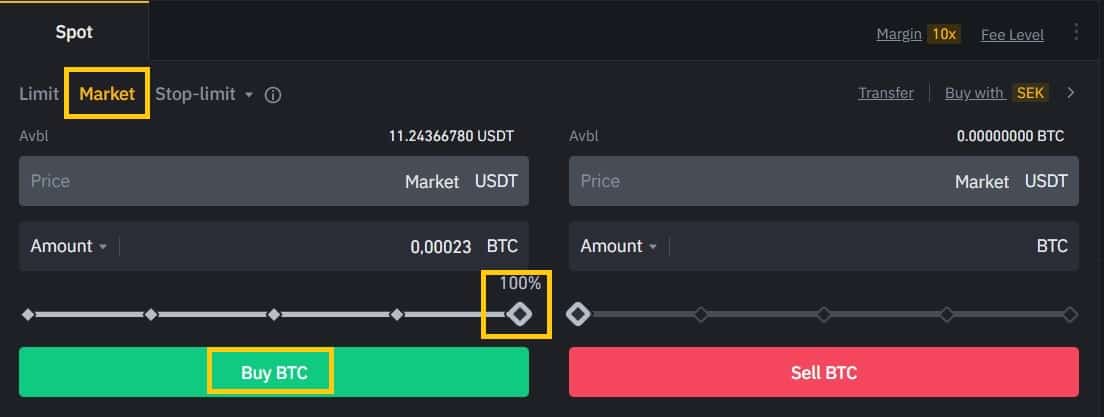
Step 3: Set buying/selling prices and buying/selling amount (or exchange total). Then click on “Buy”/”Sell”.
(Note: The percentages under the “Amount” box refer to percentages of the total account balance.)
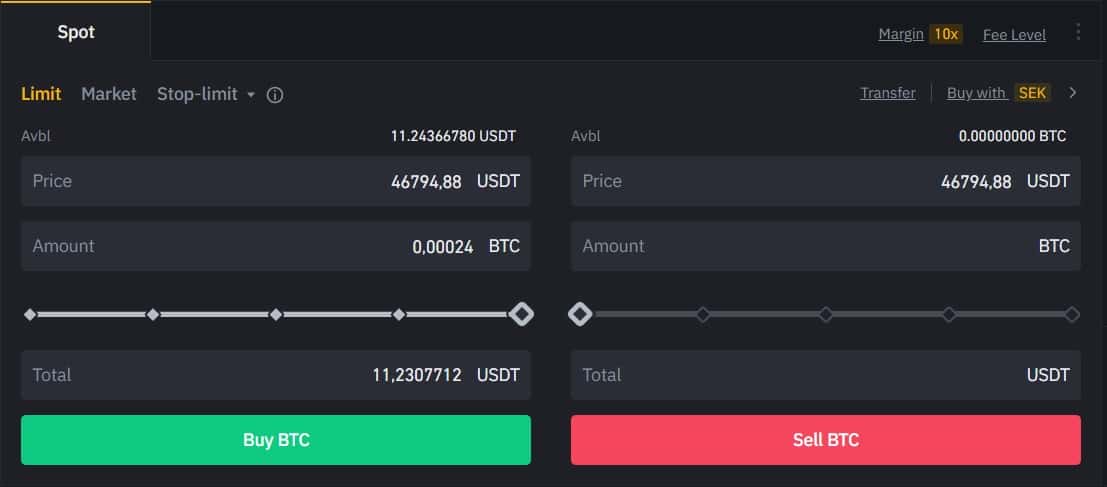
Step 4: If you don’t want to set a manual price, you can place a “Market Order” to set the buying/selling price automatically.
How to create a Gate.io account

Step 1: Go to the Gate.io website.
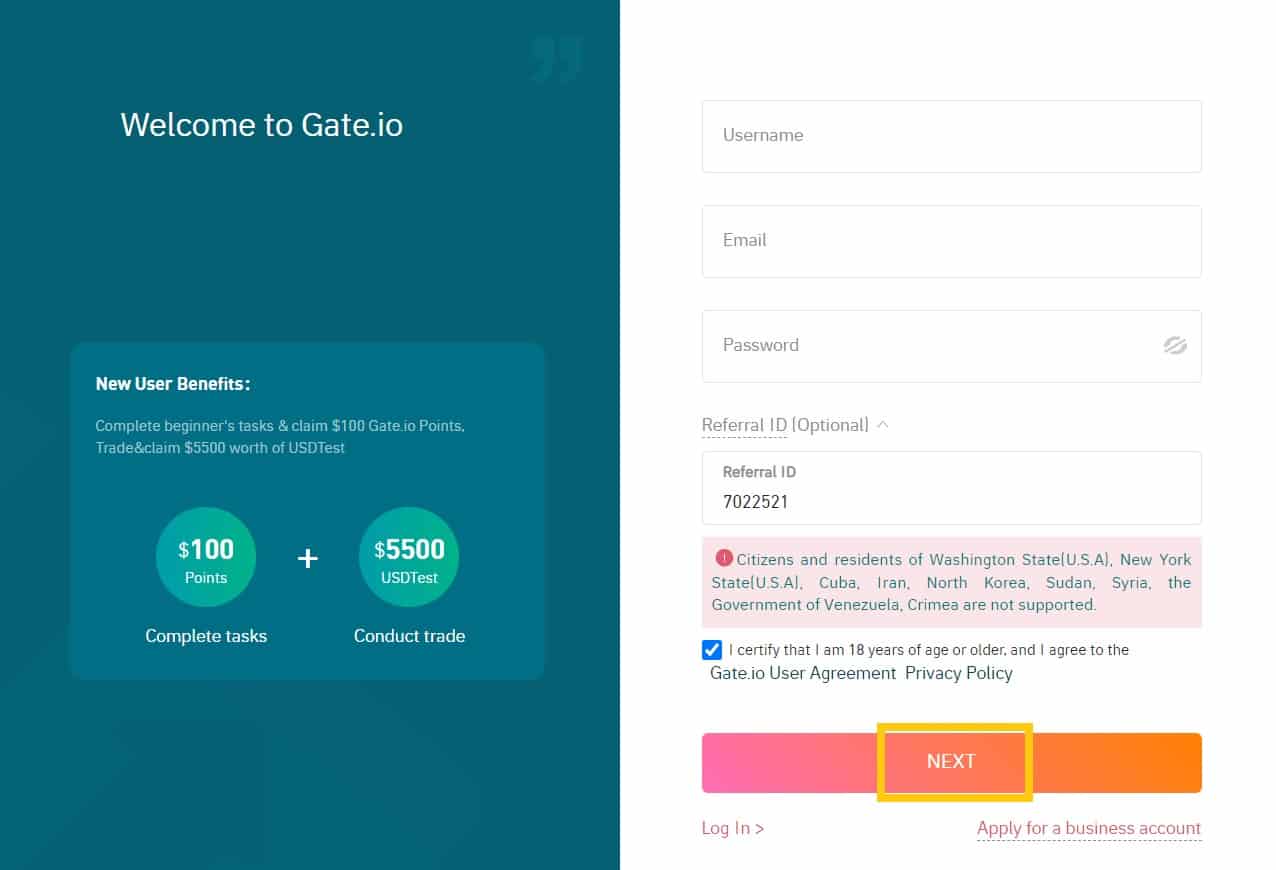
Step 2: Choose your username, your email address and your password. Then check “I certify that I am 18 years of age or older, and I agree to the Gate.io User Agreement Privacy Policy” and click “NEXT”.
Step 3: Set your fund password and click “Create account”.
Note: Your fund password must contain at least 6 characters and can not be the same as your login password.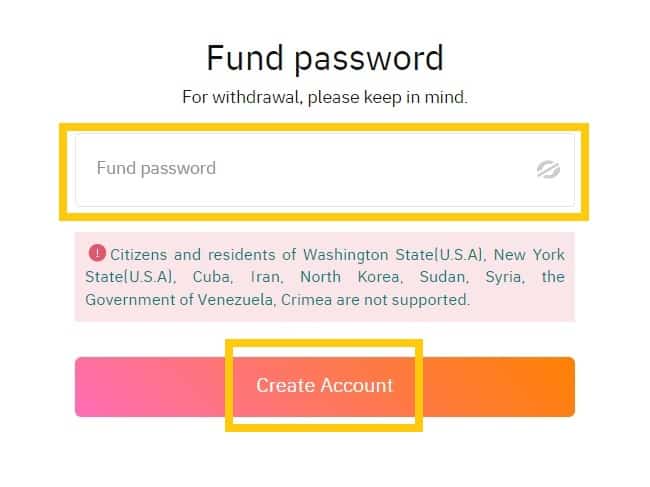
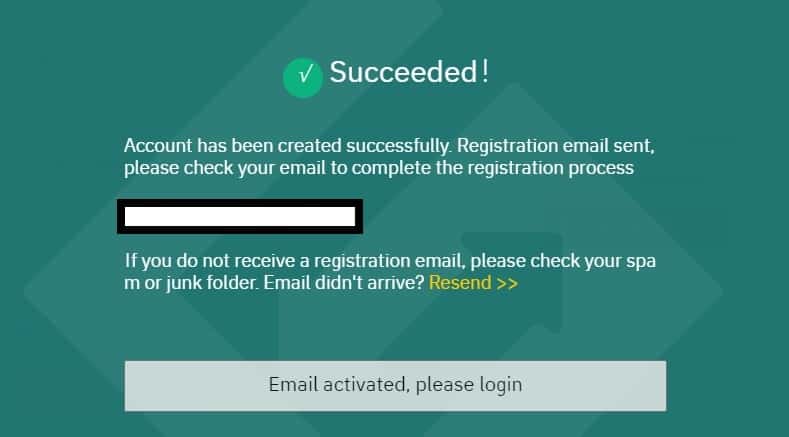
Step 4: An activation email will be sent to your email address. Complete the rest of the registration process by following the instructions in the email to activate your account. Once this is done done, click “Email activated, please log in”.
How to complete KYC (ID Verification) on Gate.io
In order to ensure the safety of your assets, and to reduce fraud, money laundering, blackmail, and other illegal activities, Gate.io makes it mandatory that all users obtain KYC ID Verification. Only after your account has obtained KYC ID verification, can you withdraw funds or use credit cards or debit cards to buy cryptocurrencies.
Step 1: Log in to your Gate.io account.
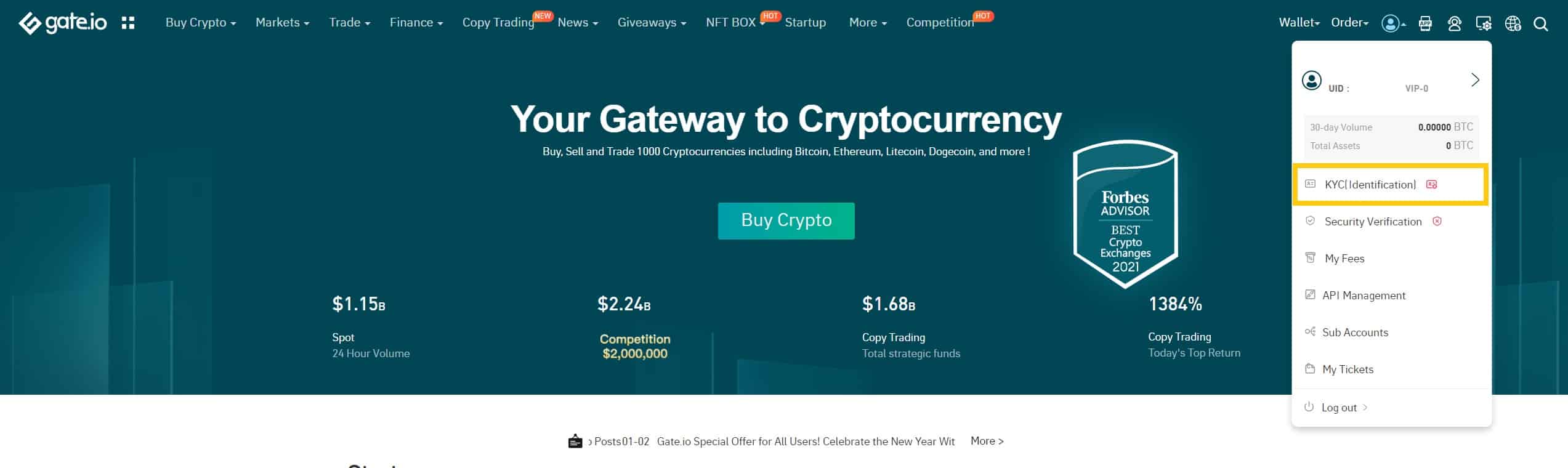
Place your cursor on the top-right profile icon and go to “KYC (ID Verification)”
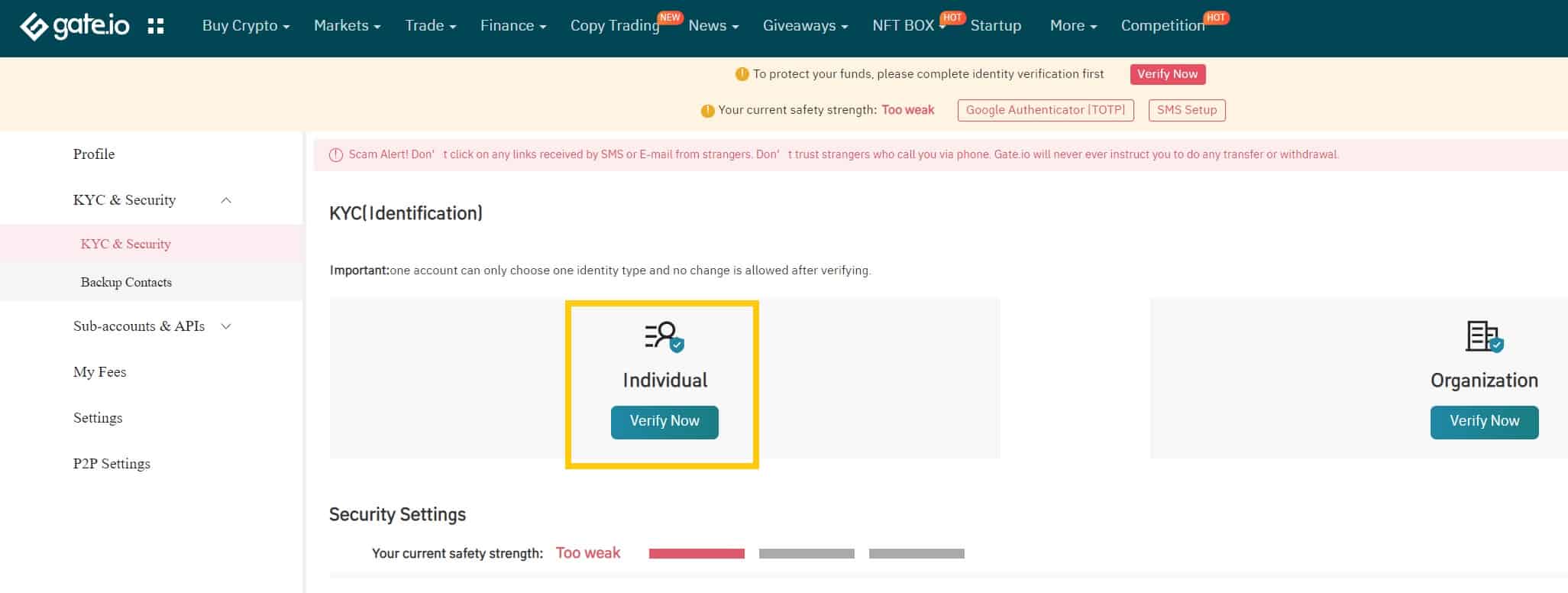
Step 2: Click “Individual (Verify now)”
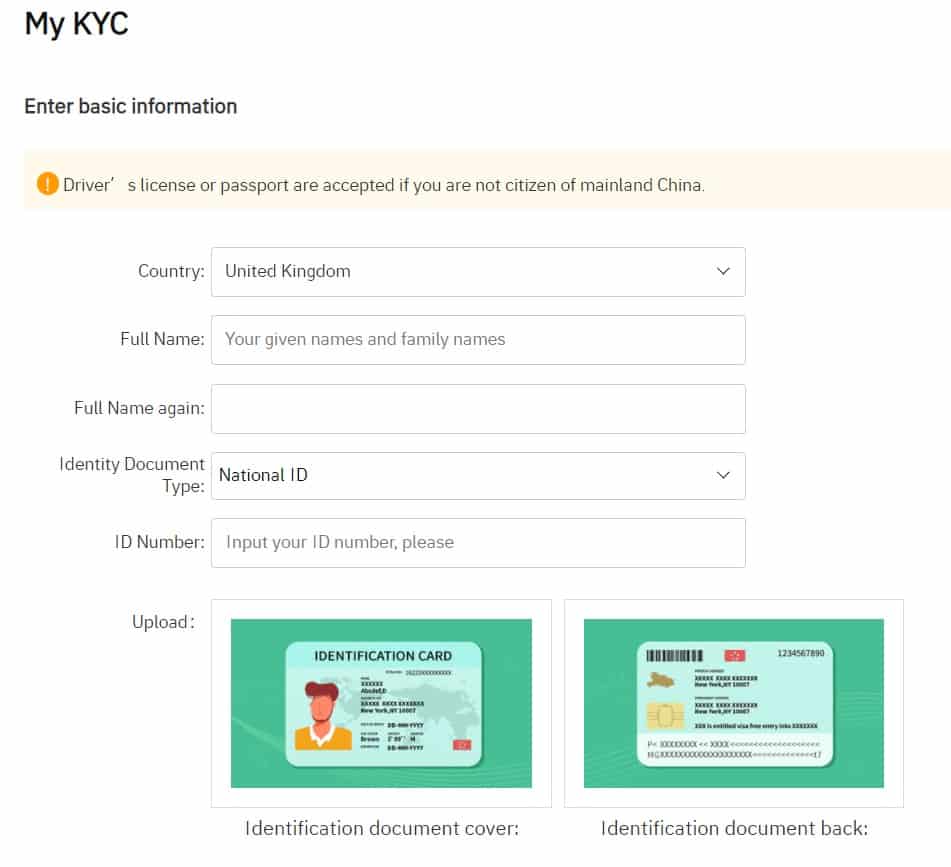
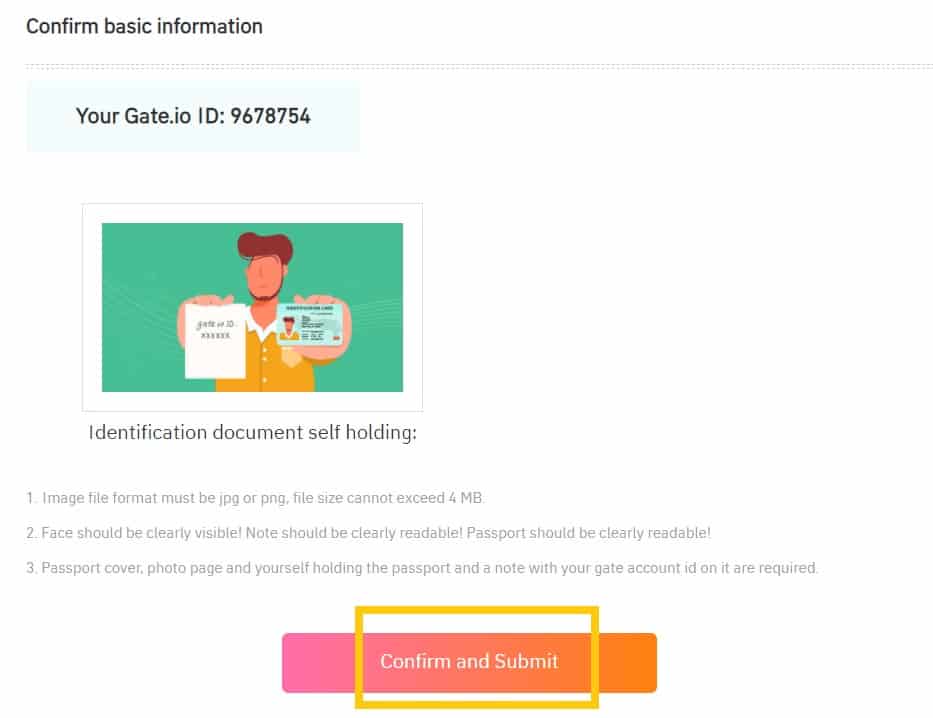
Step 3: Select your country, input your full legal name (twice), fill in your ID information, upload photos of both sides of your ID card, and a photo of you holding your ID together with your User ID (UID) for Gate.io. You will see your User ID by placing the cursor on the top-right profile icon on the main page. Make sure everything is filled in correctly and then click on “Confirm and Submit”.
Step 4: After you have submitted all the requested information, you will see the pending approval.
Approval can take anywhere from a few hours to a few days to complete.
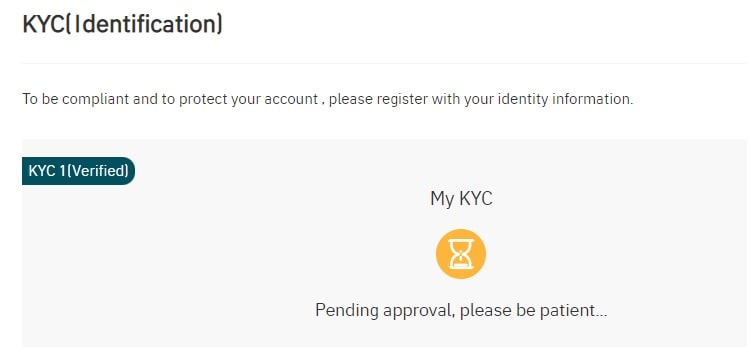
Once the KYC is approved, you’re ready to make your first cryptocurrency purchase.
How to buy cryptocurrency on Gate.io
Step 1: Log in to your Gate.io account.
Then in the Menu Bar at the top of the page, click “Buy Crypto” and select “Credit Card”.
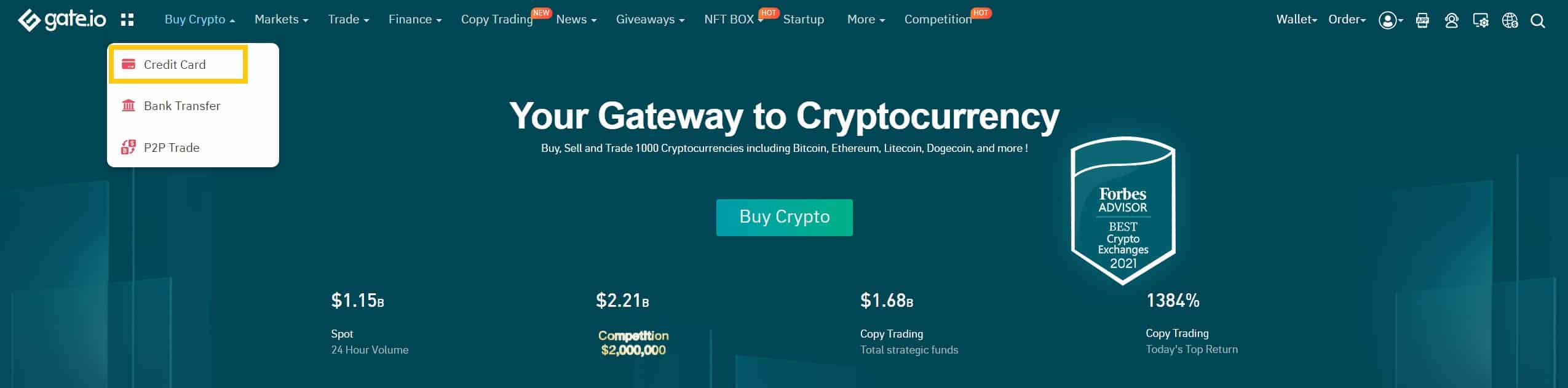
Step 2: Enter the amount you wish to spend in the “Buy with Fiat Currency” tab and select the cryptocurrency that you want to buy under the “Currency Purchased” field. Then select one of the “Service Providers” below and click the “Place Order” button to enter the confirmation page.
Note: You might not be able to purchase every cryptocurrency directly using fiat, if you’re looking to purchase something that isn’t offered in the currency list on this page, then you will want to purchase USDT. We will then show you how to exchange that on the spot-market for the cryptocurrency that you want in the next section of this guide.
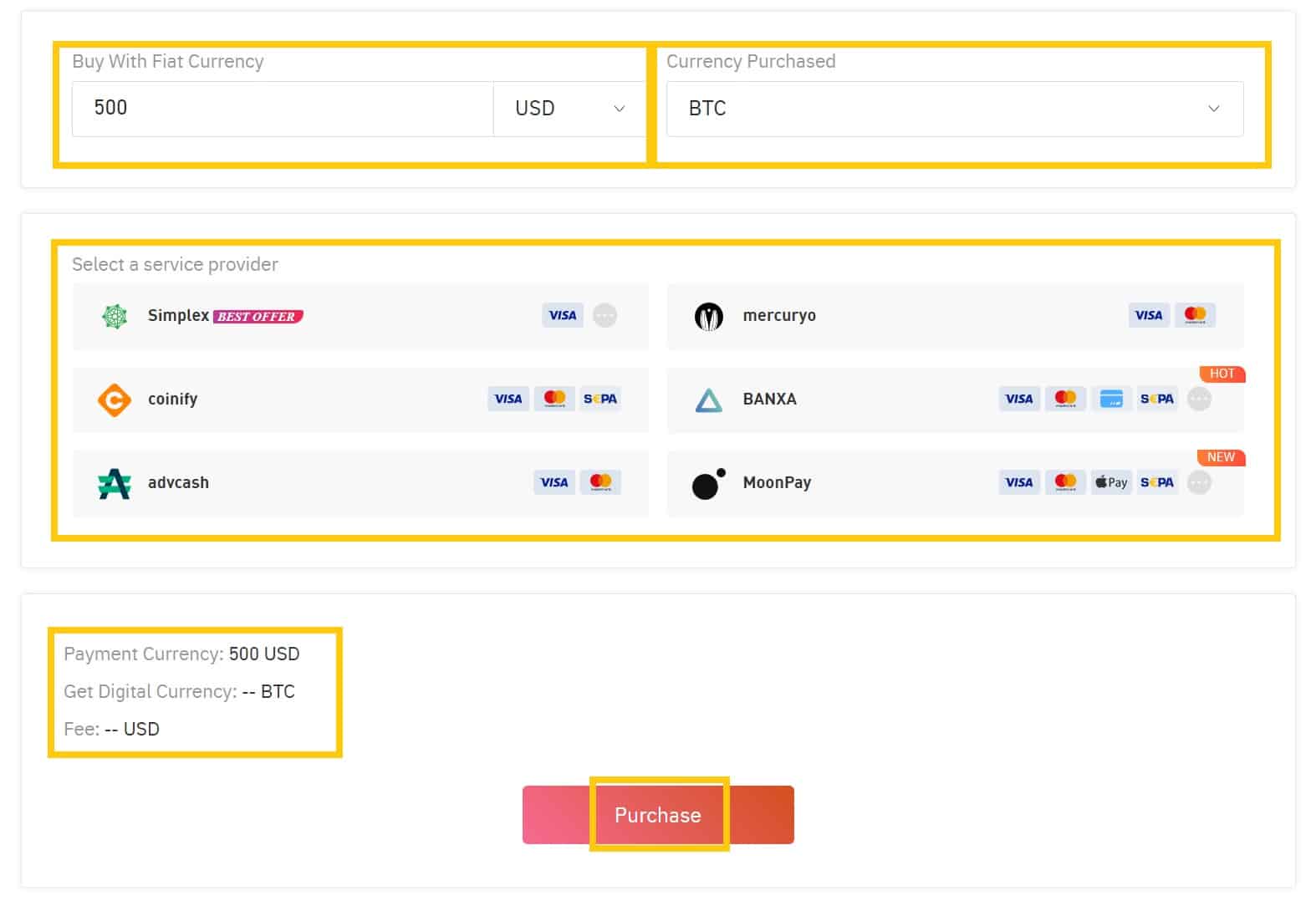
Step 3: On the confirmation page, select “Buy Crypto” or the “Create Order” button to complete the payment.
Note: To ensure a quick and secure way of receiving the order, users might need to conduct an additional Identity Verification (KYC) with a third-party service provider. Once successfully verified, the service provider will immediately transfer the cryptocurrencies to your Gate.io account.
How to Conduct Spot Trading on Gate.io
Step 1: Log in to your Gate.io account.
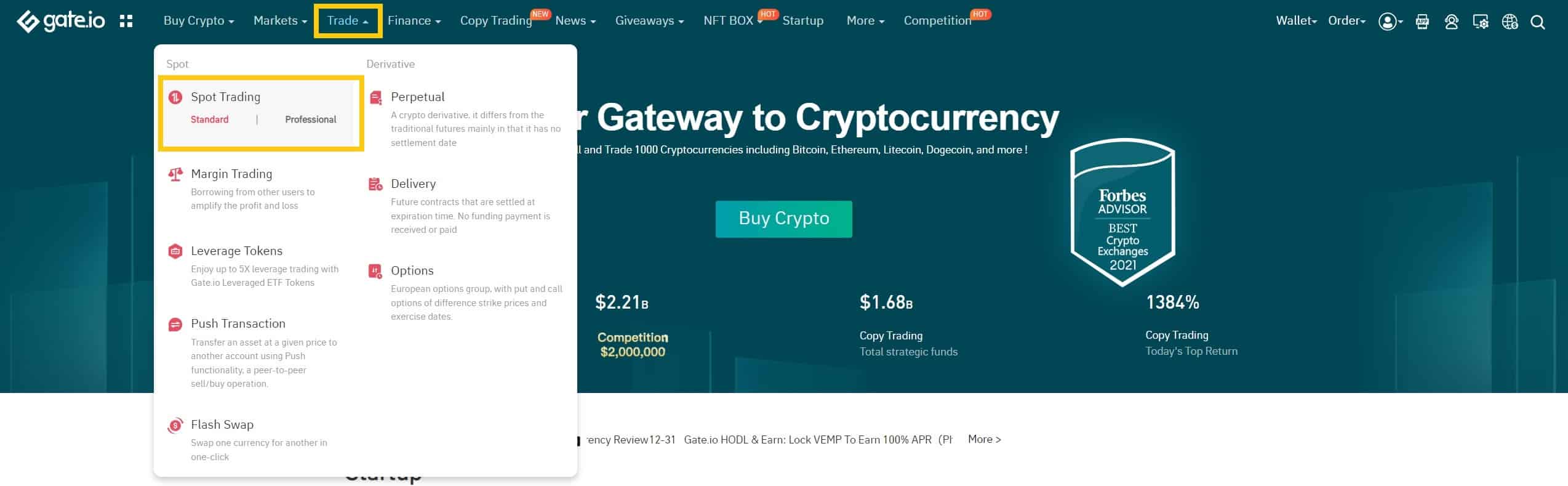
Click on “Spot Trading” under “Trade” on the top navigation bar.
You can either choose “standard” or “professional” version. This tutorial uses the standard version.
Step 2: Search and enter the cryptocurrency you want to trade.
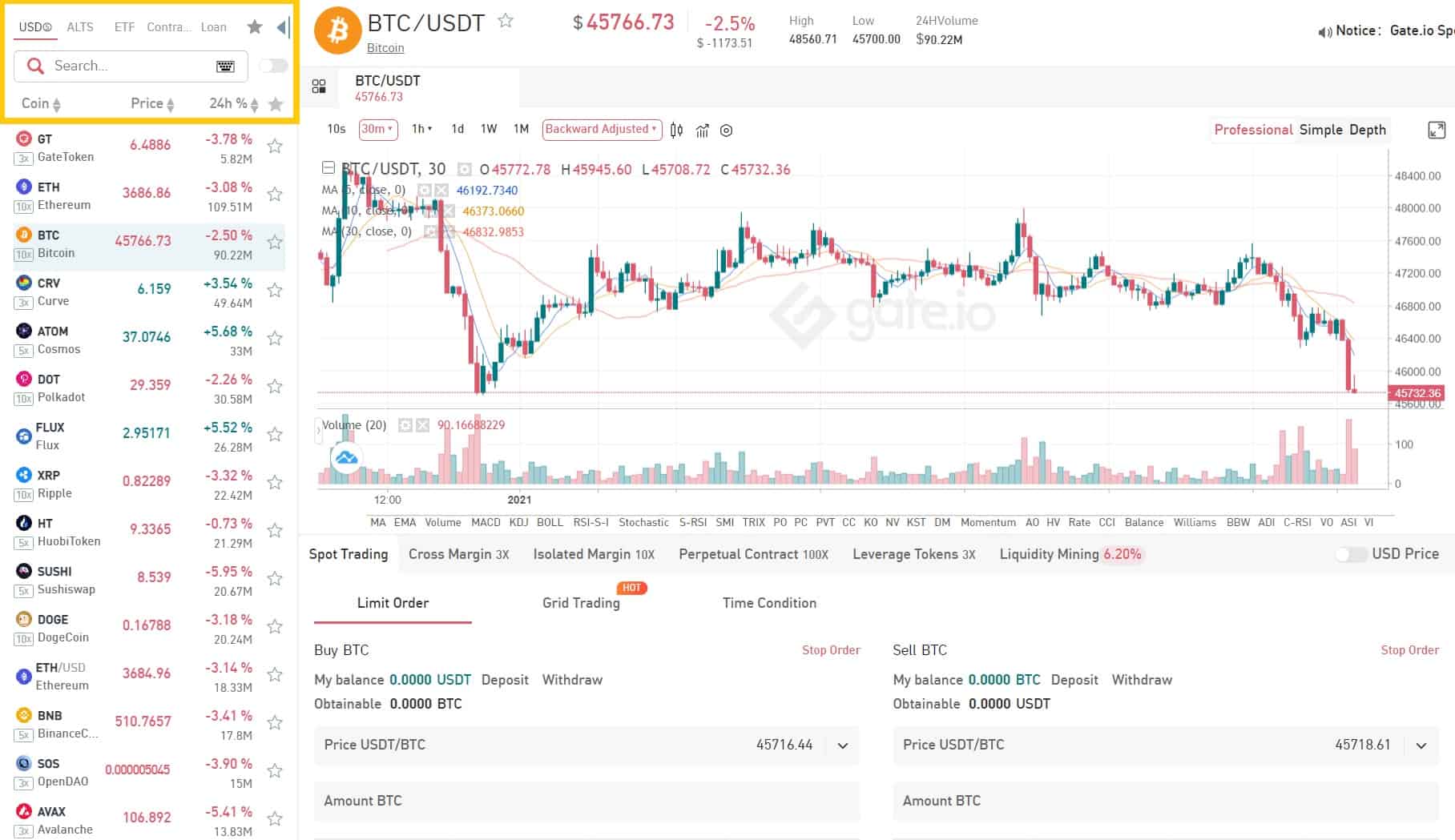
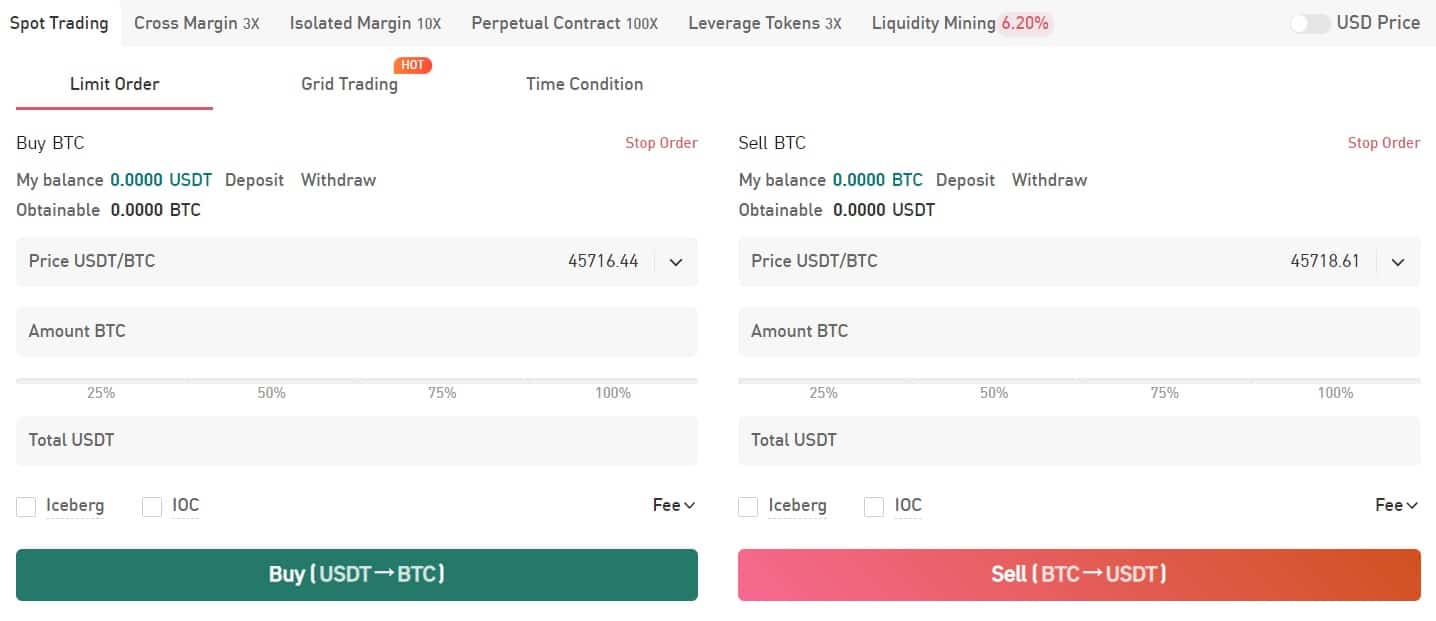
Step 3: Set buying/selling prices and buying/selling amount (or exchange total). Then click on “Buy”/”Sell”.
(Note: The percentages under the “Amount” box refer to percentages of the total account balance.)
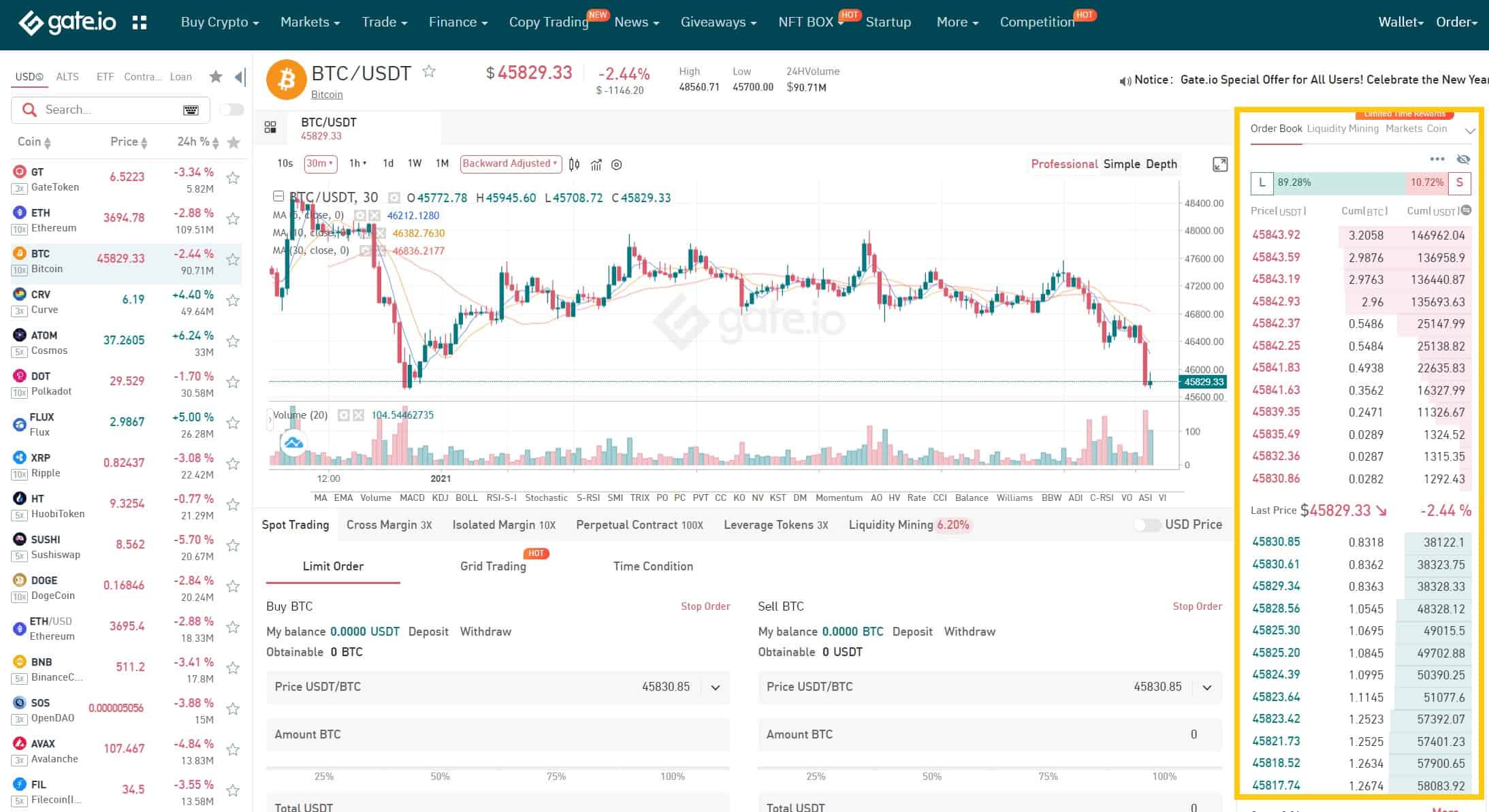
Step 4: If you don’t want to set a manual price, you can click on the last prices on the order book to set the buying/selling price automatically.
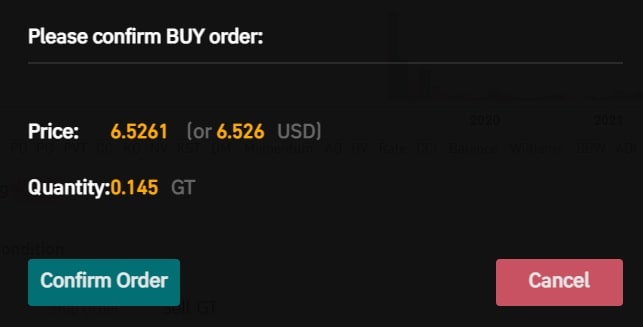
Step 5: Confirm the price and amount. Then click on “Place Order” to place the order, followed by “Confirm Order” to confirm it.
For more in-depth instructions, our ‘Absolute Beginner’s Guide To Cryptocurrency Investing‘ will take you through the process step-by step. In addition to providing instructions for sending and receiving your cryptocurrency.
And if you’re completely new to crypto our beginner, intermediate and advanced level articles will get you up to speed with everything you need to know about the cryptocurrency space starting out.
Simplecryptoguide.com
What Is IOST (IOST)?
IOST, an acronym for “Internet-of-Services Token”, is a next-generation blockchain. The platform is introducing cutting-edge technologies to facilitate sub-second transaction settlements and scalability. In order to achieve this, the project operates using the novel proof-of-believability (PoB) consensus algorithm. Further, the native IOST token (IOST) supports the operations of the PoB consensus model. IOST is a project with support from leading global investors and employs team members with experience at notorious international companies. The team collectively strives towards providing the foundational architecture for a decentralized economy, meeting all necessary scalability and security requirements.
IOST launched a public testnet on June 30, 2018 and migrated to its mainnet in February 2019, and it offers a secure smart contract development environment that is faster and cheaper than the leading smart contract-enabled blockchain, Ethereum. The blockchain originally began offering users 8,000 transactions per second (TPS). However, since the introduction of the “efficient distributed sharding” and “micro state blocks” scaling solutions in 2020, the project now claims to be able to process 100,000 TPS. In turn, the average transaction confirmation takes less than half a second.
From a developer’s perspective, the IOST blockchain can host decentralized applications (dApps) capable of handling mass real-world utility, which would remove any anxieties surrounding speed. Further, the network doesn’t compromise on security. Plus, by staking the native IOST token, developers can gain access to tools and resources to aid in dApp development. This helps keep development costs to a minimum. Moreover, the platform allows developers to design and deploy their creations using one of the most familiar programming languages, JavaScript. This lowers entry barriers for blockchain development for traditional Web2 programmers.
What is the IOST Token?
Since IOST is a blockchain, its native currency powering the protocol is technically a coin. However, before the IOST mainnet went live, the project launched its currency via the Ethereum blockchain. These are native Ethereum ERC-20 IOST tokens. Then, as the project’s mainnet went live, the IOST-native coins were introduced into circulation. Holders were encouraged to swap their IOST tokens for IOST coins at a 1:1 ratio through Binance.
The IOST coin has the same function and utility as the IOST token. Plus, IOST is using its own IRC-20 token standard, similar to Ethereum’s ERC-20. In turn, all cryptocurrencies operating with the native standard are fully compatible and interoperable with other applications within the IOST crypto ecosystem. Also, IOST coins are compatible with some external decentralized applications (dApps) as well.
The core function of the IOST coin or token is to provide security and privacy protection to the network. In turn, the IOST coin plays a significant role in supporting the novel consensus algorithm, PoB. Additionally, users and developers will either need IOST coin or IOST token holdings to pay for transaction fees within the IOST crypto network. IOST coin is the primary currency for users as a medium of exchange for services on the platform.
What is Proof-of-Believability (PoB)?
Proof-of-believability, or PoB, is IOST’s novel consensus algorithm. Further, PoB is an extension of the traditional “delegated proof-of-stake” (DPoS) model, which lowers the barrier to entry by introducing a point system. The PoB algorithm ensures the security, scalability, and decentralization of the network. Moreover, combining the native IOST coin and token, PoB guarantees decentralization of block production, validation of transactions, and protocol governance.
Proof-of-believability (PoB) uses a decentralized block producer election and committee formation mechanism. This presents a fair opportunity for most qualified nodes, or nodes with more votes, to receive a higher probability of producing a block. In addition to node votes, another factor for consideration of block production is through a point system called “Servi”.
The committee holds 17 seats for nodes which reshuffles every ten minutes. The top nodes with the highest Servi score will receive seats taking turns to complete block production. Each time a node enters the member committee, it “consumes” its Servi points. This means that unselected nodes have an increased chance of gaining a seat at the committee formation with each round. As such, hundreds of different nodes can validate and produce blocks within a single day.
Who Are the Founders of IOST?
The project was first launched in January 2018 by Jimmy Zhong, Terrence Wang, Justin Li, Ray Xiao, Sa Wang and Kevin Tan.
Zhong has founded other tech startups in the U.S. and China. During his university days, he sold his first company for $40 million — a marketplace where students could exchange class notes. After that, he returned to Beijing and co-founded IOST, among other projects.
Wang’s previous experience includes serving as an Uber software engineer. He holds a degree in computer science from the University of Minnesota and a masters in computer science from Princeton University.
Li previously worked as an investment banking associate at Goldman Sachs and a data scientist at Mobike. He graduated with a degree in applied mathematics and computer science. Meanwhile, Tan was a co-founder at Ethercap, while he received a degree in computer science from Tsinghua University.
Xiao co-founded Dora — alongside Jimmy and Sa — an AI company focused on intelligent kiosks. He studied computer science and quantitative economics at university.
Official website: https://iost.io/
Best cryptocurrency wallet for IOST (IOST)
There are plenty of different crypto wallets available. The best one for you depends on your general trading habits and which provides the most security in your situation. There are two main types of wallets: hot storage wallets (digital) and cold storage or hardware wallets (physical). Both have their pros and cons, and there is not necessarily a right or wrong answer when it comes to figuring out which crypto wallet is best for you.
HOW DO I DECIDE WHICH cryptocurrency WALLET TO USE for IOST (IOST)?
Deciding which type of wallet to use depends on a variety of factors, including:
- How often you trade. In general, hot wallets are better for more active cryptocurrency traders. Quick login ability means you are only a few clicks and taps away from buying and selling crypto. Cold wallets are better suited for those looking to make less frequent trades.
- What you want to trade. As mentioned earlier, not all wallets support all types of cryptocurrencies. However, some of the best crypto wallets have the power to trade hundreds of different currencies, providing more of a one-size-fits-all experience.
- Your peace of mind. For those worried about hacking, having a physical cold wallet stored in a safe deposit box at the bank or somewhere at home, provides the safest, most secure option. Others might be confident in their ability to keep their hot wallets secure.
- How much it costs. It is important to investigate the costs associated with each wallet. Many hot wallets will be free to set up. Meanwhile, cold wallets, like any piece of hardware, will cost money to purchase.
- What it can do. While the basics of each cryptocurrency wallet are the same, additional features can help set them apart. This is especially true of hot wallets, many of which come with advanced reporting features, insights into the crypto market, the ability to convert cryptocurrencies and more. Security features can also be a good differentiator.
For a more in-depth overview of cryptocurrency wallets visit our “Cryptocurrency Wallets Explained” guide.
If you’re going to be dealing in larger volumes of crypto, investing in cold storage might prove advantageous.
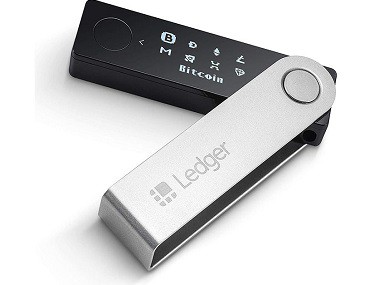
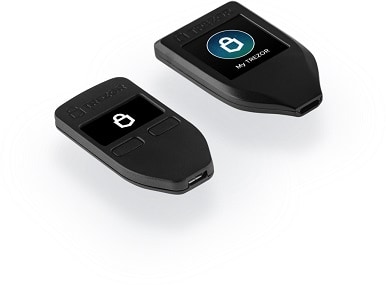
Most widespead examples of this being the Ledger Nano and the Trezor.
Ledger manufactures cold storage wallets designed for users who want increased security. Their wallets are a physical device that connects to your computer. Only when the device is connected can you send your cryptocurrency from it. Ledger offers a variety of products, such as the Ledger Nano S and the Ledger Nano X (a bluetooth connected hardware wallet).
Trezor is a pioneering hardware wallet company. The combination of world-class security with an intuitive interface and compatibility with other desktop wallets, makes it ideal for beginners and experts alike. The company has gained a lot of the Bitcoin community’s respect over the years. Trezor offers two main models – The Trezor One and Trezor Model T (which has a built in touch screen).
Market Overview
Coinmarketcap.com
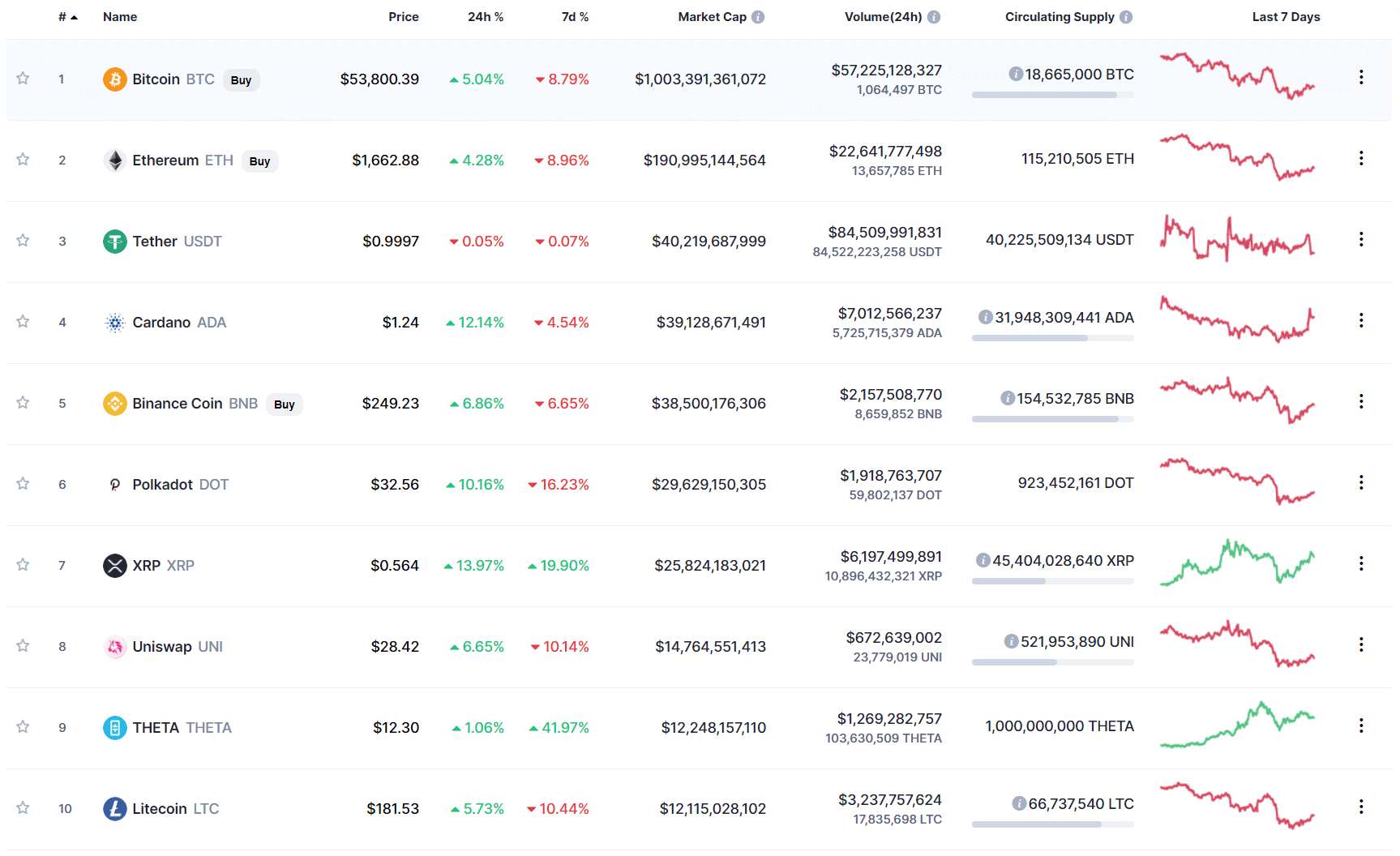
Coinmarketcap will be your cryptocurrency go-to for just about everything. Here you can see the following:
Market Capitalization And Daily Trading Volume
Current Market Price Of Every Cryptocurrency Relative To USD (And Some Local Currencies)
Circulating And Total Supply
Historical Charts With Prices Relative To USD, Bitcoin (BTC), And Ethereum (ETH).