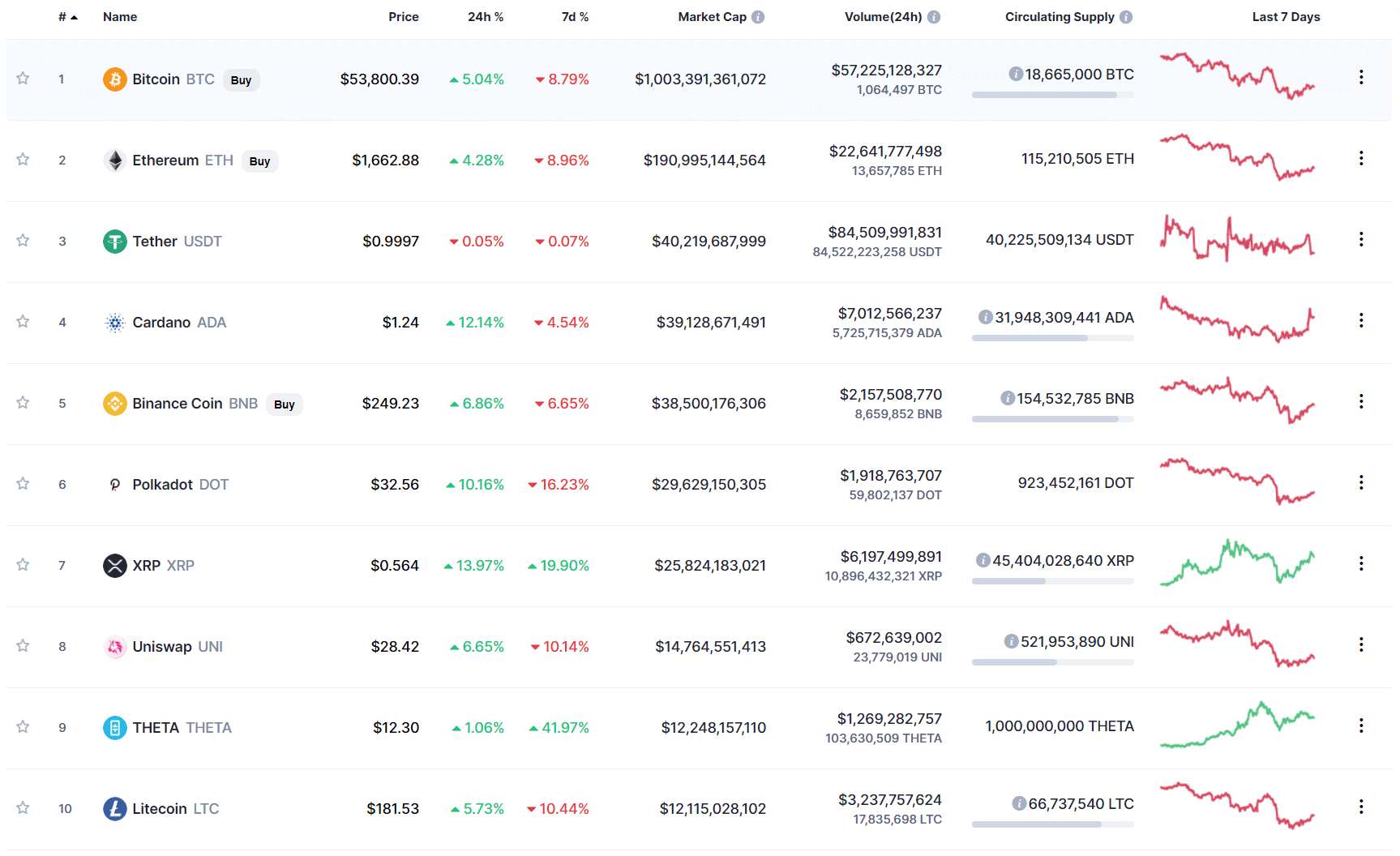
How To Buy League Of Kingdoms Arena (LOKA)?

A common question you often see on social media from crypto beginners is “Where can I buy League Of Kingdoms Arena?” Well, you’ll be happy to hear it is actually quite a simple and straightforward process.
Step 1: Create an account on an exchange that supports League Of Kingdoms Arena (LOKA)
First, you will need to open an account on a cryptocurrency exchange that supports League Of Kingdoms Arena (LOKA).
We recommend the following based on functionality, reputation, security, support and fees:
1
Binance

Fees (Maker/Taker) 0.075%*-0.1%*
Cryptocurrencies
Available for Trade 500+
Sign-up bonus
10% reduced trading fees*
Available in
Europe, Asia, Oceania, Africa
2
Gate.io

Fees (Maker/Taker) 0.2%*-0.2%*
Cryptocurrencies
Available for Trade 1000+
Sign-up bonus
Up to $100 in USDT vouchers*
Available in
North America, South America, Europe, Asia, Oceania, Africa
3
Kucoin

Fees (Maker/Taker) 0.1%*-3%*
Cryptocurrencies
Available for Trade 250+
Sign-up bonus
Up to $500 in USDT vouchers*
Available in
North America, South America, Europe, Asia, Oceania, Africa
In order to sign up, you will need to enter some basic information, such as your email address, password, full name and, in some cases, you might also be asked for a phone number or address.
Note: On specific exchanges, you might need to complete a Know Your Customer (KYC) procedure in order to be able to purchase cryptocurrency. This is most commonly the case with licensed and regulated exchanges.
Step 2: Deposit funds into your account
Many cryptocurrency exchanges will allow you to purchase League Of Kingdoms Arena (LOKA) with fiat currencies, such as EUR, USD, AUD and others. Furthermore, they will also provide you with multiple deposit methods through which you can fund your fiat account, such as credit and debit cards, ewallets or direct bank transfers.
Note: Some payment methods will have higher fees than others, such as credit card payments. Before funding your fiat account on your chosen exchange, make sure to do your due diligence to find out the fees involved with each payment method to avoid unnecessary costs.
Step 3: Buy League Of Kingdoms Arena (LOKA)
This process is similar across almost every cryptocurrency exchange. All you have to do is find a navigation bar or a search bar, and search for League Of Kingdoms Arena (LOKA) or League Of Kingdoms Arena (LOKA) trading pairs. Look for the section that will allow you to buy League Of Kingdoms Arena (LOKA), and enter the amount of the cryptocurrency that you want to spend for League Of Kingdoms Arena (LOKA) or the amount of fiat currency that you want to spend towards buying League Of Kingdoms Arena (LOKA). The exchange will then calculate the equivalent amount of League Of Kingdoms Arena (LOKA) based on the current market rate.
Note: Make sure to always double-check your transaction details, such as the amount of League Of Kingdoms Arena (LOKA) you will be buying as well as the total cost of the purchase before you end up confirming the transaction. Furthermore, many cryptocurrency exchanges will offer you their own proprietary software wallet where you will be storing your cryptocurrencies; however, you can create your own individual software wallet, or purchase a hardware wallet for the highest level of protection.
How to create a Binance account

Step 1: Go to the Binance website.
Step 2: On the registration page, enter your email address, and create a password for your account.
Then, read and agree to the Terms of Service and click “Create Account”.
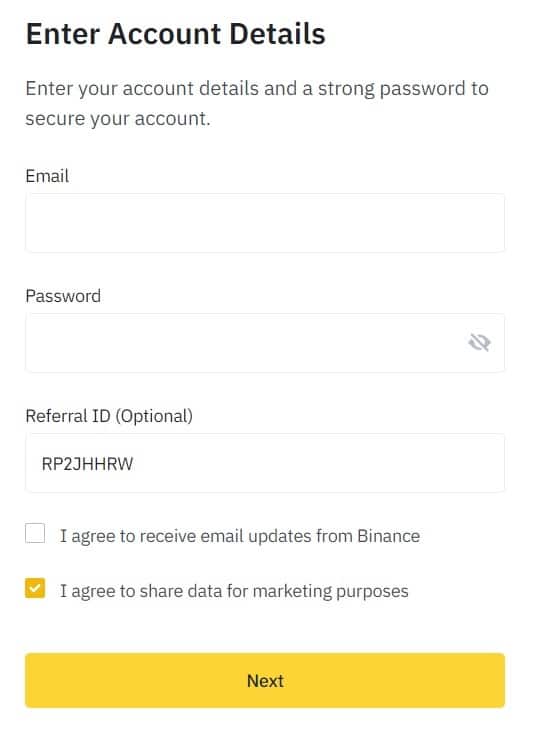
Note: Your password must be a combination of numbers and letters.
It should contain at least 8 characters, one UPPER CASE letter, and one number.
Step 3: Complete the Security Verification.
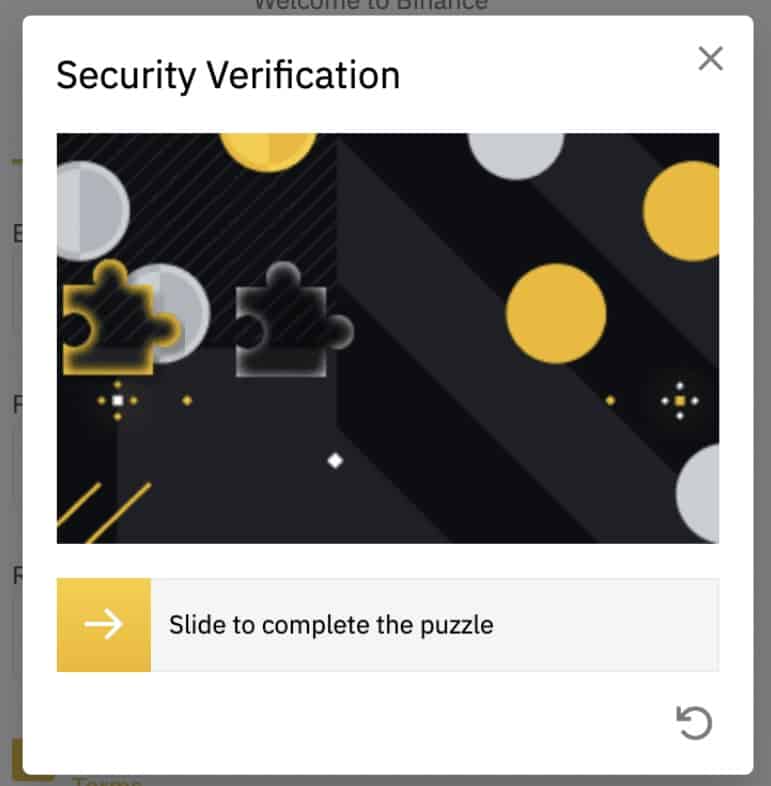
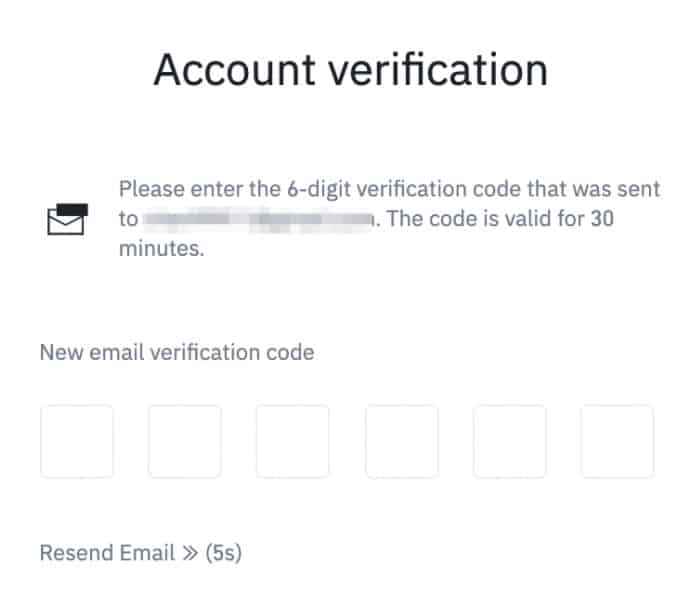
Step 4: The system will send a verification code to your email. The verification code is valid for 30 minutes. If you can’t find the email in your inbox, check your other mail folders as well, or click “Resend Email” to resend.
How to complete KYC (ID Verification) on Binance
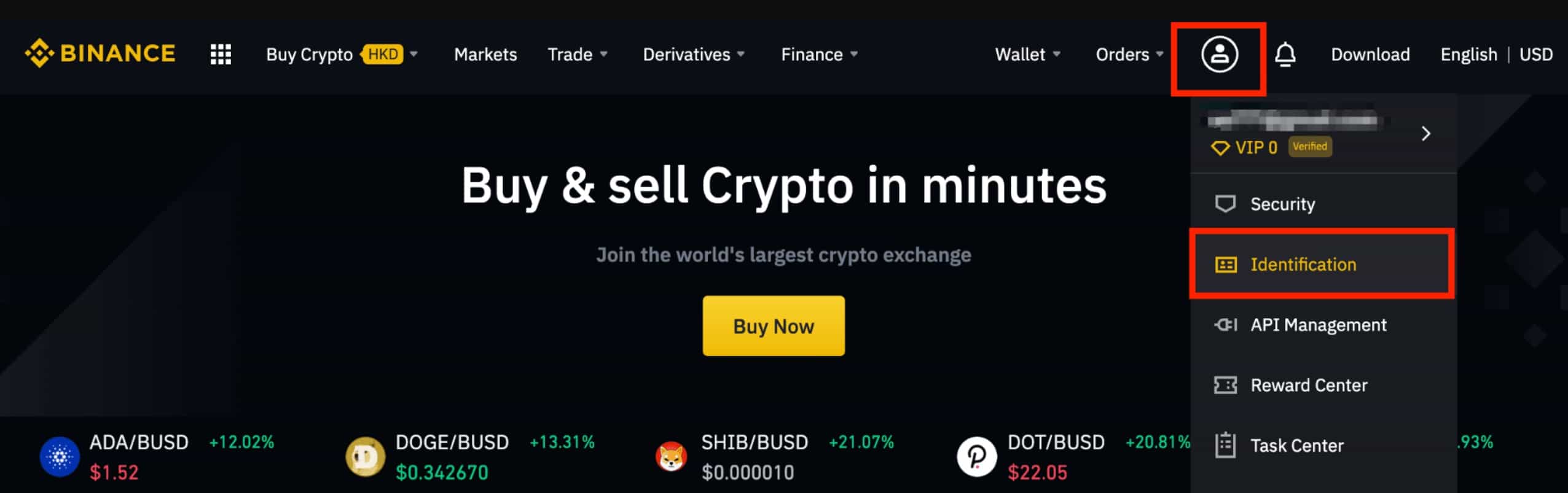
Step 1: Log in to your Binance account and click “User Center” and then “Identification”.
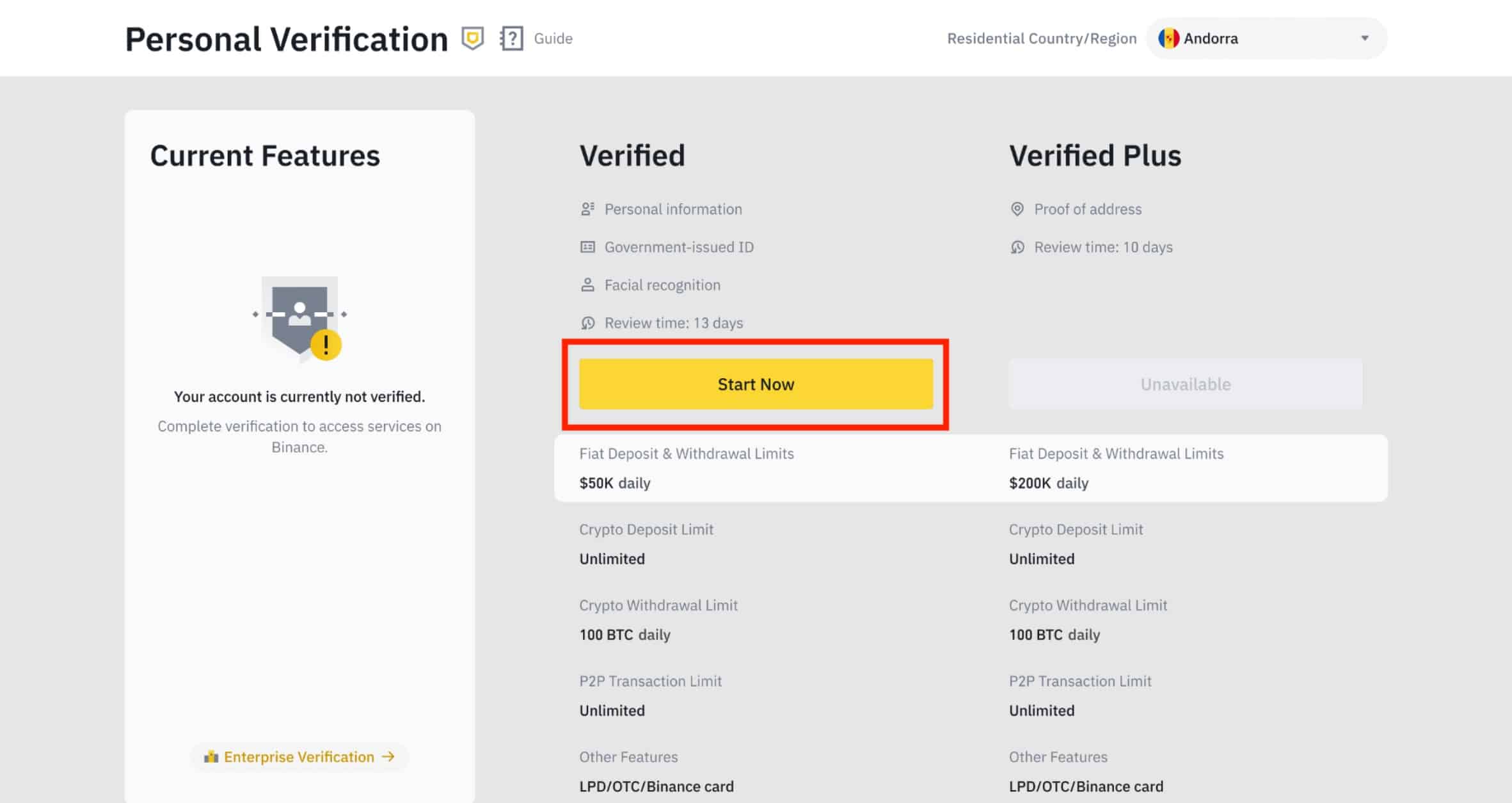
Step 2: click “Start Now” to verify your account.
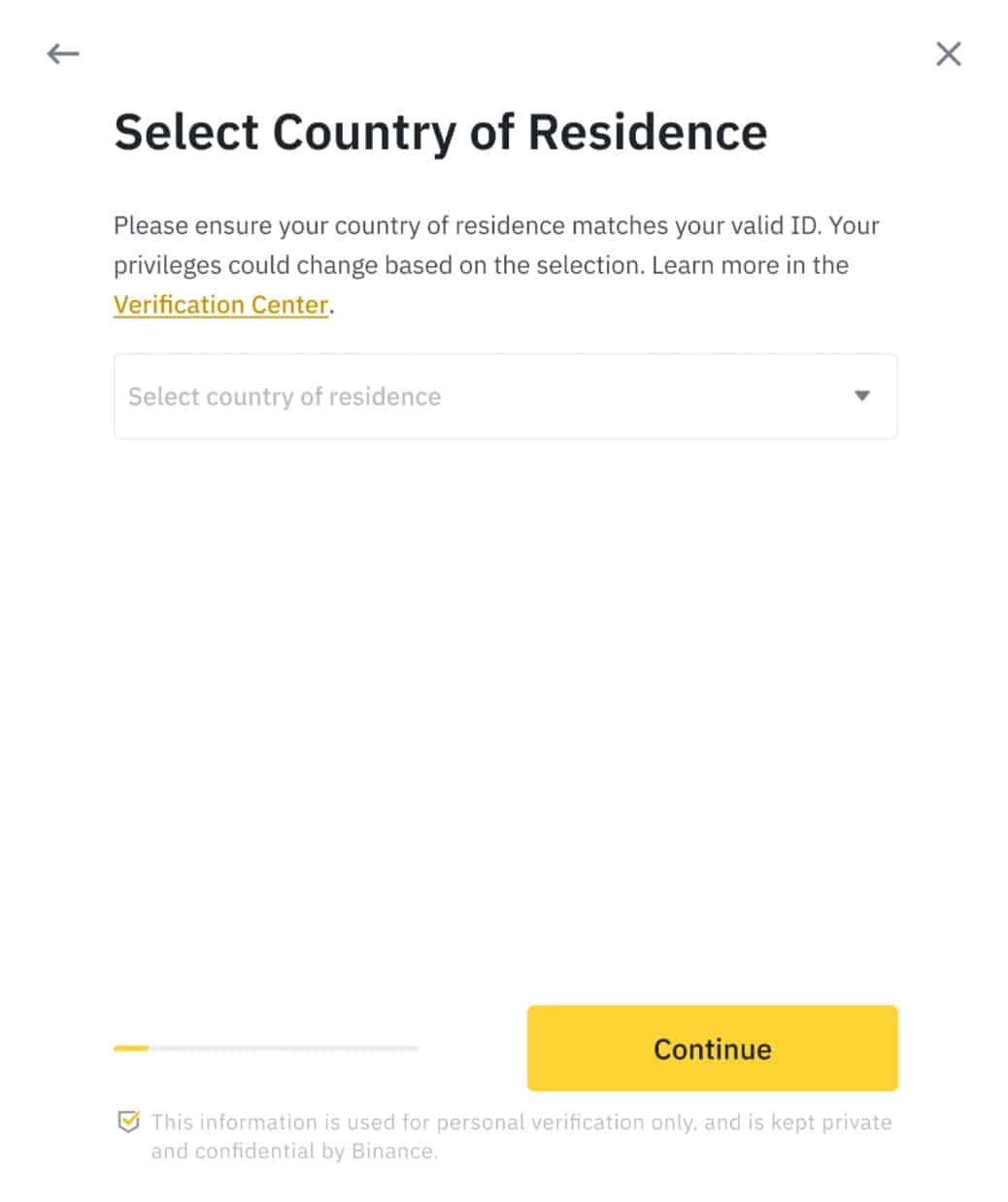
Step 3: Select your country of residence.
Ensure that your country of residence is consistent with your ID documents.
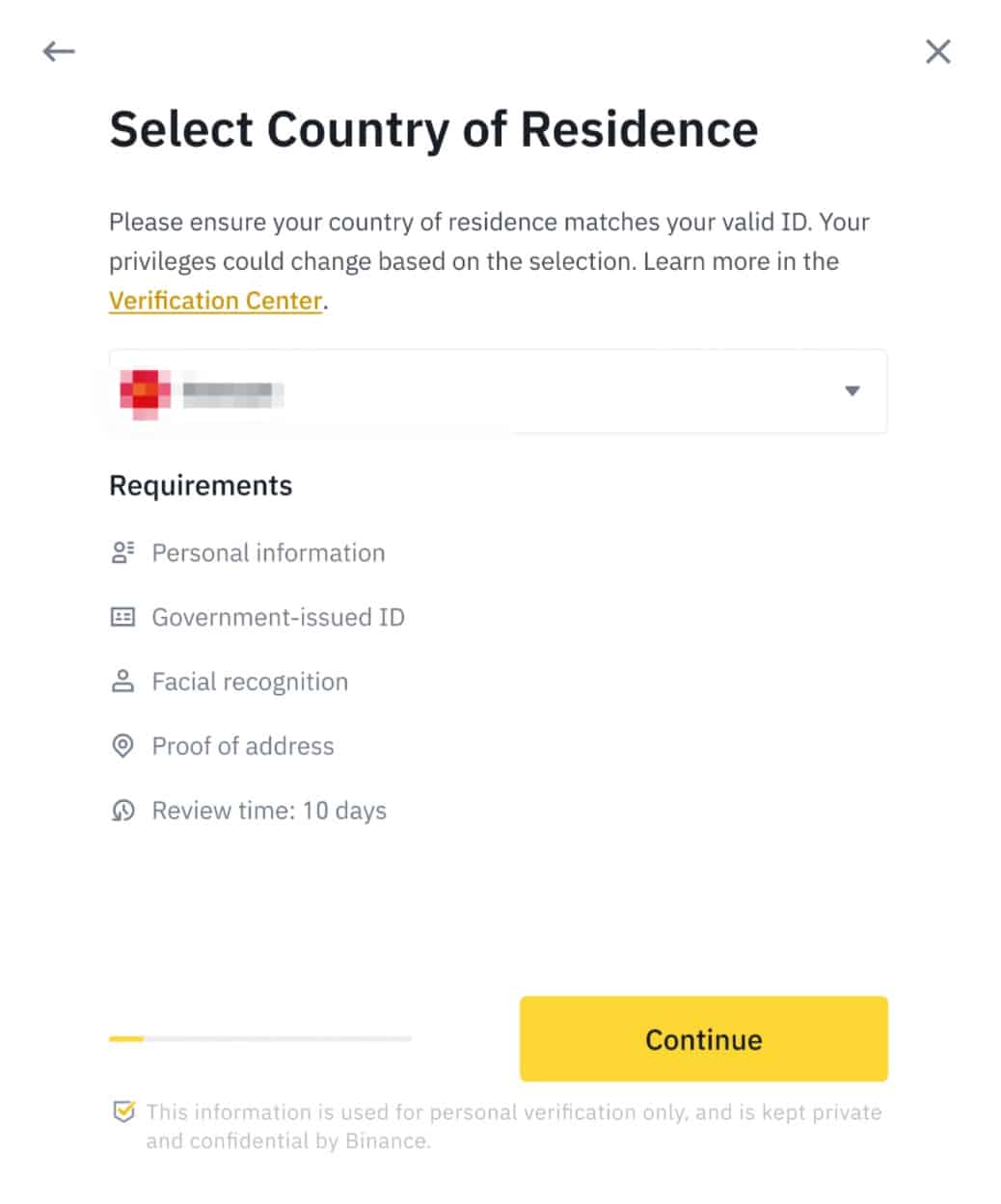
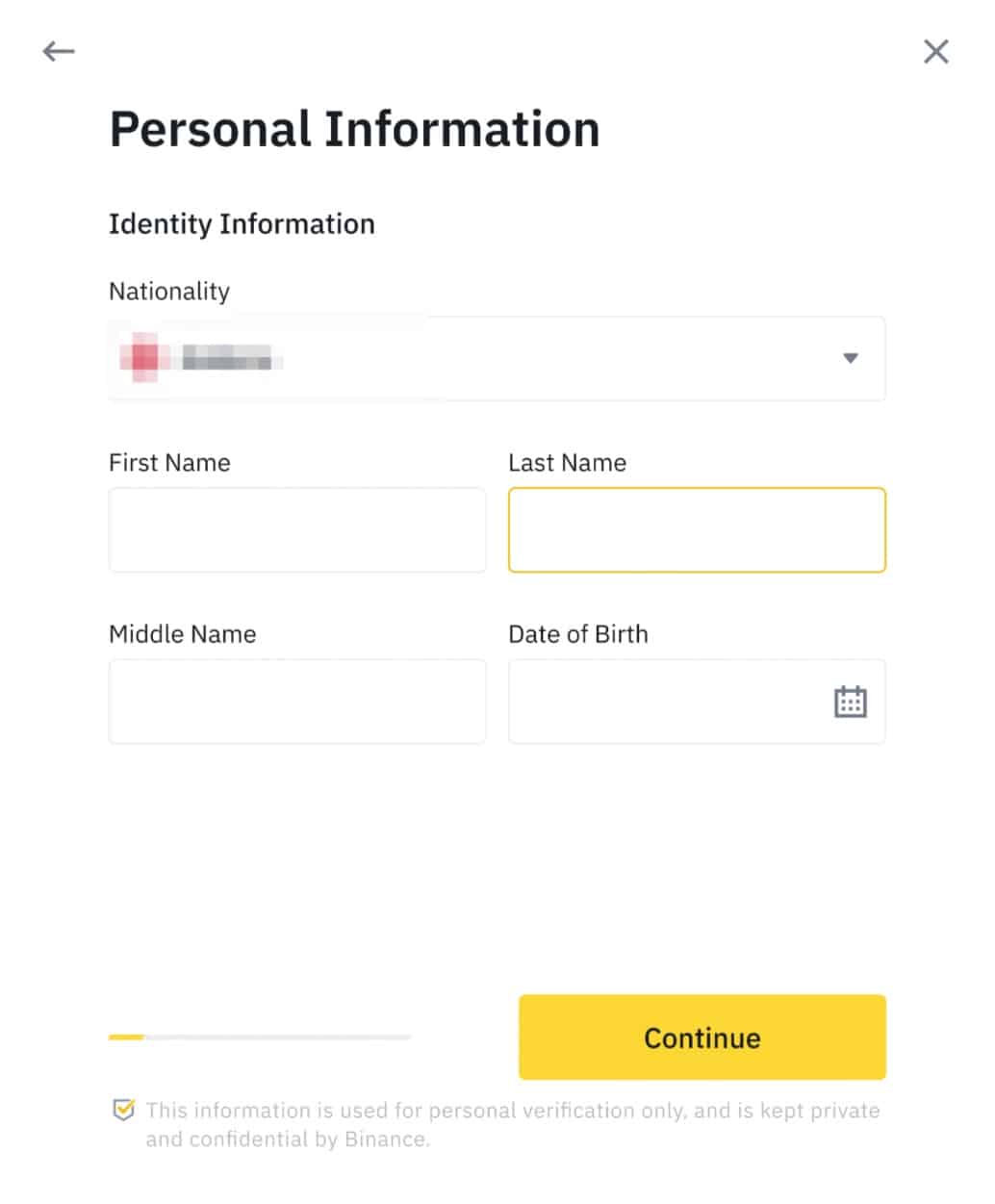
Step 5: Enter your personal information and click “Continue.”
You won’t be able to change it once confirmed.
Refer to the respective options offered for your country.
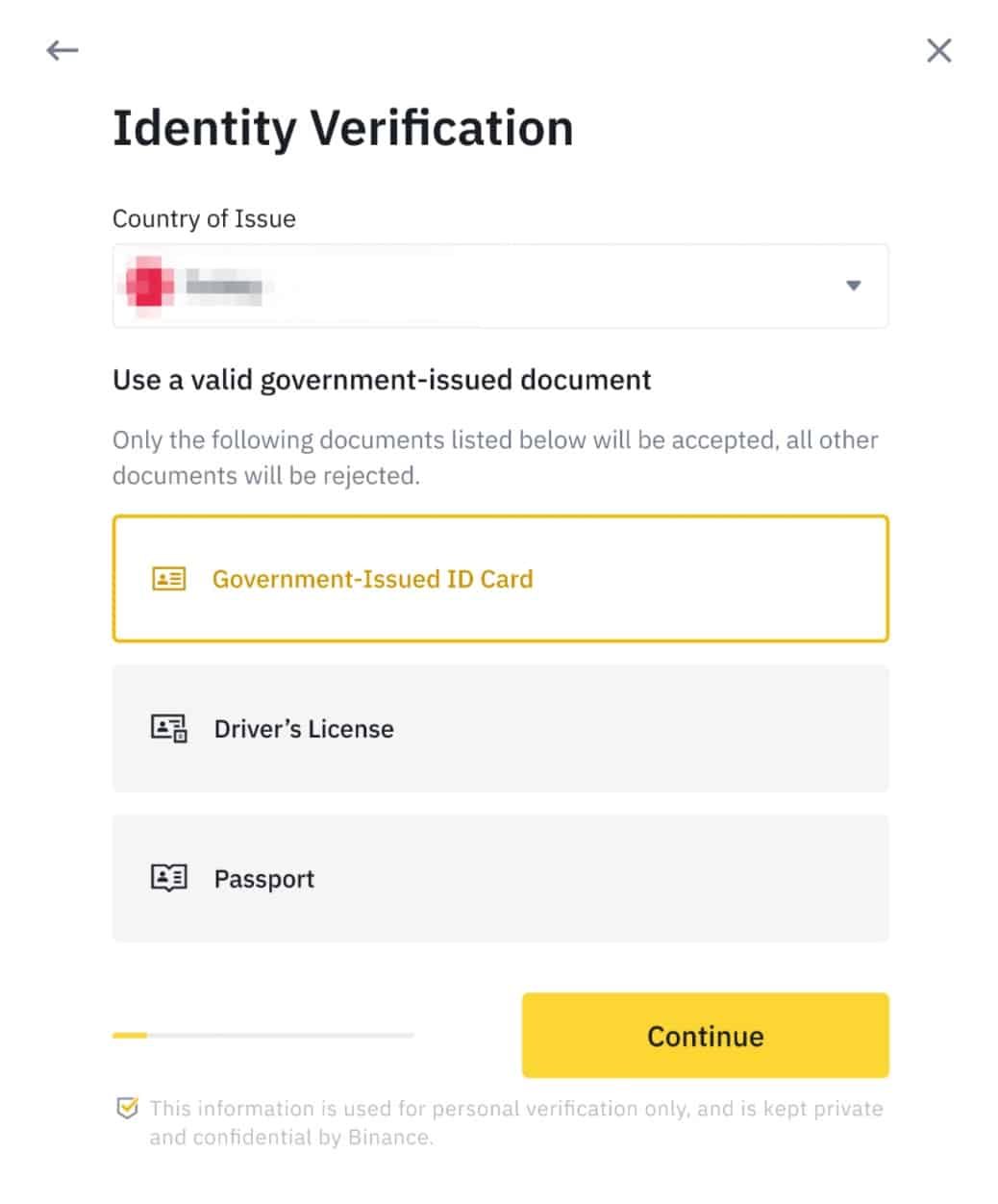
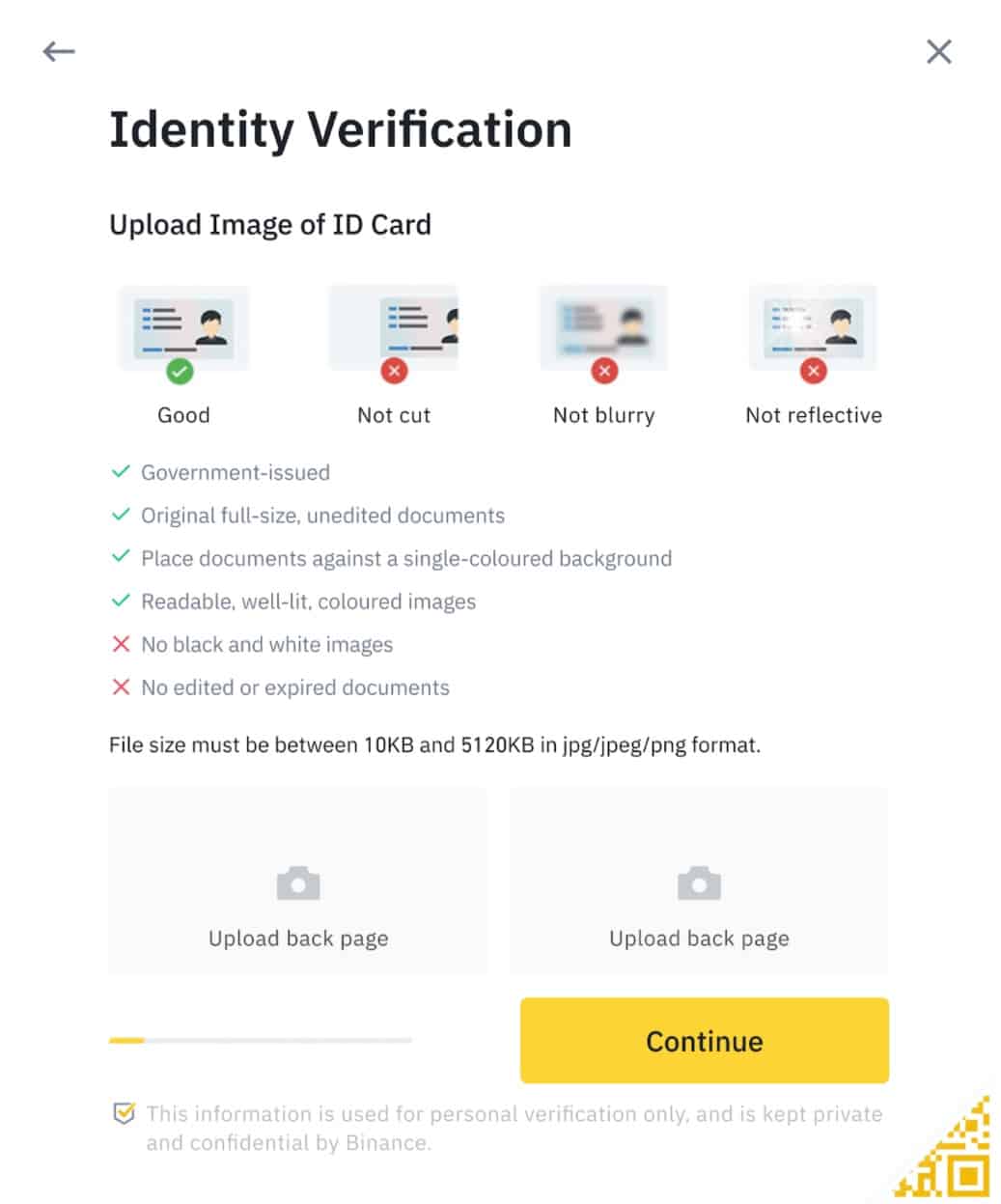
Step 7: Follow the instructions to upload photos of your document. Your photos should clearly show the full ID document.
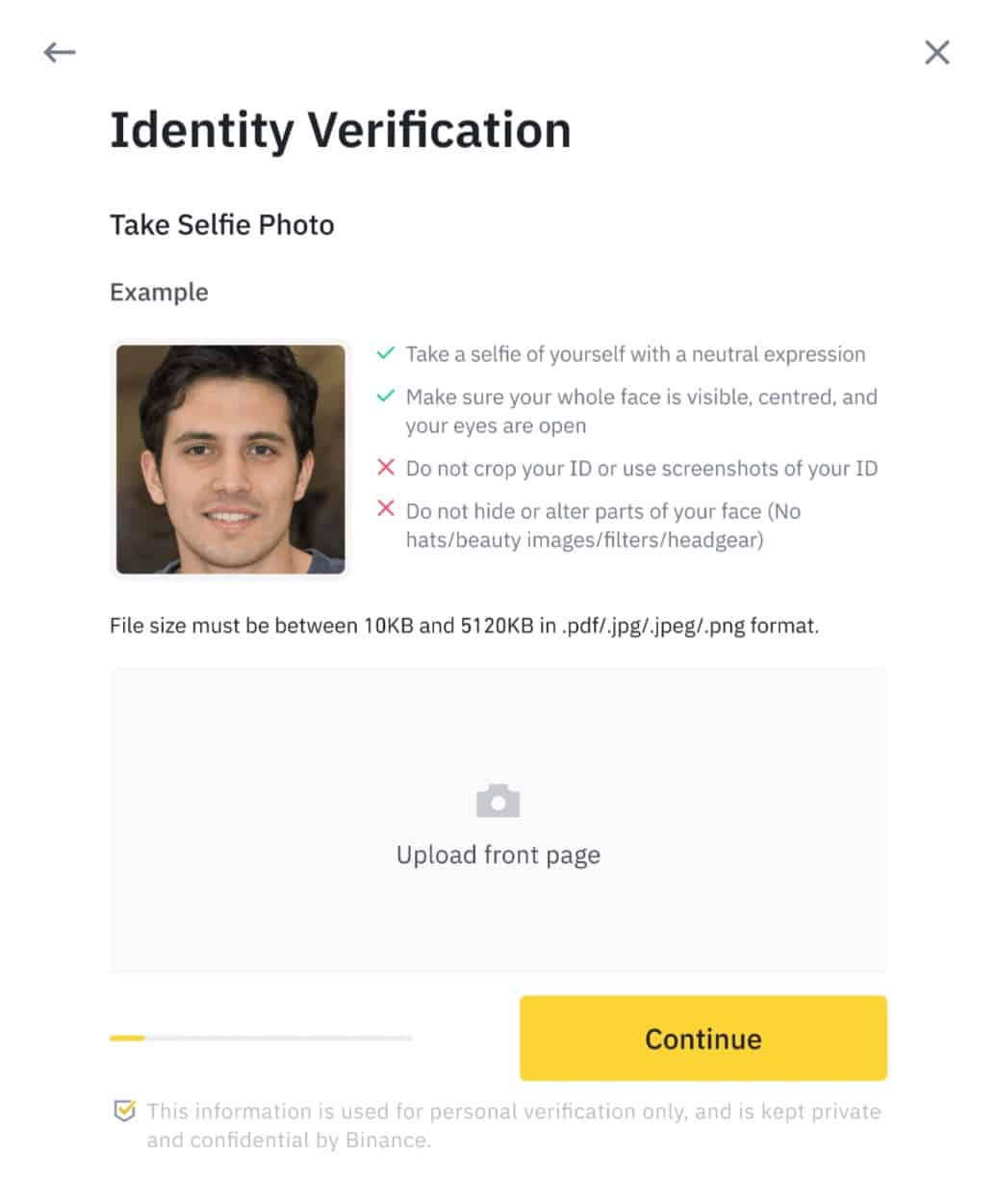
Do not wear hats, glasses, or use filters, and make sure that the lighting is sufficient.
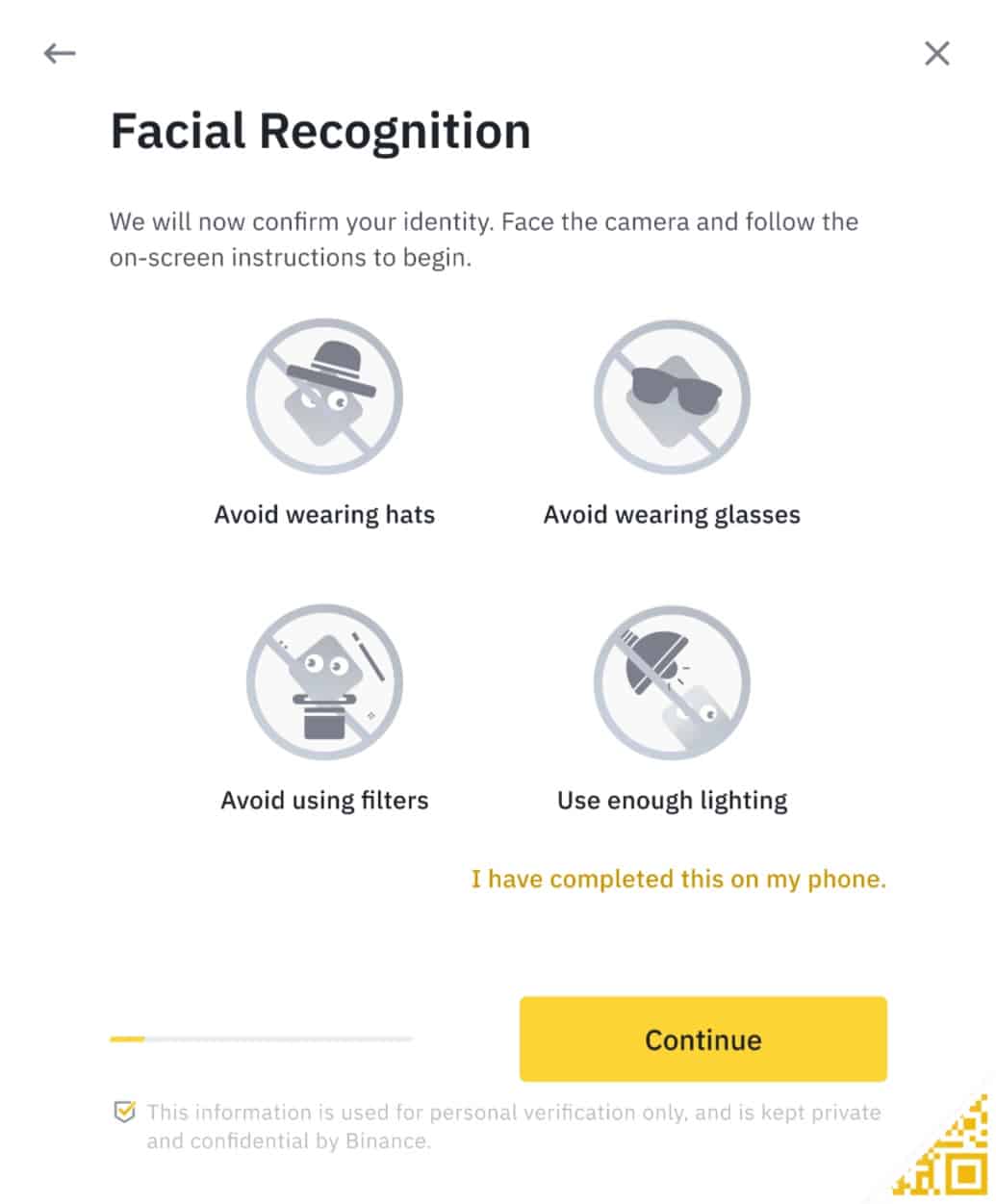
Once your application has been verified, you will receive an email notification.
How to buy cryptocurrency on Binance
Step 1: Log in to your Binance account and click “Buy Crypto” and then “Credit/Debit Card”.
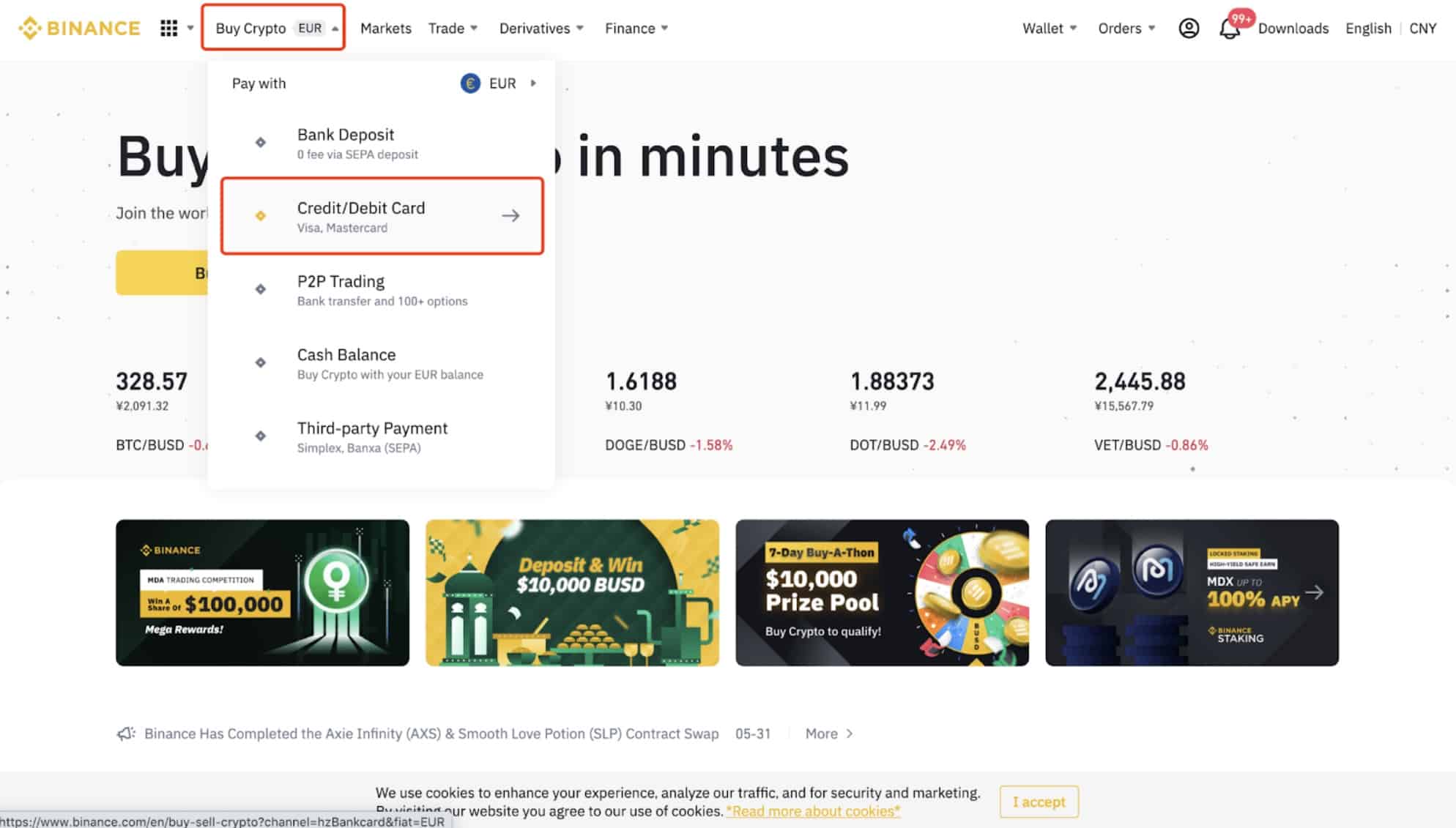
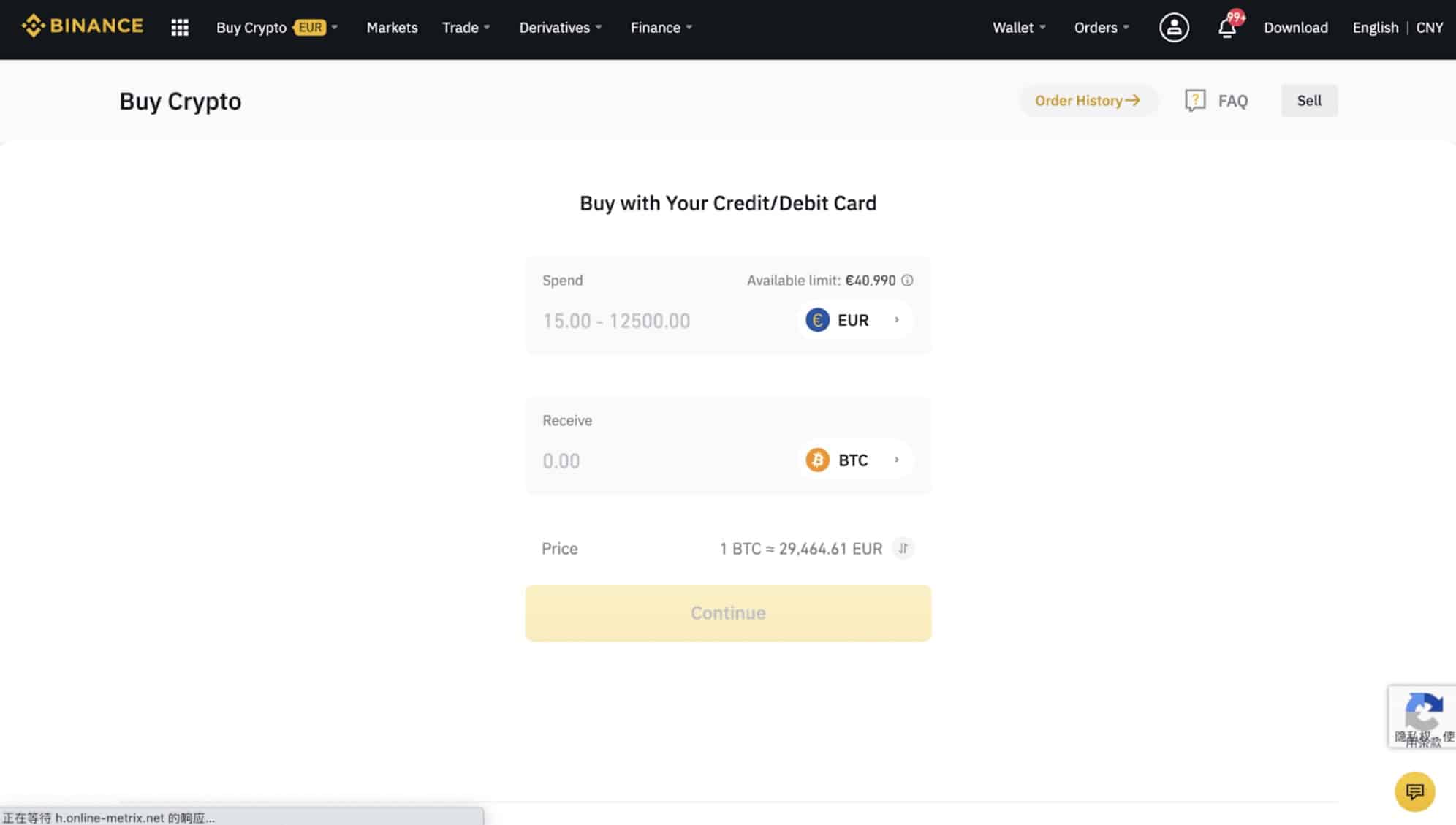
Step 2: Here you can choose to buy crypto with different fiat currencies. Enter the fiat amount you want to spend and the system will automatically display the amount of crypto you can get. When you have selected the amount you wish to spend then press “Continue”.
Note: You might not be able to purchase every cryptocurrency directly using fiat, if you’re looking to purchase something that isn’t offered in the currency list on this page, then you will want to purchase USDT. We will then show you how to exchange that on the spot-market for the cryptocurrency that you want in the next section of this guide.
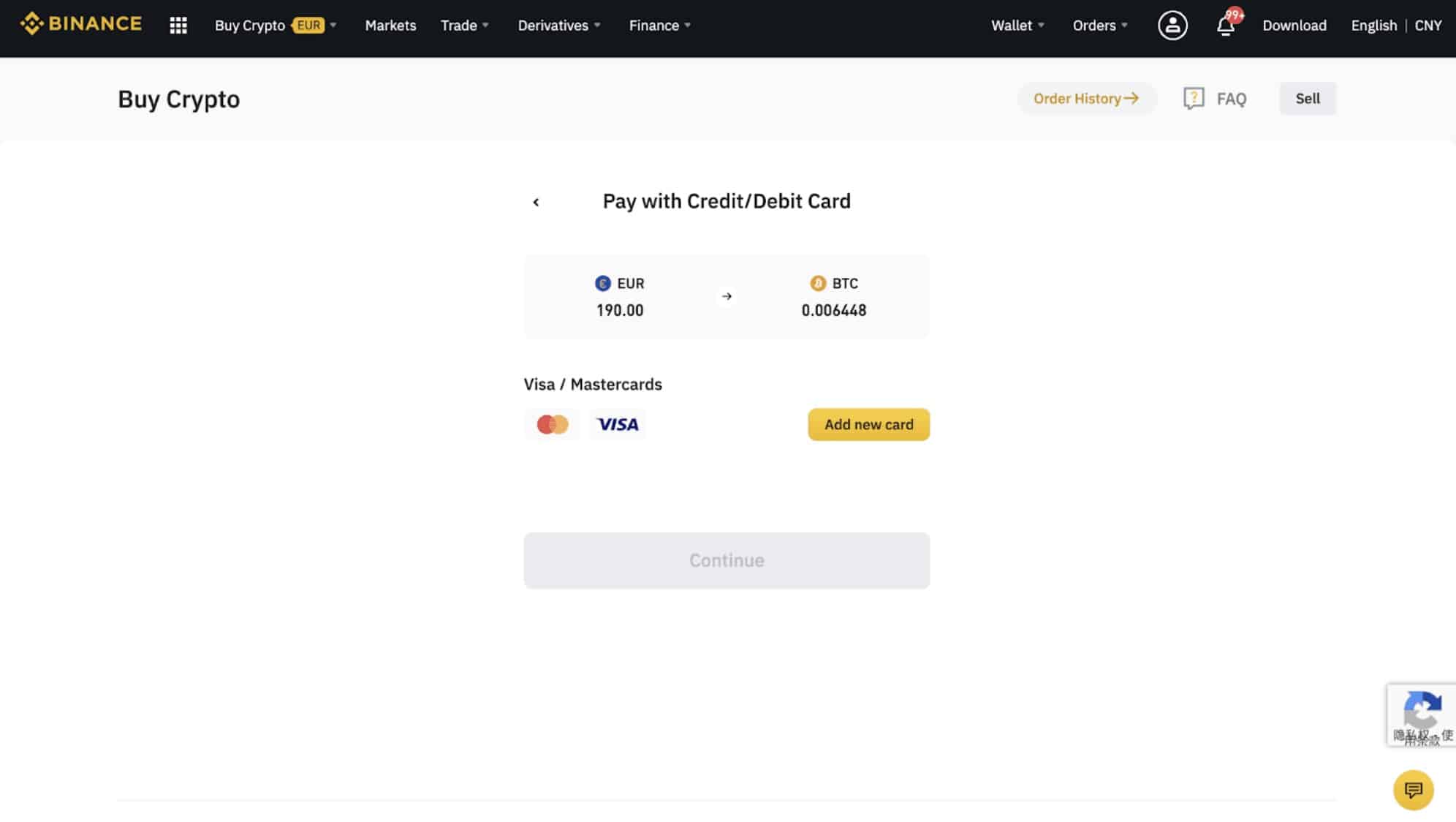
Step 3: Click “Add New Card”. Then enter your credit card details and your billing address.
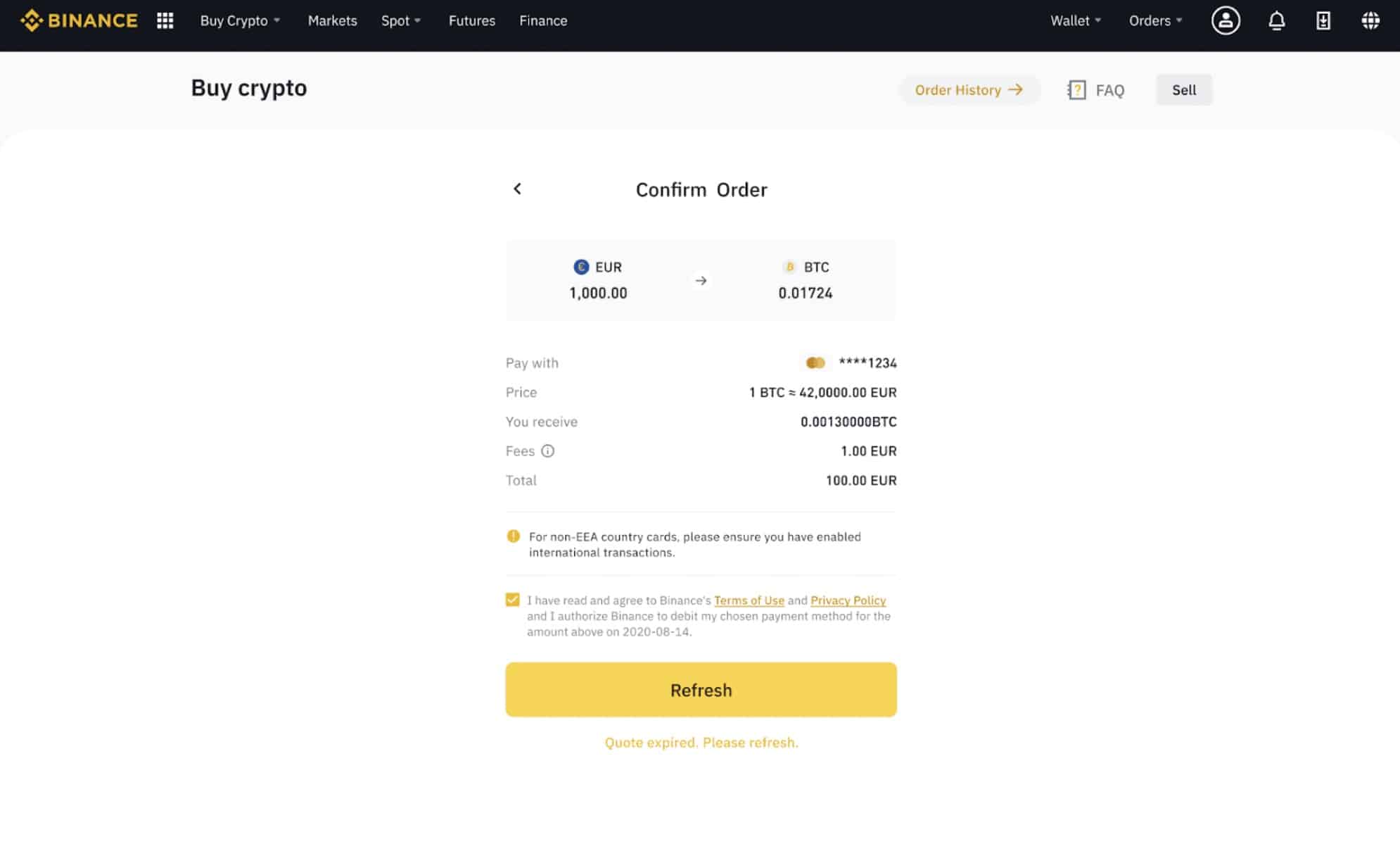
Step 4: Check the payment details and confirm your order within 1 minute. After 1 minute, the price and the amount of crypto you will get will be recalculated. You can click “Refresh” to see the latest market price. You will then be redirected to your bank’s OTP Transaction Page. Follow the on-screen instructions to verify the payment.
How to Conduct Spot Trading on Binance
Step 1: Log in to your Binance account.
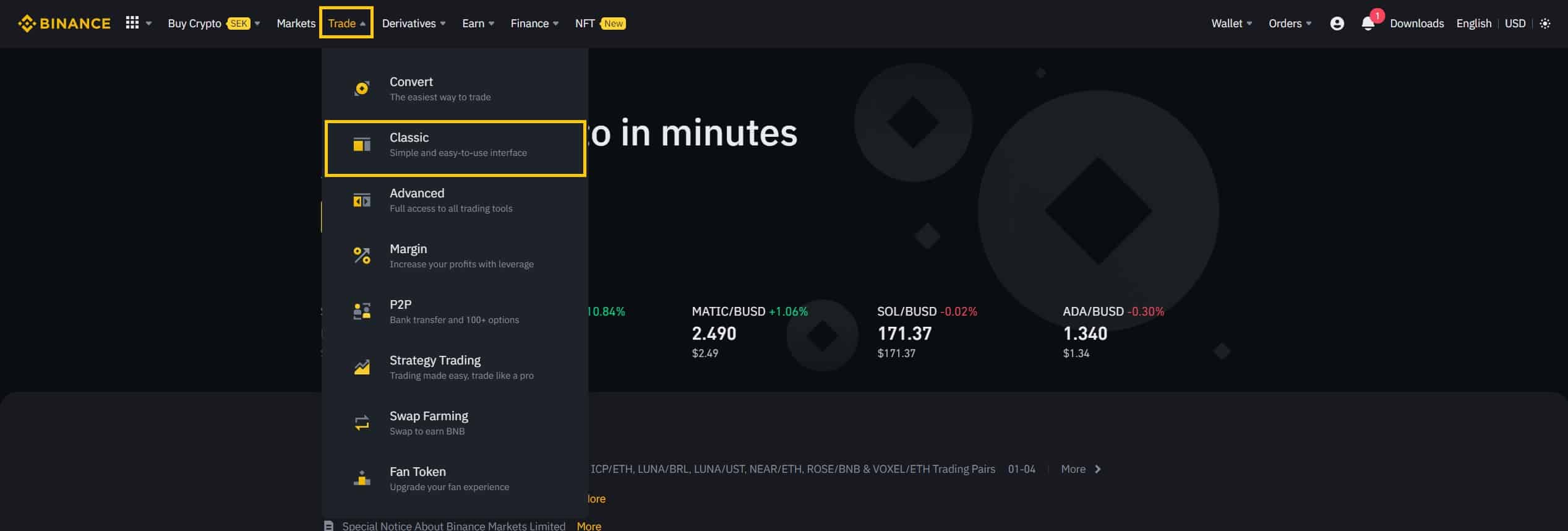
Click on “Classic” under “Trade” on the top navigation bar.
Step 2: Search and enter the cryptocurrency you want to trade.
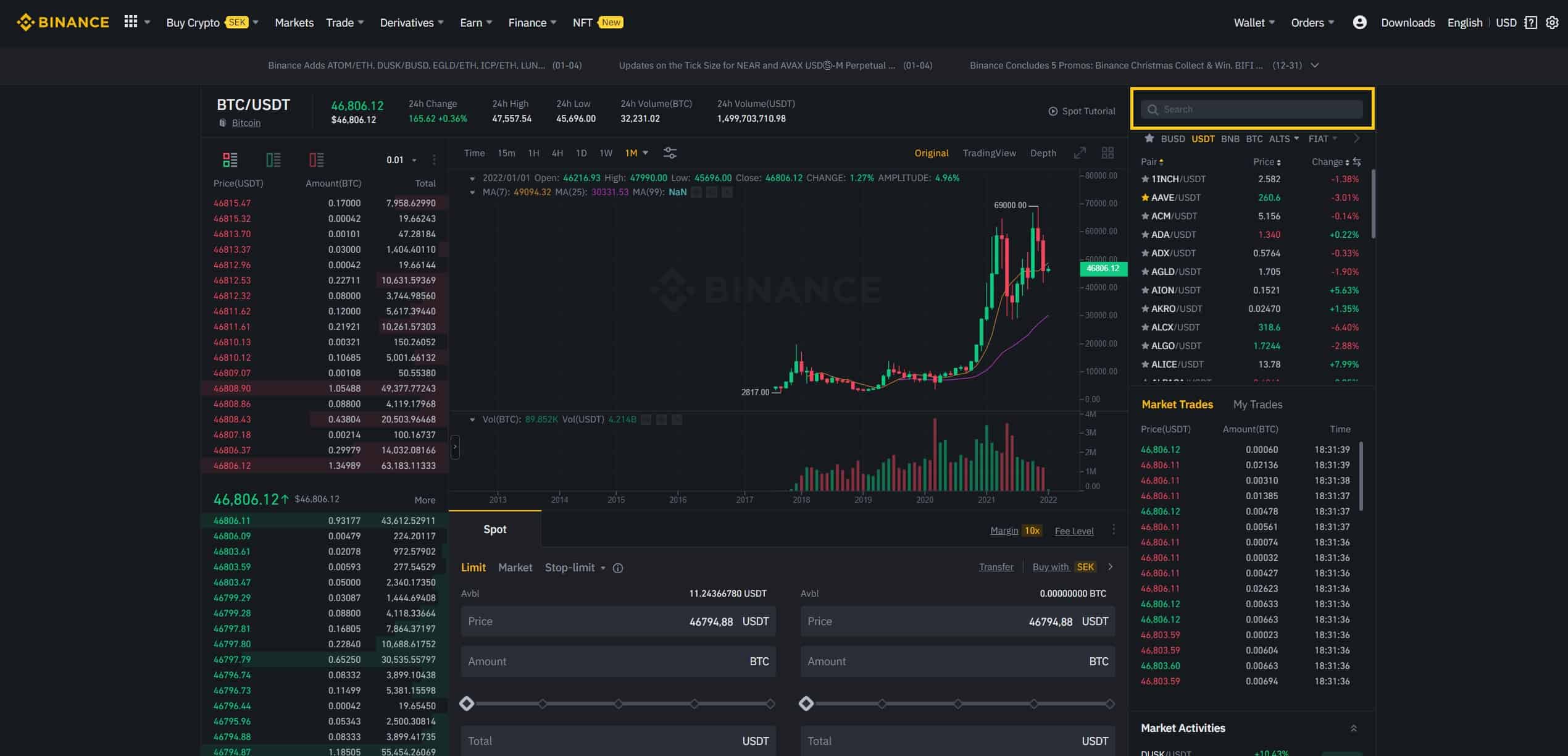
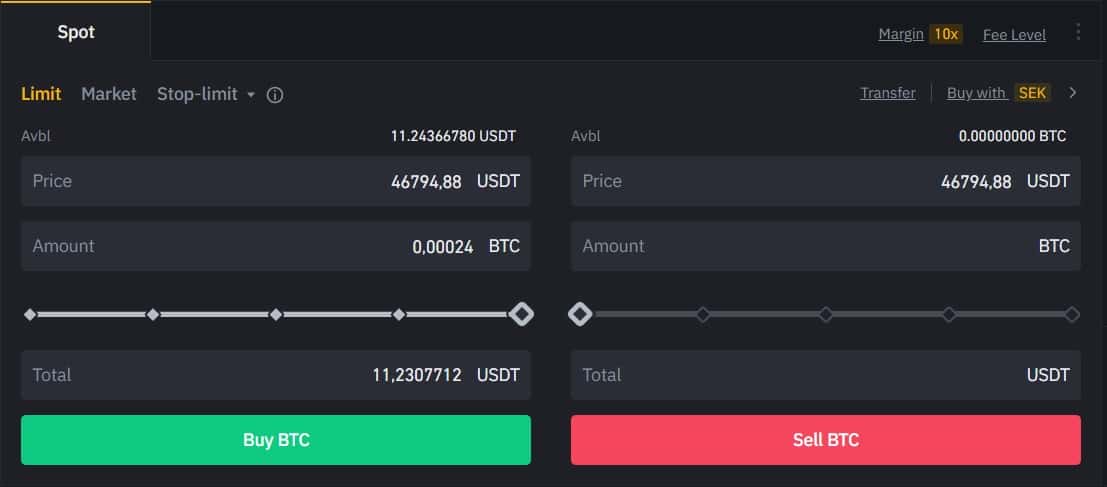
Step 3: Set buying/selling prices and buying/selling amount (or exchange total). Then click on “Buy”/”Sell”.
(Note: The percentages under the “Amount” box refer to percentages of the total account balance.)
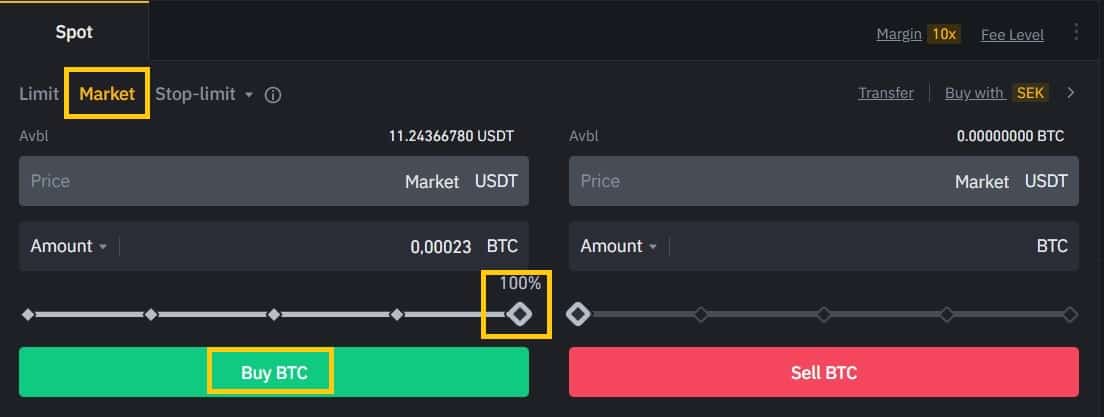
Step 4: If you don’t want to set a manual price, you can place a “Market Order” to set the buying/selling price automatically.
How to create a Gate.io account

Step 1: Go to the Gate.io website.
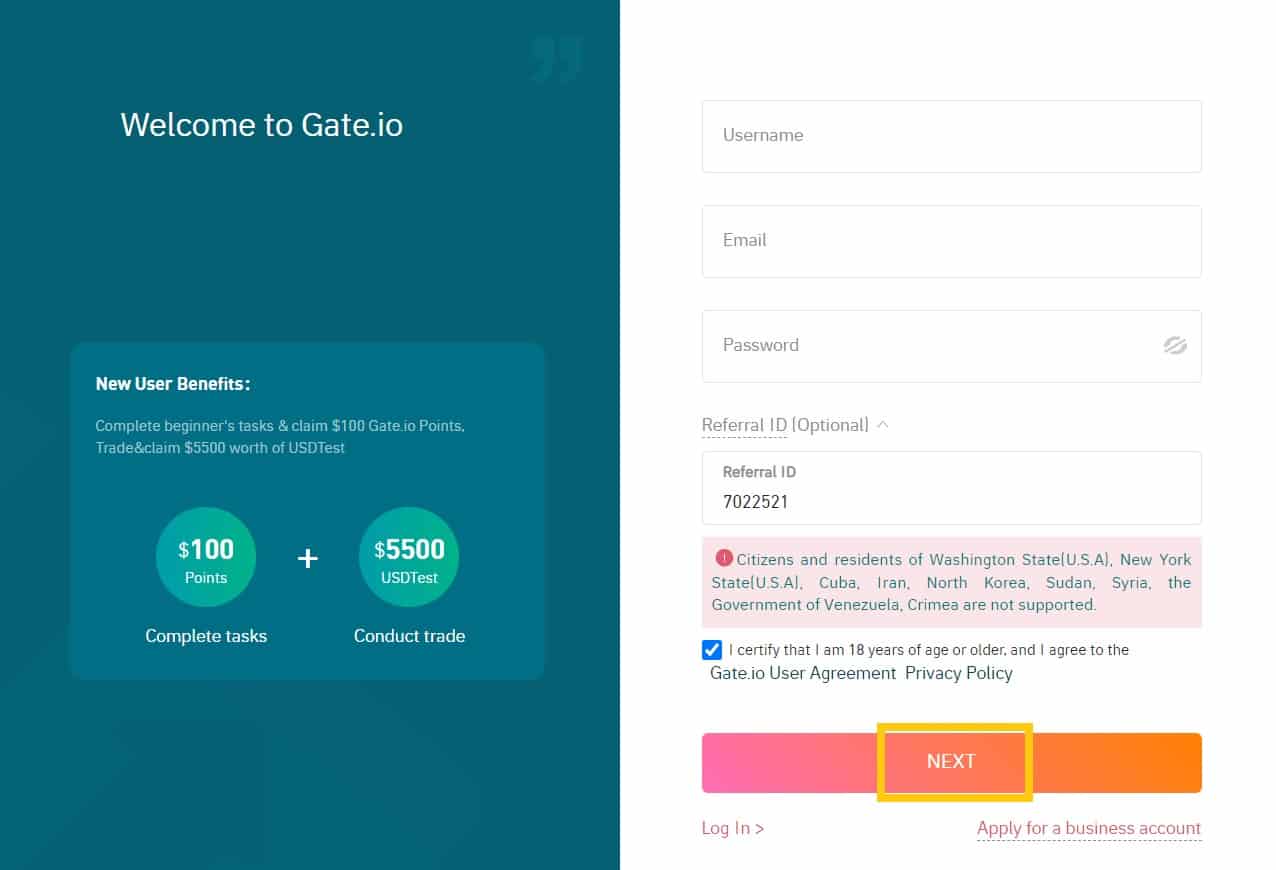
Step 2: Choose your username, your email address and your password. Then check “I certify that I am 18 years of age or older, and I agree to the Gate.io User Agreement Privacy Policy” and click “NEXT”.
Step 3: Set your fund password and click “Create account”.
Note: Your fund password must contain at least 6 characters and can not be the same as your login password.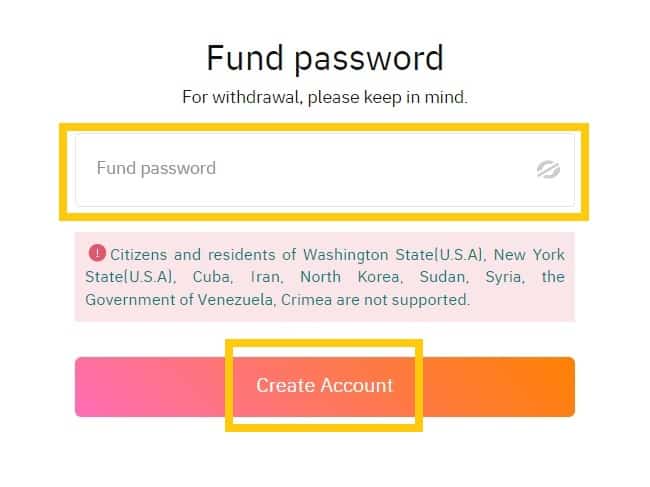
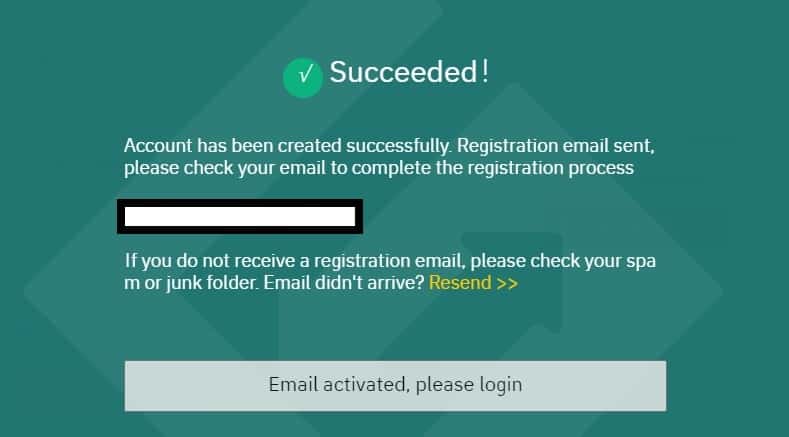
Step 4: An activation email will be sent to your email address. Complete the rest of the registration process by following the instructions in the email to activate your account. Once this is done done, click “Email activated, please log in”.
How to complete KYC (ID Verification) on Gate.io
In order to ensure the safety of your assets, and to reduce fraud, money laundering, blackmail, and other illegal activities, Gate.io makes it mandatory that all users obtain KYC ID Verification. Only after your account has obtained KYC ID verification, can you withdraw funds or use credit cards or debit cards to buy cryptocurrencies.
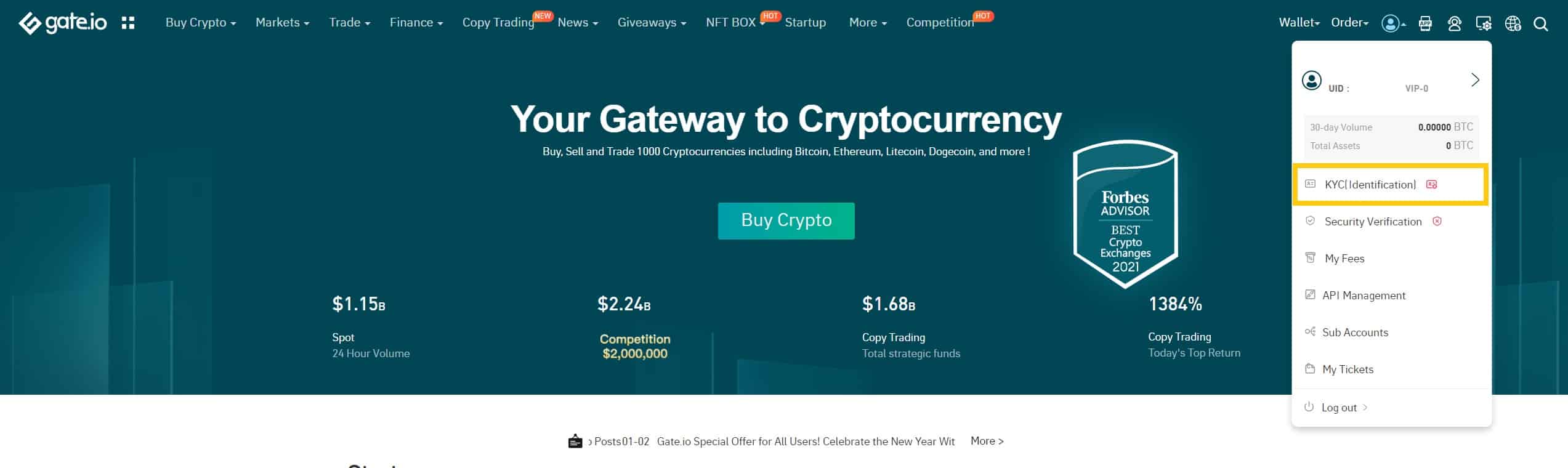
Step 1: Log in to your Gate.io account.
Place your cursor on the top-right profile icon and go to “KYC (ID Verification)”
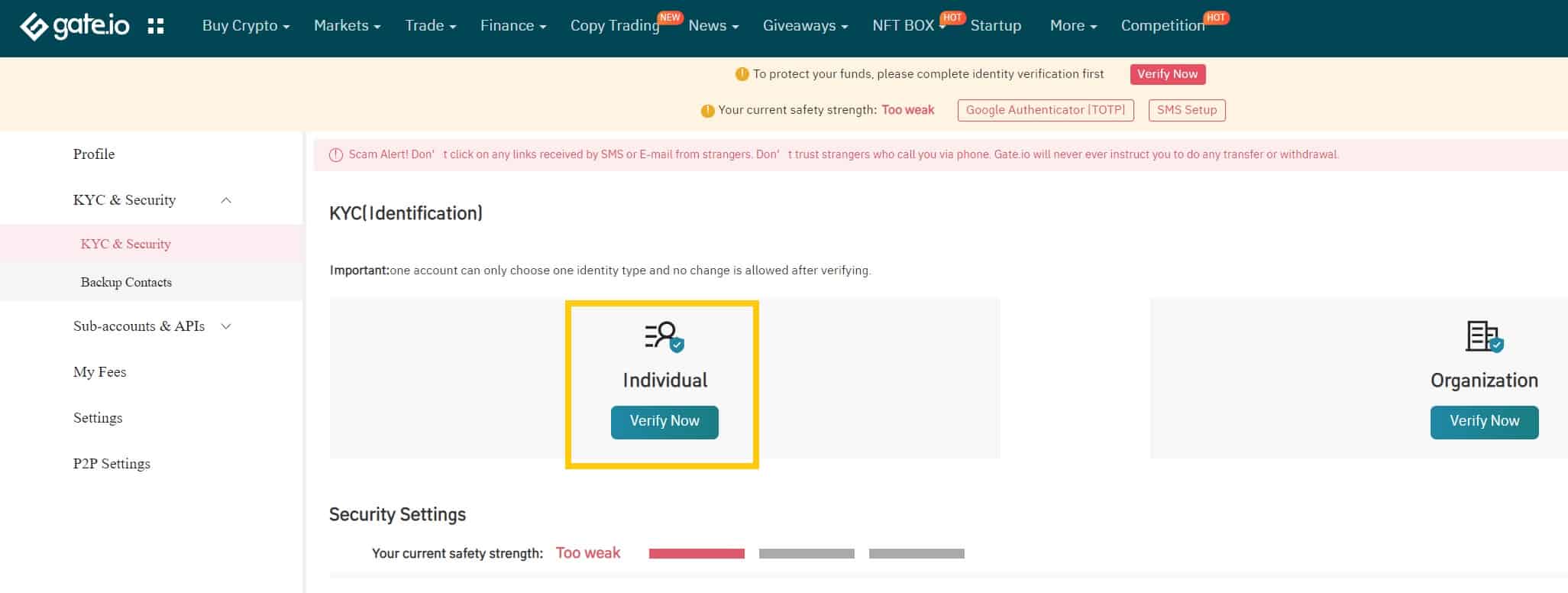
Step 2: Click “Individual (Verify now)”
Step 3: Select your country, input your full legal name (twice), fill in your ID information, upload photos of both sides of your ID card, and a photo of you holding your ID together with your User ID (UID) for Gate.io. You will see your User ID by placing the cursor on the top-right profile icon on the main page. Make sure everything is filled in correctly and then click on “Confirm and Submit”.
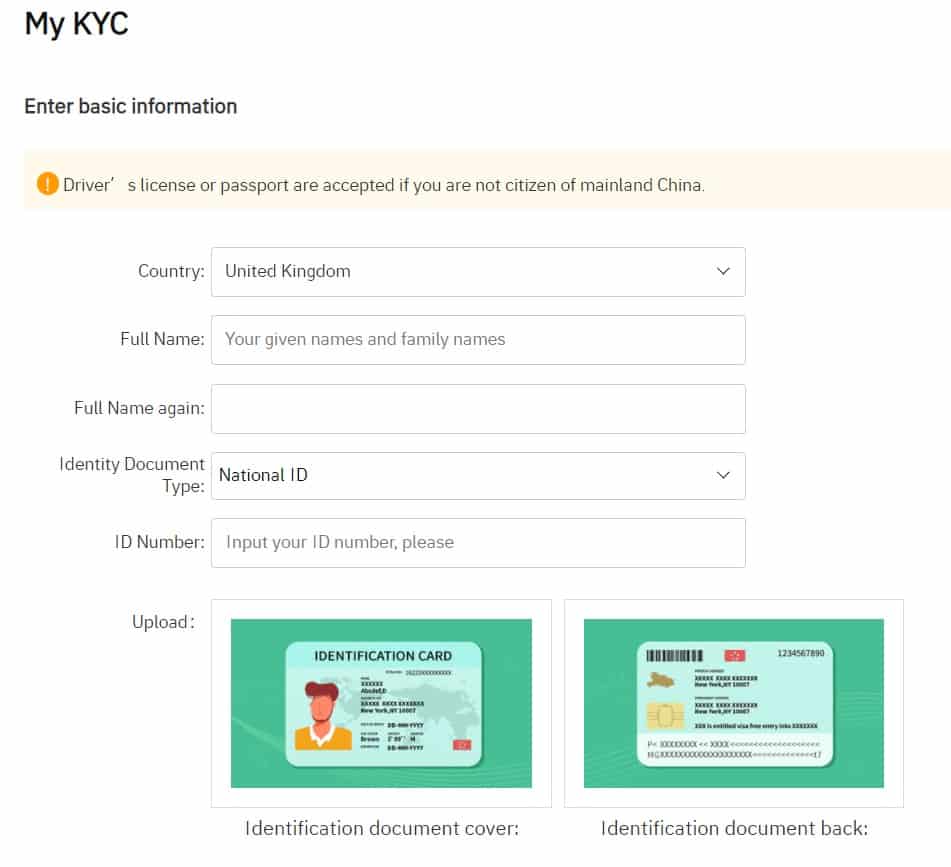
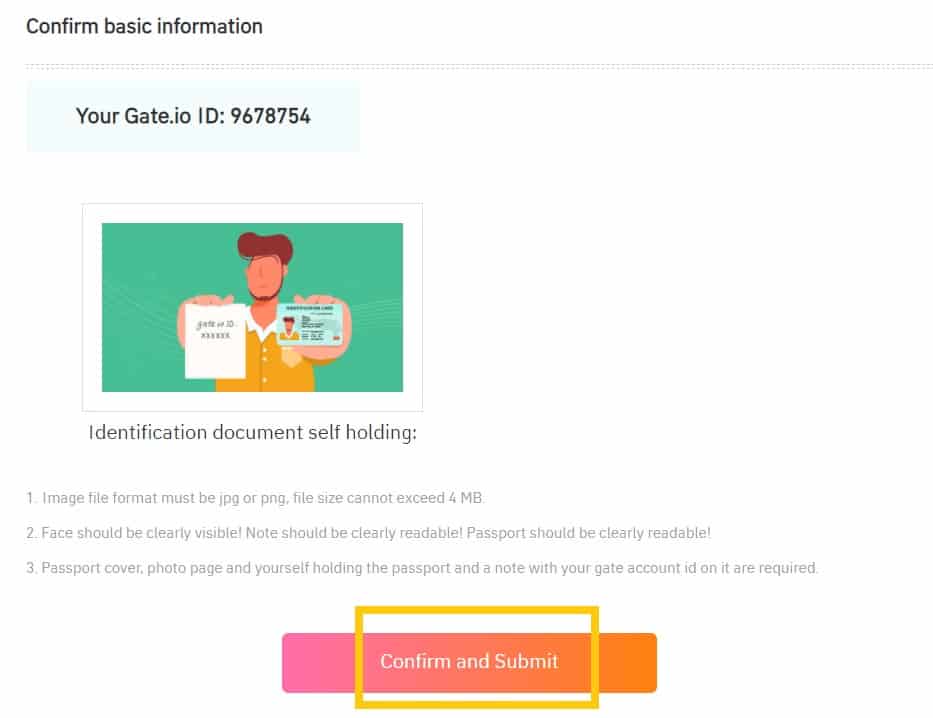
Step 4: After you have submitted all the requested information, you will see the pending approval.
Approval can take anywhere from a few hours to a few days to complete.
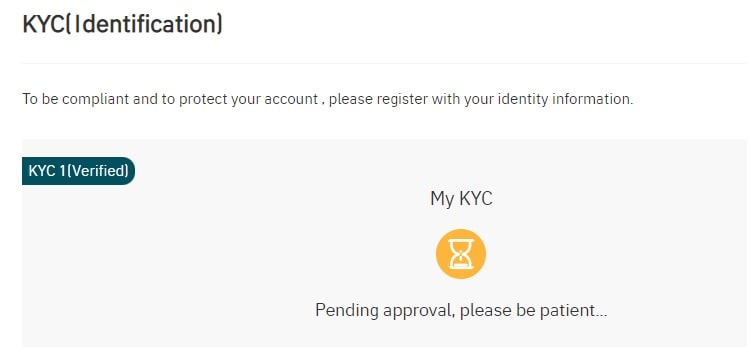
Once the KYC is approved, you’re ready to make your first cryptocurrency purchase.
How to buy cryptocurrency on Gate.io
Step 1: Log in to your Gate.io account.
Then in the Menu Bar at the top of the page, click “Buy Crypto” and select “Credit Card”.
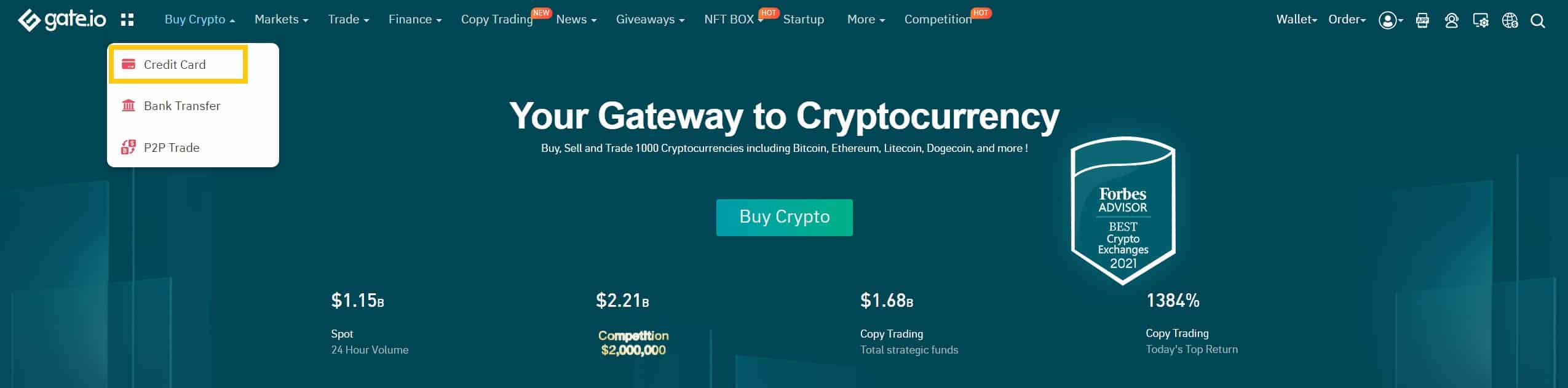
Step 2: Enter the amount you wish to spend in the “Buy with Fiat Currency” tab and select the cryptocurrency that you want to buy under the “Currency Purchased” field. Then select one of the “Service Providers” below and click the “Place Order” button to enter the confirmation page.
Note: You might not be able to purchase every cryptocurrency directly using fiat, if you’re looking to purchase something that isn’t offered in the currency list on this page, then you will want to purchase USDT. We will then show you how to exchange that on the spot-market for the cryptocurrency that you want in the next section of this guide.
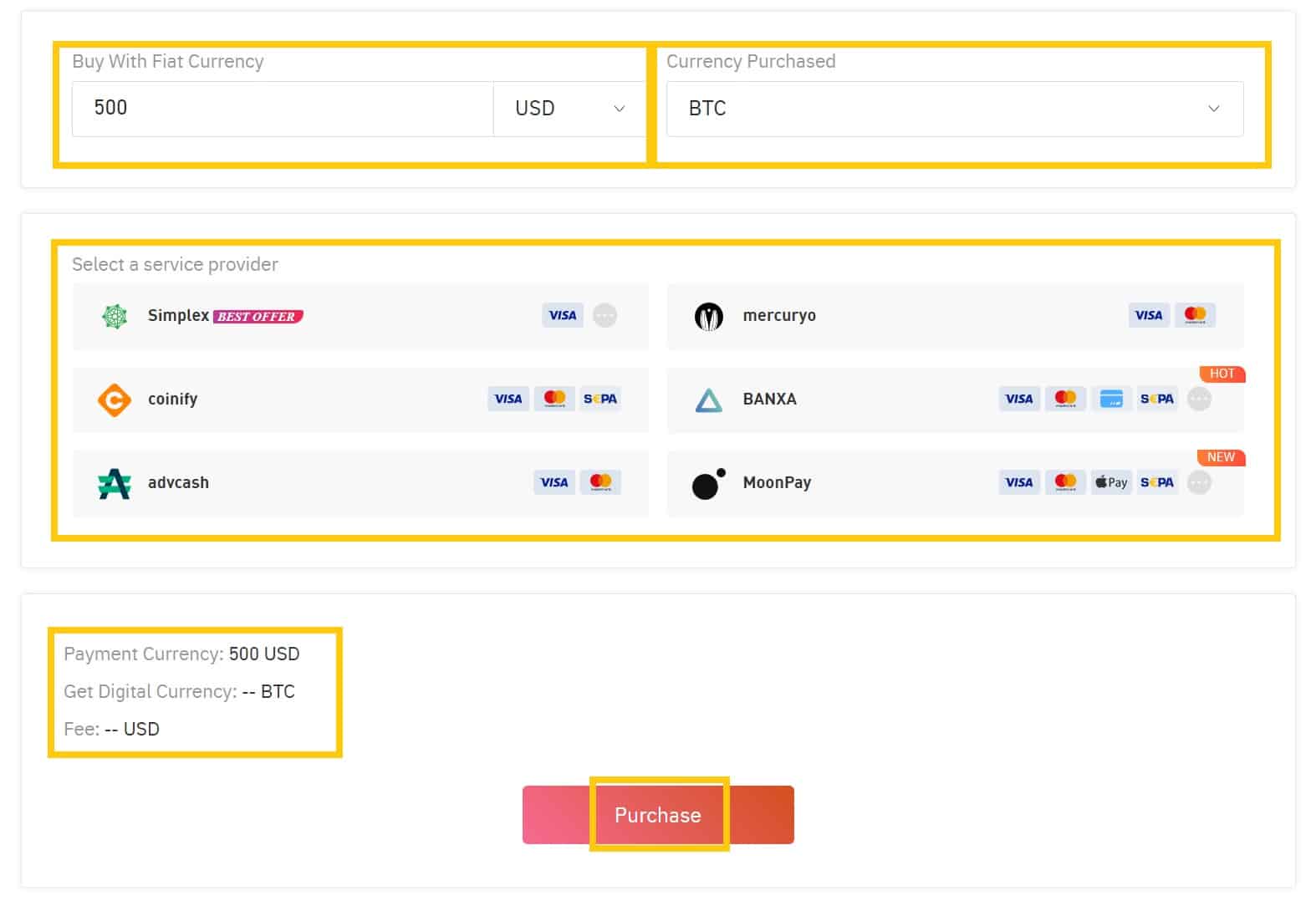
Step 3: On the confirmation page, select “Buy Crypto” or the “Create Order” button to complete the payment.
Note: To ensure a quick and secure way of receiving the order, users might need to conduct an additional Identity Verification (KYC) with a third-party service provider. Once successfully verified, the service provider will immediately transfer the cryptocurrencies to your Gate.io account.
How to Conduct Spot Trading on Gate.io
Step 1: Log in to your Gate.io account.
Click on “Spot Trading” under “Trade” on the top navigation bar.
You can either choose “standard” or “professional” version. This tutorial uses the standard version.
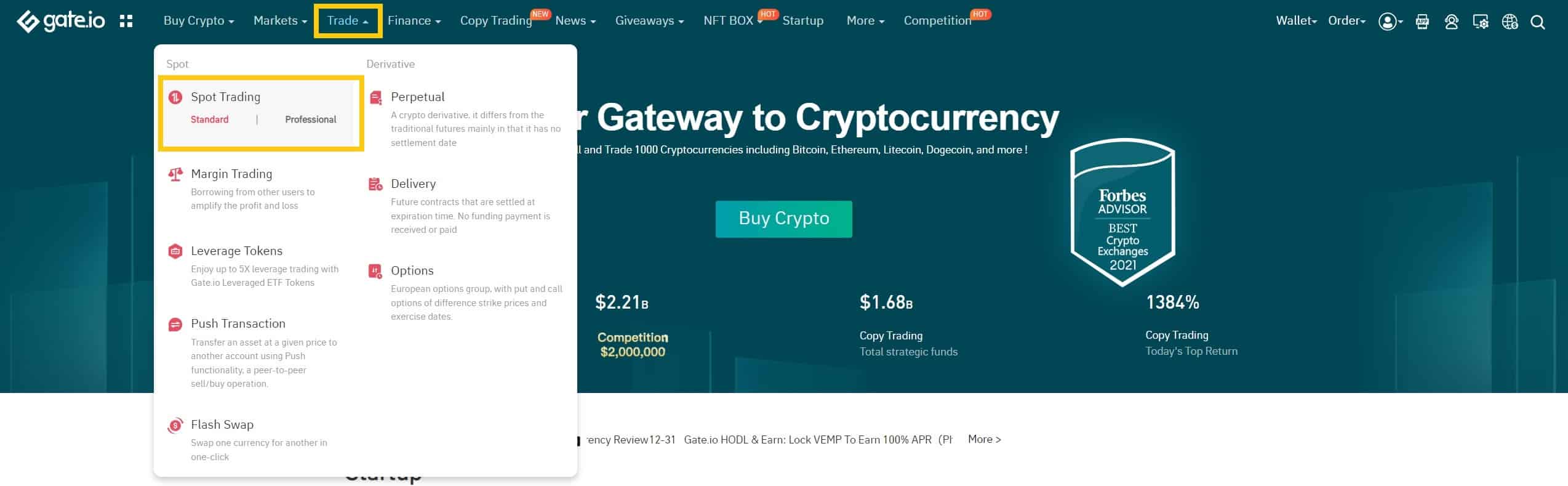
Step 2: Search and enter the cryptocurrency you want to trade.
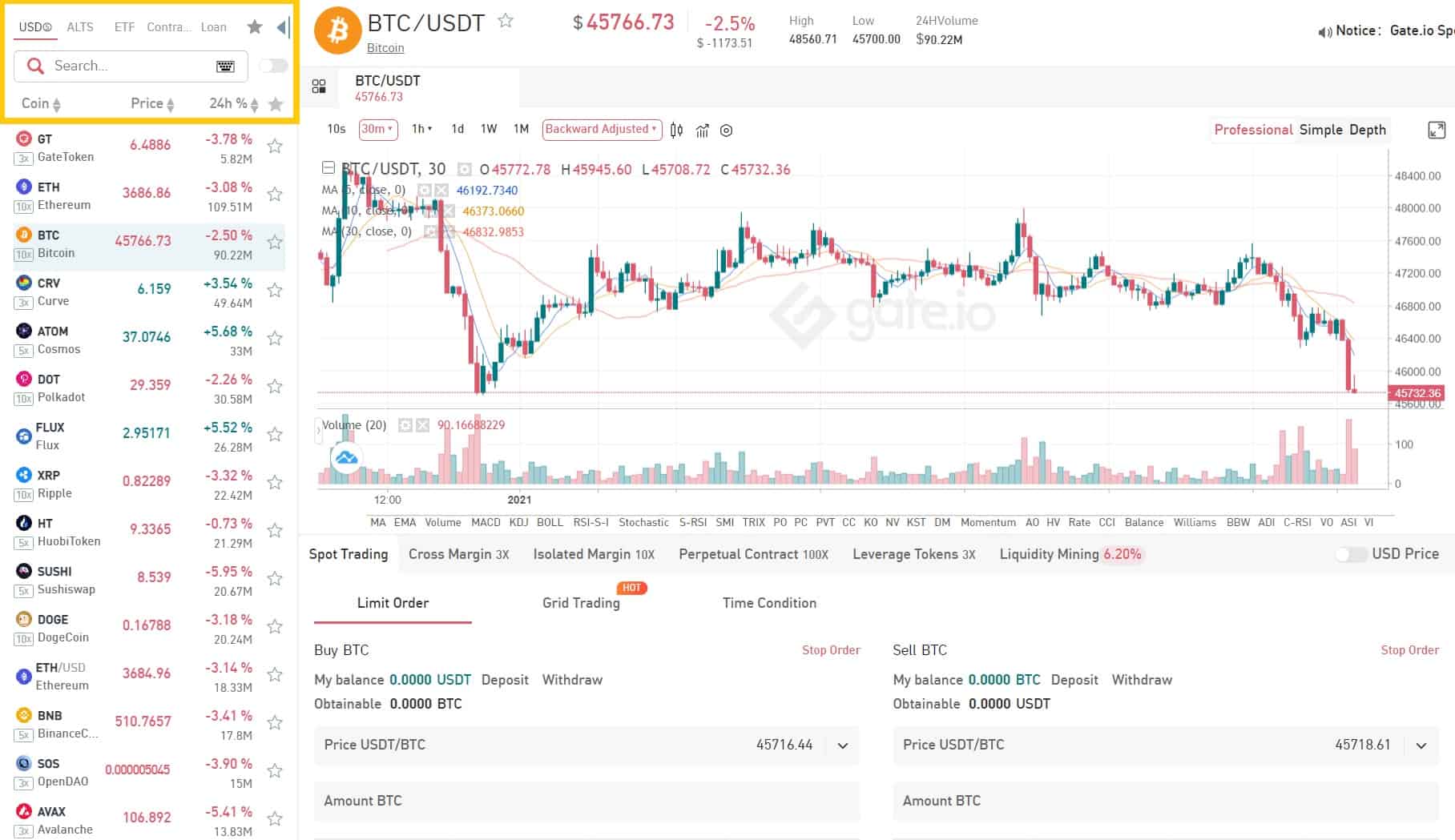
Step 3: Set buying/selling prices and buying/selling amount (or exchange total). Then click on “Buy”/”Sell”.
(Note: The percentages under the “Amount” box refer to percentages of the total account balance.)
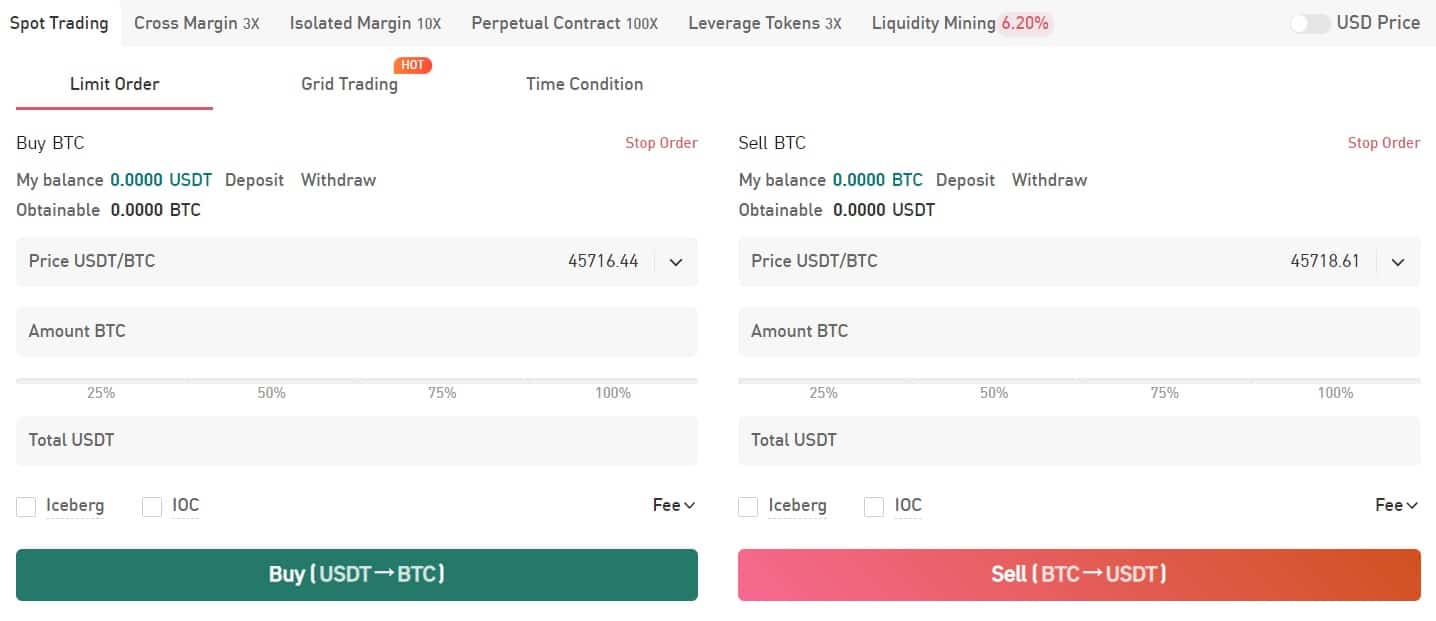
Step 4: If you don’t want to set a manual price, you can click on the last prices on the order book to set the buying/selling price automatically.
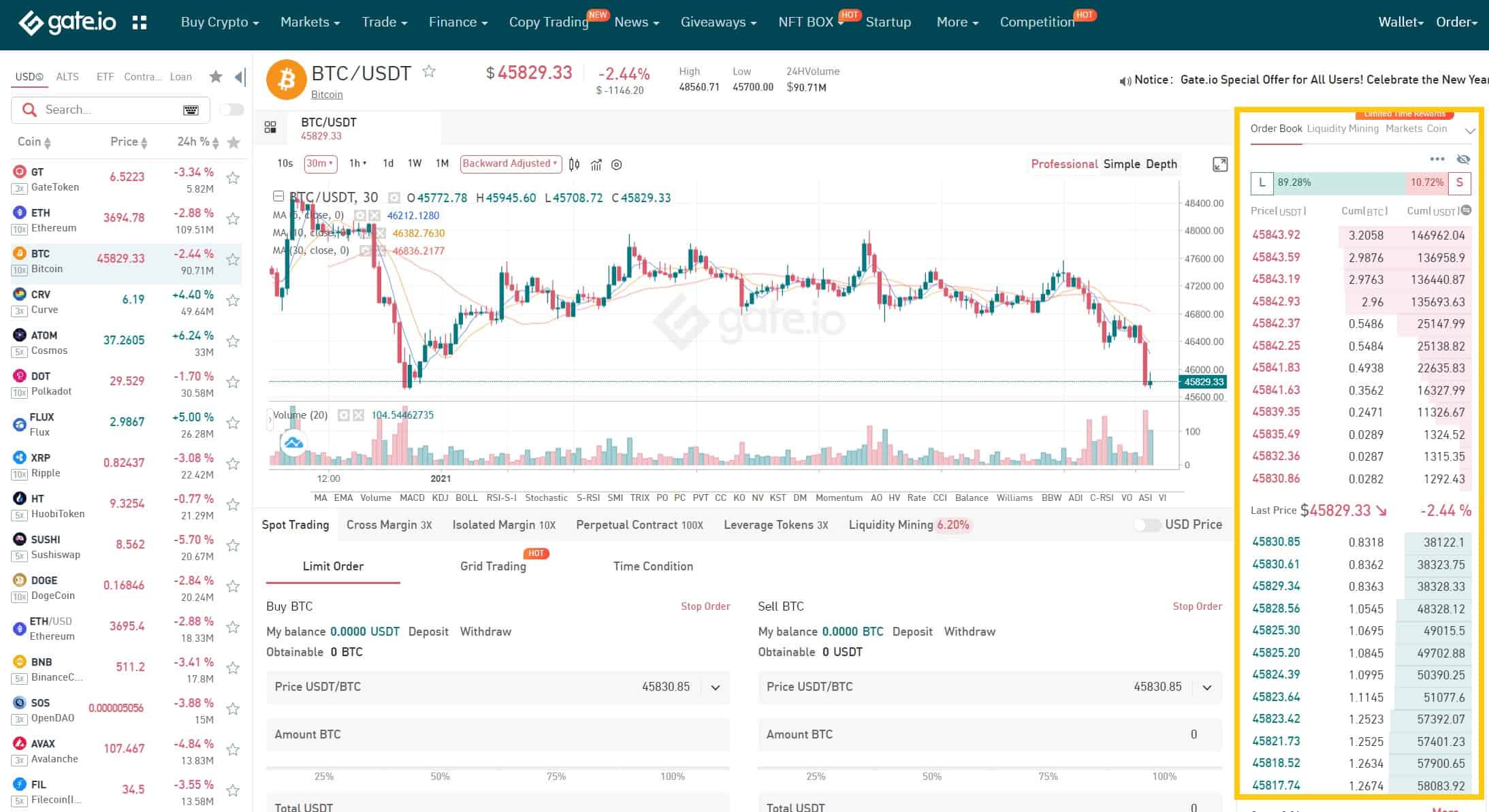
Step 5: Confirm the price and amount. Then click on “Place Order” to place the order, followed by “Confirm Order” to confirm it.
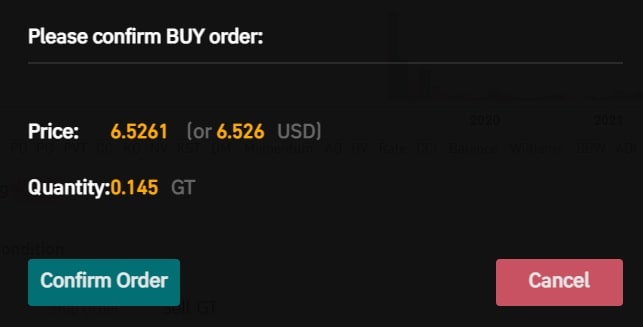
For more in-depth instructions, our ‘Absolute Beginner’s Guide To Cryptocurrency Investing‘ will take you through the process step-by step. In addition to providing instructions for sending and receiving your cryptocurrency.
And if you’re completely new to crypto our beginner, intermediate and advanced level articles will get you up to speed with everything you need to know about the cryptocurrency space starting out.
Simplecryptoguide.com
What Is League Of Kingdoms Arena (LOKA)?
League of Kingdoms (LOKA) is one of the world’s first blockchain MMO strategy games. Gamers build kingdoms, farm resources, fight monsters (PvE), and compete with enemy kingdoms (PvP) or alliances (MMO) where all the land plots are non-fungible tokens (NFT) along with tokenizable resources, skins, and many other game assets. Currently, the free-to-play strategy game is available on mobile (Android, iOS), as well as on the PC.
The game is built on the Ethereum blockchain and its NFT ecosystem include a variety of in-game assets and properties, such as the game’s iconic Land NFTs.
All the Lands in the game are non-fungible tokens (NFT) that can be owned and developed by users. The landowners can develop their lands by inviting more users to farm resources, spend crystals, and be more active in the zones. Landowners may acquire resources, rewards, and many other opportunities in the future. League of Kingdom’s resources can be tokenized and traded across blockchains, and they are one of the most frequently traded NFT assets on Polygon.
The game features a variety of gameplay types, from PvE to MMO. In the future, the gaming universe will be expanded with new game types, events, missions, campaigns, and contests.
How Does League of Kingdoms (LOKA) Work?
The League of Kingdom Arena platform consists of multi-faceted game modes, including various single play, PvE, PvP, and MMO modes, which together provide an immersive entertainment experience with mainstream appeal. Additionally, by leveraging blockchain NFT technology, the game enables player ownership of game assets and properties, which help players to capitalize on their investment and time.
In the game, the players can construct their kingdom, join an alliance, participate in wars against other kingdoms, participate in championships, and many more activities.

League of Kingdoms (LOKA) Gameplay
Kingdom Building – In the first step, the players have to construct buildings inside their kingdom. This can include farms, barracks, quarries, and so on. As the player builds on and upgrades these buildings, their overall rank in the game increases and they become more powerful.
The next step is to invest some time and resources into the Academy, Alliance technology, and Mastery functions. Players can invest their time in the academy to develop new technologies. They can use alliance technology to benefit their kingdom and the alliance as a whole. And finally, they can earn mastery points to level up their lords and become more powerful in the game.
The third and final step of kingdom building includes the training of troops from three divisions, namely Infantry, Archery, and Cavalry. These troops have different battle abilities and keeping a balance among them is crucial to advance in the game.
Farm and Hunt – Farming and hunting help the gamers to collect resources that they can use to build their kingdom.
In farming, there are five main resources including food, wood, gold, crystals, and stone. These resources can be harvested from the farms present inside the castle.
Players can also hunt monsters to gather resources and loots which will help them earn EXP as well. EXP can help players gain new mastery skills.
Alliance – Alliances are the core feature on which the League of Kingdoms (LOKA) is built. Players can join an alliance to excel faster in the game as it increases their chances of winning significantly.
An attack on one alliance player is considered an attack on the entire alliance. Moreover, players can gain benefits from the exclusive perks offered to an alliance like technology, gifts, lands, and many other things.
Battle – After the kingdom has been built, resources gathered, troops trained, and an alliance joined, it is now time to battle. This is where things get interesting as the League of Kingdoms has various battle modes including PvE, PvP, and MMO. Each battle mode has its challenges and it is best to master a battle mode before moving on to the next one.
To learn more about battle techniques, click here.
What is the LOKA Token?
Regardless of who owns allodial title (NFT) to the land and material rights, LOKA holders will be in a privileged role of jurisdictional authority over entire continents. These players may be able to limit parts of the activities that can take place while under their control, levy taxes on inhabitants, issue fees, determine the value of bounties for contests, and establish other rules that other players must follow.
Simply put, LOKA stands for a wide range of democratic rights, including, but not limited to, voting rights, proposal rights, membership rights, and the freedom to express oneself on a variety of issues. It can be a double-edged sword in this way.
To avoid being supplanted by a handful of more powerful entities, the governance process will very certainly require several actors to work on these regulations, fines, fees, tolls, and other elements.
The shards of the “League of Kingdoms Arena (LOKA)” are Ethereum-based ERC-20 governance tokens. As essential members of the game universe, LOKA holders will be entitled to a variety of benefits and privileges, including the ability to participate in game governance processes.
In summary, there are two utilities of the LOKA token:
- To stay up with the quickly changing and increasing digital landscape, decentralize the ownership and control of the game universe.
- More players will be encouraged to stake their tokens for the project’s long-term vision and engage actively in governance processes.
Players will be able to earn $LOKA through participating in various community-driven activities and playing various game content within the League of Kingdoms Universe.
League of Kingdoms Arena development updates in 2023
In 2023, League of Kingdoms Arena (LOKA) has implemented several updates and changes to enhance the gaming experience. Here are the key developments:
-
Quality of Life Updates and Bug Fixes: The team focused on addressing quality of life issues and resolving persistent bugs. This included displaying resource bars on resource nodes, showing distance on the bookmark UI, updating the Drago Fusion UI, adjusting the claim button location on NFT mail, and readjusting the display of kingdom’s nicknames, titles, and skin enchanting levels.
-
New Features in Resource Management and Accessibility: The introduction of resource bars on nodes helps players identify the remaining resources without needing to click each node. The updated bookmark UI simplifies tracking distances from the player’s kingdom to important locations.
-
Drago Fusion Interface Improvements: The Drago Fusion UI now illustrates the potential benefits and stats evolution with each Fusion level, including the DSA gathering speed buff.
-
Enhancements in In-Game Communication and Interaction: Adjustments were made to the positioning of kingdom nicknames and titles for better visibility and coordination.
-
Major Event Updates: The Christmas event introduced a new buff on the Christmas skin, along with scheduling changes to align with the community’s needs. Additionally, the introduction of mythic pieces in the Mythic Treasure Hunt bonus item list and the announcement of world messages for Skin Enchant levels of +3 or higher were made.
-
Battle Calculation Update: An overhaul to the battle calculation process was implemented, changing how battles are conducted, particularly under high server stress levels. Battles at the same location now occur in rounds, allowing participants to enter and exit between rounds. This is expected to impact longer battles significantly.
-
Adjustments to Drago Breeding Cost: Due to the declining value of DST and LOKA, the cost of Drago breeding was increased significantly. This adjustment was in response to the asset value changes in the game.
-
New Continent Openings and Adjustments: New continents were introduced, and adjustments were made to the continents demoted from the Minor League, including changes in spawning of Crystal and DSA mines, Shrine medals, and migration policies.
-
Upcoming Updates: Plans for future updates include changes to the CVC event duration, introduction of the Gargantua Boss Monster event, and the introduction of the mythic treasure hunt event requiring blue crystals.
These updates and changes are part of League of Kingdoms Arena’s ongoing efforts to improve player experience, game balance, and community engagement.
Official website: https://www.leagueofkingdoms.com/
Best cryptocurrency wallet for League Of Kingdoms Arena (LOKA)
There are plenty of different crypto wallets available. The best one for you depends on your general trading habits and which provides the most security in your situation. There are two main types of wallets: hot storage wallets (digital) and cold storage or hardware wallets (physical). Both have their pros and cons, and there is not necessarily a right or wrong answer when it comes to figuring out which crypto wallet is best for you.
HOW DO I DECIDE WHICH cryptocurrency WALLET TO USE for League Of Kingdoms Arena (LOKA)?
Deciding which type of wallet to use depends on a variety of factors, including:
- How often you trade. In general, hot wallets are better for more active cryptocurrency traders. Quick login ability means you are only a few clicks and taps away from buying and selling crypto. Cold wallets are better suited for those looking to make less frequent trades.
- What you want to trade. As mentioned earlier, not all wallets support all types of cryptocurrencies. However, some of the best crypto wallets have the power to trade hundreds of different currencies, providing more of a one-size-fits-all experience.
- Your peace of mind. For those worried about hacking, having a physical cold wallet stored in a safe deposit box at the bank or somewhere at home, provides the safest, most secure option. Others might be confident in their ability to keep their hot wallets secure.
- How much it costs. It is important to investigate the costs associated with each wallet. Many hot wallets will be free to set up. Meanwhile, cold wallets, like any piece of hardware, will cost money to purchase.
- What it can do. While the basics of each cryptocurrency wallet are the same, additional features can help set them apart. This is especially true of hot wallets, many of which come with advanced reporting features, insights into the crypto market, the ability to convert cryptocurrencies and more. Security features can also be a good differentiator.
For a more in-depth overview of cryptocurrency wallets visit our “Cryptocurrency Wallets Explained” guide.
If you’re going to be dealing in larger volumes of crypto, investing in cold storage might prove advantageous.
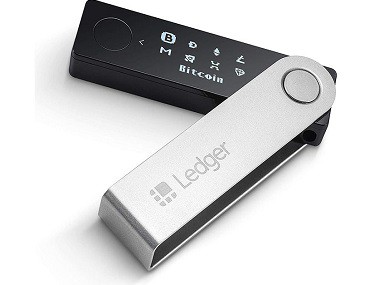
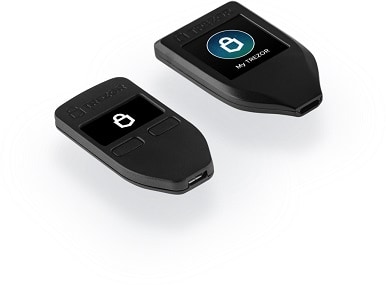
Most widespead examples of this being the Ledger Nano and the Trezor.
Ledger manufactures cold storage wallets designed for users who want increased security. Their wallets are a physical device that connects to your computer. Only when the device is connected can you send your cryptocurrency from it. Ledger offers a variety of products, such as the Ledger Nano S and the Ledger Nano X (a bluetooth connected hardware wallet).
Trezor is a pioneering hardware wallet company. The combination of world-class security with an intuitive interface and compatibility with other desktop wallets, makes it ideal for beginners and experts alike. The company has gained a lot of the Bitcoin community’s respect over the years. Trezor offers two main models – The Trezor One and Trezor Model T (which has a built in touch screen).
Market Overview
Coinmarketcap.com
Coinmarketcap will be your cryptocurrency go-to for just about everything. Here you can see the following:
Market Capitalization And Daily Trading Volume
Current Market Price Of Every Cryptocurrency Relative To USD (And Some Local Currencies)
Circulating And Total Supply
Historical Charts With Prices Relative To USD, Bitcoin (BTC), And Ethereum (ETH).