MEXC vs Binance (2026): Altcoin Access, Fees and Buying Options
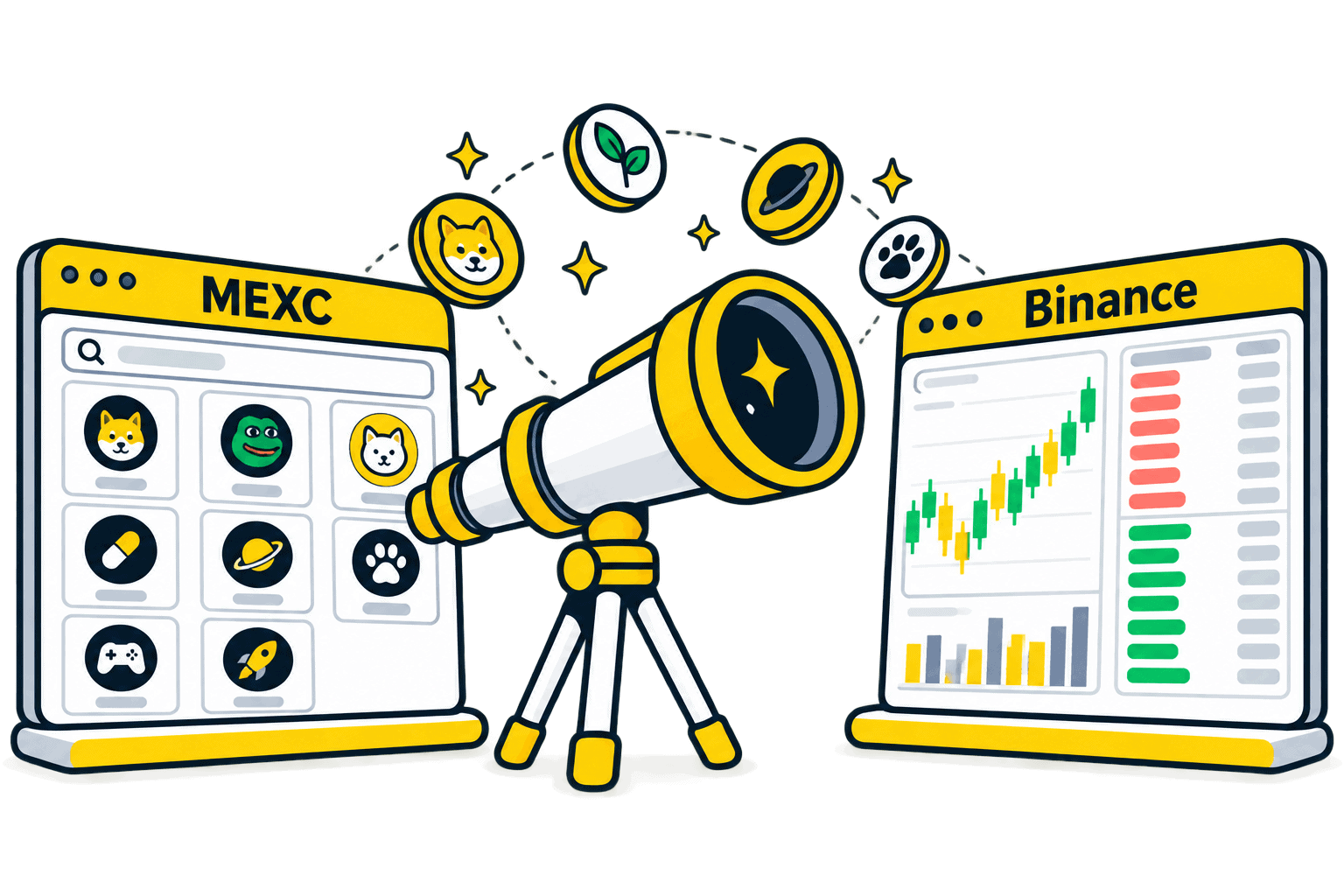
This choice often begins with availability: is your intended token actually on both platforms? If it is, compare the whole purchase route rather than choosing on listing count or trading commission alone.
Facts checked 28 October 2026
We may earn a commission through exchange links. This comparison explains trade-offs; it is not a recommendation to buy a cryptocurrency. Offers and access depend on your location and account.
Which exchange fits your needs?
Consider MEXC for a specific token you have verified there, especially when you can fund directly and use a suitable withdrawal network. Consider Binance when the same asset is listed and its available payment route makes the purchase simpler or cheaper overall. MEXC’s standard rate is lower, but special trading zones and an extra transfer can reverse the advantage.
MEXC
Consider it when
You have identified a particular smaller token and confirmed that its spot market and withdrawal network are available to your account. The standard maker rate is attractive for patient orders that can wait in the book.
Check first
Do not apply the standard fee to every new listing. From 30 September 2026, MEXC lists different taker rates for some USDT markets: Innovation Zone and MEME+ at 0.08%, Assessment Zone at 0.20%. Check the market’s classification.
Binance
Consider it when
Your target asset is listed and you value the deposit, spot-trading and withdrawal routes available in your region. Check the complete route before choosing a specialist venue solely for a smaller headline commission.
Check first
Binance’s global catalogue is not the same as every local platform’s. BNB fee discounts require separate conditions and token exposure; this comparison uses the standard rate without that discount.
Your money is already on another exchange
Moving funds to save a quarter of a USDT can be false economy. Under the standard taker assumptions, a 500 USDT order costs 0.25 USDT on MEXC and 0.50 USDT on Binance. If moving the quote asset adds 1 USDT, the move costs more than that trading saving before considering the later withdrawal. If only MEXC lists your target, the decision becomes whether the extra route and token risk are justified, rather than a direct fee contest.
Check availability before calculating savings. Then compare a direct purchase with any two-exchange route, including every conversion and transfer. Never assume a token with the same ticker on two platforms is the same asset.
What does a 500 USDT spot trade cost?
The comparison below uses an executed order worth 500 USDT, a standard retail account and no VIP tier, referral rebate, token-payment discount or temporary promotion. It compares trading commission only. USDT is the quote asset, not a bank deposit or a guaranteed dollar balance.
MEXC
Do not apply the standard fee to every new listing. From 30 September 2026, MEXC lists different taker rates for some USDT markets: Innovation Zone and MEME+ at 0.08%, Assessment Zone at 0.20%. Check the market’s classification.
Binance
Binance’s global catalogue is not the same as every local platform’s. BNB fee discounts require separate conditions and token exposure; this comparison uses the standard rate without that discount.
These are reference rates, not a quote for every market. A limit order that immediately matches an existing order can be charged as taker. Check the pair, trading zone and your account fee before confirming; the fee may be deducted from the asset received.
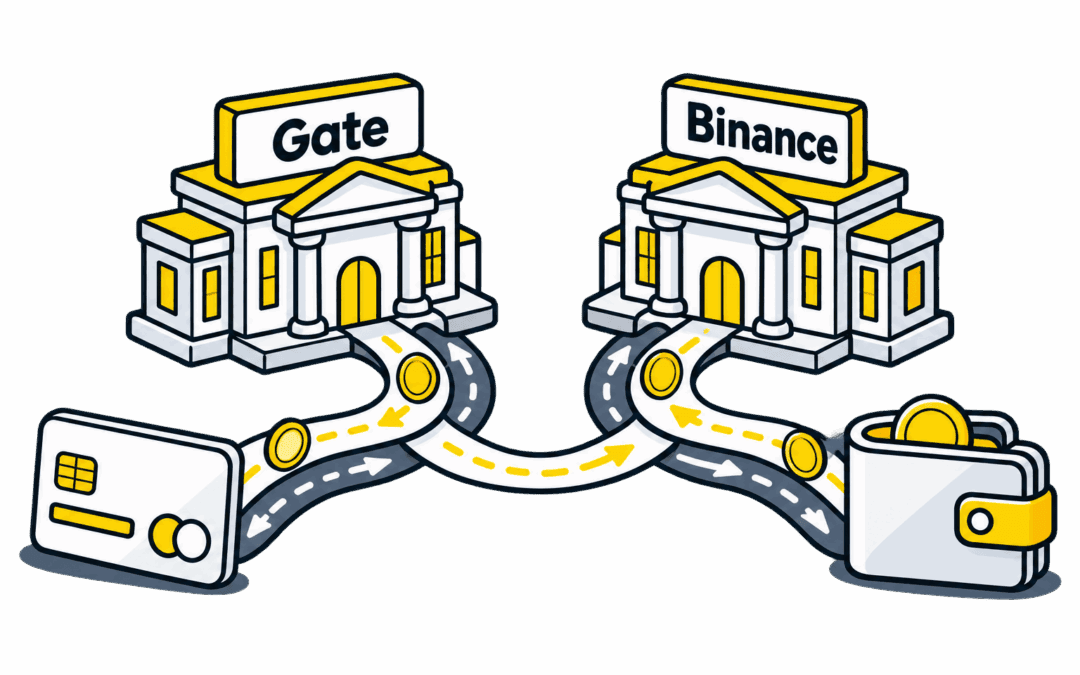
Follow the money from deposit to wallet
1. Fund the account
With a card or bank purchase, compare the amount of crypto you actually receive for the same amount of local currency. A low advertised trading fee does not include a payment provider’s charge, currency conversion or a buy-quote spread. A crypto deposit can still cost a sending fee at the originating wallet or exchange.
2. Execute the trade
Use the same trading pair, order size and timestamp. Compare the quoted price and available order-book depth as well as commission. A market order can consume several price levels; a limit order caps your buy price but may fill partially or not at all.
3. Withdraw to your wallet
Compare the withdrawal fee, minimum withdrawal and supported network for the exact asset. Confirm that your destination supports that network and any required memo. A cheaper network is useful only if the destination accepts it. Network maintenance can temporarily prevent a withdrawal.
A small fee advantage can disappear
Illustrative example, not live exchange quotes: route A costs 0.25 USDT to trade and 3 USDT to withdraw; route B costs 0.50 USDT to trade and 1 USDT to withdraw. With identical funding and execution prices, A costs 3.25 USDT and B costs 1.50 USDT. B is 1.75 USDT cheaper overall despite its higher trading commission.
Compare the final amount reaching the same wallet on the same network. If the price or funding method differs, add that difference before deciding.
One purchase, two practical routes
These illustrated steps explain the workflow rather than reproduce a live account screen. Menu labels and available products can differ by region and app version. Stop if identity verification, the asset or the withdrawal route is unavailable.
Confirm access and asset
MEXC
Search the exact token in Spot, check its identity and trading zone, and confirm that your residence is eligible.
Binance
Confirm the Binance service available to your residence, complete the required checks and locate the actual spot pair for the asset.
Fund the correct balance
MEXC
Open the deposit details for the required asset, match the network at both ends and make sure funds reach the balance used for spot trading.
Binance
Choose a supported bank, card or crypto route. Compare the final received amount and confirm the network for any crypto deposit.
Review and place a spot order
MEXC
Select the spot pair, inspect its order book and choose market or limit. Review the zone-specific fee and avoid the similarly named futures market.
Binance
Use the spot order ticket for the chosen pair. Review price, amount and fee; distinguish it from Convert or a leveraged product.
Check the withdrawal route
Use the asset’s deposit details in your own wallet to confirm the network and address. Review the exchange’s fee and net amount; use a small test transfer when appropriate. Never enter a seed phrase into an exchange form.
Trading features, funding and custody
Spot buying is the focus here. Futures, margin and leveraged products add borrowing, liquidation or funding risks and are not substitutes for owning a withdrawable spot asset. An exchange can list a derivatives contract without offering that token for spot purchase.
MEXC
MEXC’s spot workflow includes market, limit and conditional order types. Its separate futures products do not give you a withdrawable token. For a newly listed asset, inspect available depth and withdrawal status before funding; being early does not ensure a workable exit.
Compare the crypto-deposit route with any card, third-party or P2P purchase option offered to your verified account. Check the provider’s final quote and whether an additional conversion is needed to obtain the pair’s quote asset.
Binance
Binance offers a spot order book alongside other purchase and trading products. A simple card purchase or conversion quote is not identical to a spot order. Compare the net crypto received, and check that a discovered token is actually listed in the market available to you.
Binance documents card purchases, bank transfers, P2P and crypto deposits, with availability varying by region. Compare the final local-currency quote and settlement time; a supported payment method in one country may not be offered in another.
What neither exchange changes
On a custodial exchange, the platform controls the private keys. A balance can be affected by withdrawal restrictions, account reviews, operational failures or insolvency. Proof-of-reserves information is useful evidence to examine, but it is not deposit insurance or a guarantee of solvency. Self-custody removes exchange custody only after a successful withdrawal and gives you responsibility for backups and transaction mistakes.
Your country can change the answer
Check the legal entity serving your residence before depositing. A global brand, a regional platform and a local partner may have different assets, fees, payment methods and products. This article’s language does not determine eligibility. Do not use a VPN or false residence details to evade restrictions.
MEXC
MEXC’s current global agreement prohibits several jurisdictions, including the US, UK and Canada. Availability elsewhere is not automatic; verify the current terms and account checks before depositing.
Binance
Check Binance’s platform and verification requirements for your residence. Do not treat Binance.com and separately operated local services as the same product; available markets and terms can differ.
Questions that change the decision
Is the lower trading fee always cheaper?
No. For a small purchase, a card charge or fixed withdrawal fee can exceed the trading commission. For an illiquid token, execution price can matter more. Compare one complete route using the same asset, amount and destination.
Does a listing mean I can withdraw the token?
Not necessarily. Confirm that it is a spot listing for the correct token, then check the live withdrawal status and supported network. A ticker alone is not enough to establish token identity.
Should a signup bonus decide the choice?
Treat a bonus as conditional. Eligibility, deposits, trading volume, deadlines and reward type can change its value. Read the current offer terms and avoid trading more than planned to unlock a reward.
Put the comparison to work
How we made this comparison
We checked the exchanges’ public fee schedules, help guides and access terms on the date above. Cost calculations are our own worked examples. We have not executed identical live trades or measured customer-support response times for this comparison. We avoid a universal winner because the relevant pair, country, funding method and withdrawal route can change the result.
Official sources and current terms
- MEXC — Spot fees and exceptions
- MEXC — Eligibility and regional restrictions
- MEXC — Funding and trading instructions
- MEXC — Spot fees and exceptions
- Binance — Spot fees and exceptions
- Binance — Eligibility and regional restrictions
- Binance — Funding and trading instructions
- Binance — Spot fees and exceptions