
How to Buy Crypto in the Netherlands (2026): iDEAL, SEPA and EUR
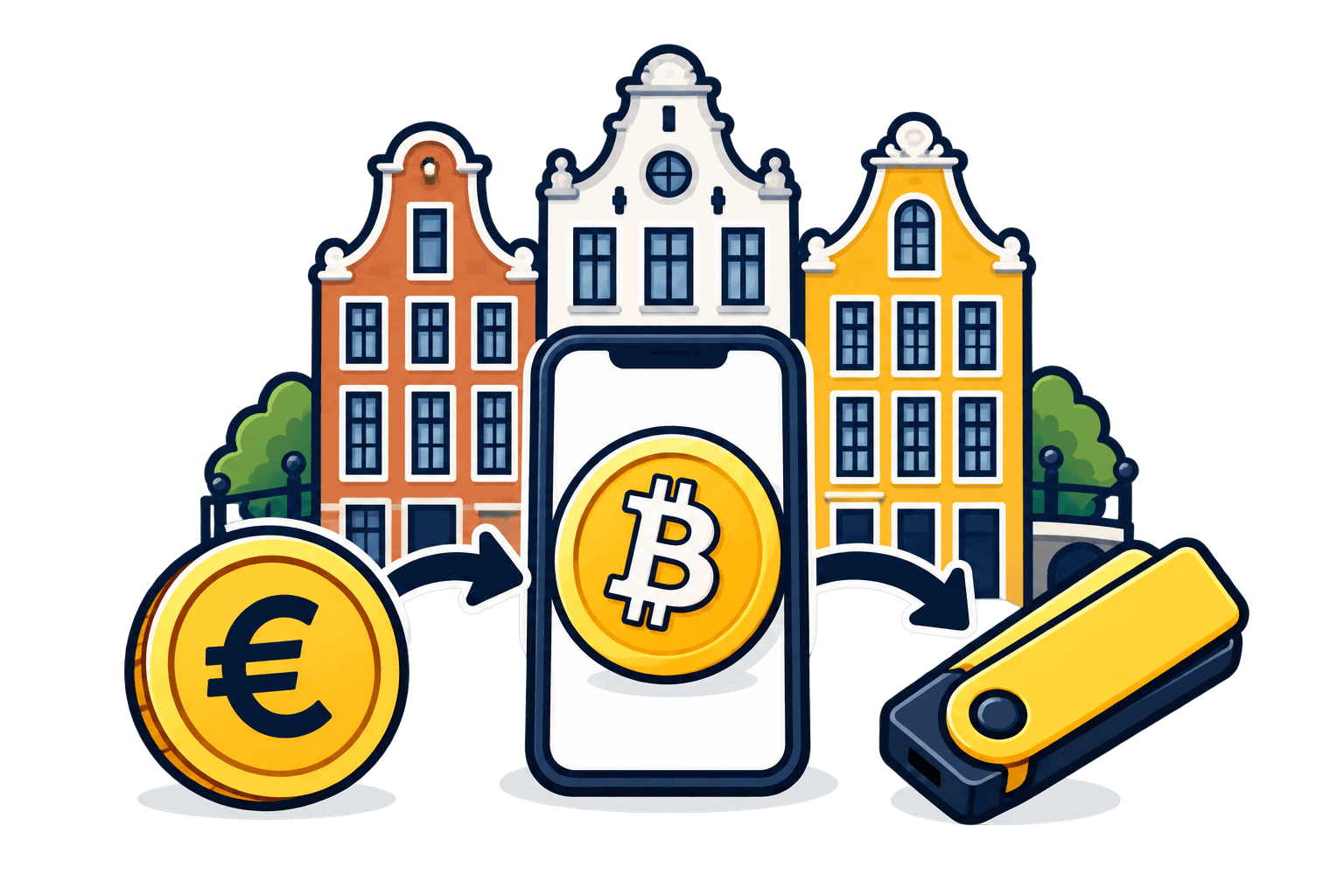
Buying crypto in the Netherlands can start with iDEAL/Wero or a euro bank transfer. Follow the money from your bank to an exchange and then to your wallet, compare the full cost, and prepare the records you need for Dutch Box 3 reporting.
Checked 28 October 2026 · For people buying from the Netherlands
This guide covers owning cryptocurrency, not leveraged trading or exchange-traded products. Crypto can lose its value. Some links are affiliate links; we may earn a commission. They do not determine which payment routes are included.
Choose the route that fits your starting point
EUR → Bitvavo → crypto
Bitvavo supports iDEAL/Wero and SEPA euro deposits. Its Dutch bank-payment route suits someone who wants to fund an account through their banking app. A deposit adds euros; it does not automatically buy Bitcoin or another coin. Review the separate trading order afterwards.
EUR → Coinbase → crypto
Coinbase lists euro SEPA funding, simple purchases and Advanced order-book trading. This can suit someone who wants a choice of order interfaces. Compare the final quote and the Advanced fee tier separately; they are different products, even within the same account.
These are two documented routes, not a ranking of every provider. Payment methods, banking checks and available assets depend on your account. Confirm them before sending money.
Check the legal entity, not just the brand
ESMA’s register lists Bitvavo B.V. under the Dutch AFM and Coinbase Luxembourg S.A. under Luxembourg’s CSSF, both with the Netherlands among their service countries. Match the entity in your account terms and its permitted services. MiCA authorization does not insure your coins or guarantee a token’s value.
An old DNB crypto registration is not the same as current MiCA authorization. Check the current entity and service, especially when using lending, staking or leveraged products outside this guide’s spot-buying scope.
Compare the complete cost of a €1,000 purchase
Use the same asset, wallet destination and network at roughly the same time. Compare the euros paid with the coins received after withdrawal. A low trading fee can be outweighed by the quoted price, payment charges or a fixed withdrawal cost.
Turn a percentage into euros
At the checked date, Bitvavo’s entry EUR-market tier lists 0.15% maker and 0.25% taker fees. A €1,000 executed taker trade therefore costs €2.50 in trading fees, before price effects or a crypto withdrawal. Stablecoin and other market categories have separate schedules. Check your pair, tier and order preview.
A quote needs a full breakdown
Bitvavo lists iDEAL/Wero and SEPA deposits as free, but trading and crypto withdrawals are separate. Coinbase simple purchases include a quoted spread and a fee; Advanced uses an order book and its own fee schedule. Compare the final coins received, not just the funding or trading headline.
Try the full-route comparison
Imagine two routes for the same asset and network. Route A has no funding charge, €10 trading costs and a €5 withdrawal. Route B has a €4 funding charge, €3 trading costs and a €6 withdrawal. Assume equal execution prices and no other charges. Which is cheaper?
A totals €15; B totals €13. B is €2 cheaper under these assumptions, despite charging for funding. These are teaching figures, not live offers. Different spreads, purchase sizes or withdrawal networks can reverse the result.
From account setup to coins in your wallet
Verify access and secure the account
Use the official provider site, confirm eligibility for Netherlands residents and complete identity checks. Secure the account with a unique password and strong two-factor authentication. Stop if someone asks you to install remote-access software or send crypto to unlock your account.
Fund the right balance
For Bitvavo, choose a euro deposit, select iDEAL/Wero and your bank, then confirm in your banking app. Wait for the credited balance before ordering. With SEPA, use the current beneficiary, IBAN and reference shown in the account. Coinbase requires matching account names; its SEPA transfers can take 1–3 working days.
Review the asset and order
Confirm the exact coin, purchase amount, quoted price and fees before accepting. A market order prioritizes execution; a limit order sets a price boundary but may not fill. Avoid confusing spot ownership with futures, leveraged tokens or a similarly named asset.
Check the destination before withdrawing
Match the asset, network and receiving address with your wallet’s instructions, including a memo or tag if required. Inspect the withdrawal minimum, fee and net amount. Consider a small test transfer where practical. Never give an exchange or support agent your wallet’s recovery phrase.
Prepare your Dutch Box 3 records
Ordinary private crypto holdings belong in Box 3. Record their market value at 00:00 on 1 January of the relevant tax year using the platform’s price. Reporting assets does not automatically mean tax is due: the calculation considers your wider Box 3 position. Wages, business activities or income from additional work can require different treatment.
- Coin quantities and euro valuations on 1 January and 31 December, with the price source
- Annual purchases, sales, fees and exchange exports, including accounts you later close
- Wallet addresses and transaction IDs linking your own transfers, so movements are not counted twice
Example: you hold 0.02 BTC at the reference time and the platform’s price is €80,000 per BTC. The recorded value is €1,600, regardless of the original purchase cost. That is an asset valuation, not a tax bill. For actual-return reporting, retain year-end values and annual purchases and sales too; an unsold price increase can matter. Follow the current Belastingdienst method for your whole situation.
Questions before your first purchase
Can I buy Bitcoin with iDEAL in the Netherlands?
Bitvavo’s iDEAL/Wero route adds euros to your account, usually almost immediately and without a deposit charge. You then place a separate Bitcoin purchase. Trading fees still apply. The payment label may say iDEAL/Wero during the transition to Wero; confirm the provider and amount in your own bank app.
Do I need my own wallet immediately?
You can use a provider’s custody service where offered, but then depend on its access controls and withdrawals. A self-custody wallet gives you responsibility for backups and transaction accuracy. Learn the process before moving funds; self-custody does not remove every risk.
Do I only need tax records when I sell?
No. Dutch Box 3 reporting starts from holdings at the reference date, not only realized profits. Keep records even if you have not sold or hold coins in your own wallet. Actual-return reporting also needs year-end values and annual flows. The Belastingdienst guidance distinguishes private holdings from work and business income.
Choose your next practical step
Use the local payment and eligibility checks above first. Then go deeper into the platform, asset or skill relevant to your purchase.
Sources and scope
Reviewed against the official pages below on 28 October 2026. Fees, payment availability and permissions can change; confirm the current terms and order preview. This is general education, not individual investment or tax advice.
- See Bitvavo’s iDEAL/Wero instructions
- ESMA: check the MiCA provider register
- Bitvavo: legal entity and authorization
- Coinbase’s European legal entity
- Check Bitvavo’s fee schedule
- Coinbase’s fee disclosures
- Coinbase: EU payment methods
- Belastingdienst: reporting crypto and Box 3
- Belastingdienst: private holdings, work and business
- Belastingdienst: how income tax is calculated



