Coinbase Review 2026: Buying Costs, Advanced and Custody
Researched and updated: 25 October 2026
Coinbase offers a simple purchase flow and an Advanced order book. The same asset can have different costs on each route. Here is how to compare the quote, account requirements and withdrawal options before deciding which interface fits your needs.
Some links are affiliate links. We may earn a commission if you register and transact. Offers do not determine our conclusions, and a bonus is not a reason to choose an unsuitable exchange.
Our assessment
Coinbase is worth comparing for straightforward fiat purchases with an option to use limit orders through Advanced. Convenience has a price: compare the final crypto received, rather than assuming that one Coinbase fee covers every interface.
Understand the product before comparing the price
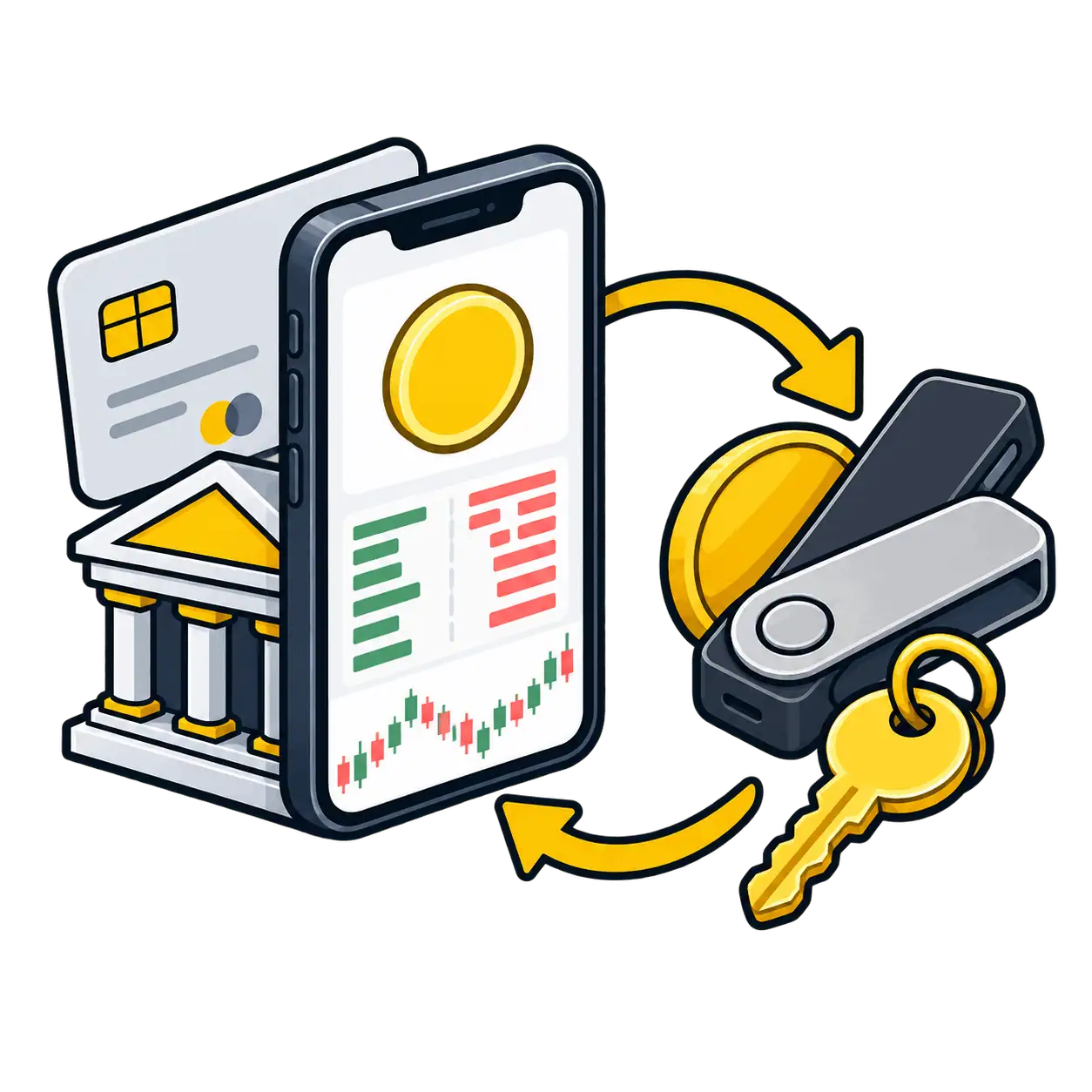
A Coinbase exchange balance is custodial. A separate self-custody wallet puts key and recovery responsibilities on you; transferring between them is an on-chain transaction, not an internal account switch.
Country access and identity checks
Identity verification is required. Supported assets, payment methods and products depend on residence and the serving entity. Check your account’s current fee tier and withdrawal availability before depositing; an accessible website alone does not establish eligibility.
Fees: what you actually pay
Simple purchases include variable fees and a spread shown in the quote. Advanced uses account-tier maker/taker fees without Coinbase adding a spread, although the market still has a bid–ask spread. Payment and withdrawal costs are separate. Coinbase One has limits and exclusions; it does not make every transaction free.
See the numbers
If the same $500 purchase delivers 490 units through a simple quote and 495 through an order book, compare those net amounts after all charges. The five-unit difference is the useful comparison; the displayed commission alone is not. These are illustrative figures, not live Coinbase quotes.
Before you fund an account
- 1Confirm residence eligibility and identity requirements.
- 2Choose the product and inspect its complete cost.
- 3Check custody, withdrawal rules and account protections.
- 4Research the asset, network and order before committing funds.
A market price is not a price guarantee
Imagine buying 100 tokens from this small order book. The cheapest seller cannot fill the whole order. This is why liquidity matters more than the last traded price.
| Price | Tokens | Cost |
|---|---|---|
| $1.00 | 40 | $40 |
| $1.05 | 60 | $63 |
| Total | 100 | $103 |
Illustrative USD amounts, before fees; not live market data.
Market order: $103
Buying all 100 tokens consumes both price levels: 40 × $1.00 + 60 × $1.05. The average is $1.03, even though the best displayed ask was $1.00.
Limit order at $1.00: only 40 fill
A buy limit caps the unit price, not the waiting time. With these sell orders unchanged, the other 60 tokens remain unfilled. A limit order that immediately matches existing orders can still incur taker fees.
Security, custody and the track record
In May 2025, Coinbase disclosed a customer-data theft involving bribed support contractors. It said passwords and private keys were not exposed, but stolen data created impersonation risks. Its May 2026 outage also illustrates that custody access can be interrupted without an on-chain loss.
Exchange balance or your own wallet?
An exchange controls the keys to assets held in your account. A self-custody wallet gives you control and responsibility for the recovery phrase. Choose deliberately: withdrawal availability, backup practices and the amount kept ready for trading all matter.
Questions worth answering before you register
Can I withdraw on any network with the same ticker?
Open the receiving wallet’s deposit instructions first. Both sides must support the same token on the same network; a matching ticker or address format is not enough. Include a memo or destination tag when required. Check minimums and fees before a small test transfer, then verify receipt before sending more.
Choose and understand a wallet
Does proof of reserves mean my funds are guaranteed?
Enable strong authentication and withdrawal protections, and use support reached through the official site or app. Proof of reserves can help inspect reported backing, but is not a full financial audit, deposit insurance or a guarantee of withdrawal access. Keep recovery phrases private; support should never need them.
Should a signup bonus decide which exchange I use?
Referral rewards may require identity checks, deposits or trading activity and can expire. Read the offer terms, distinguish trading credits from withdrawable cash, and compare the underlying costs first.
Continue your research
Connect the platform decision to the asset, its network and your practical buying route. Topic links explain the technology; they do not confirm that this platform lists every asset in that category.
How we reviewed this exchange
This is a desk-researched review of official fee schedules, account rules, product documentation and relevant incident records. We have not deposited money, tested withdrawals or measured support response times for this review. We separate documented facts from our assessment; there is no invented star rating. Check the linked sources and your account’s live quotes before funding.