
DeFi Explained: Swaps, Lending and the Risks Between Them
Decentralized finance uses blockchain contracts to coordinate trading, lending and other financial activities. Follow the movement of assets and permissions to understand what you are trusting at each step.
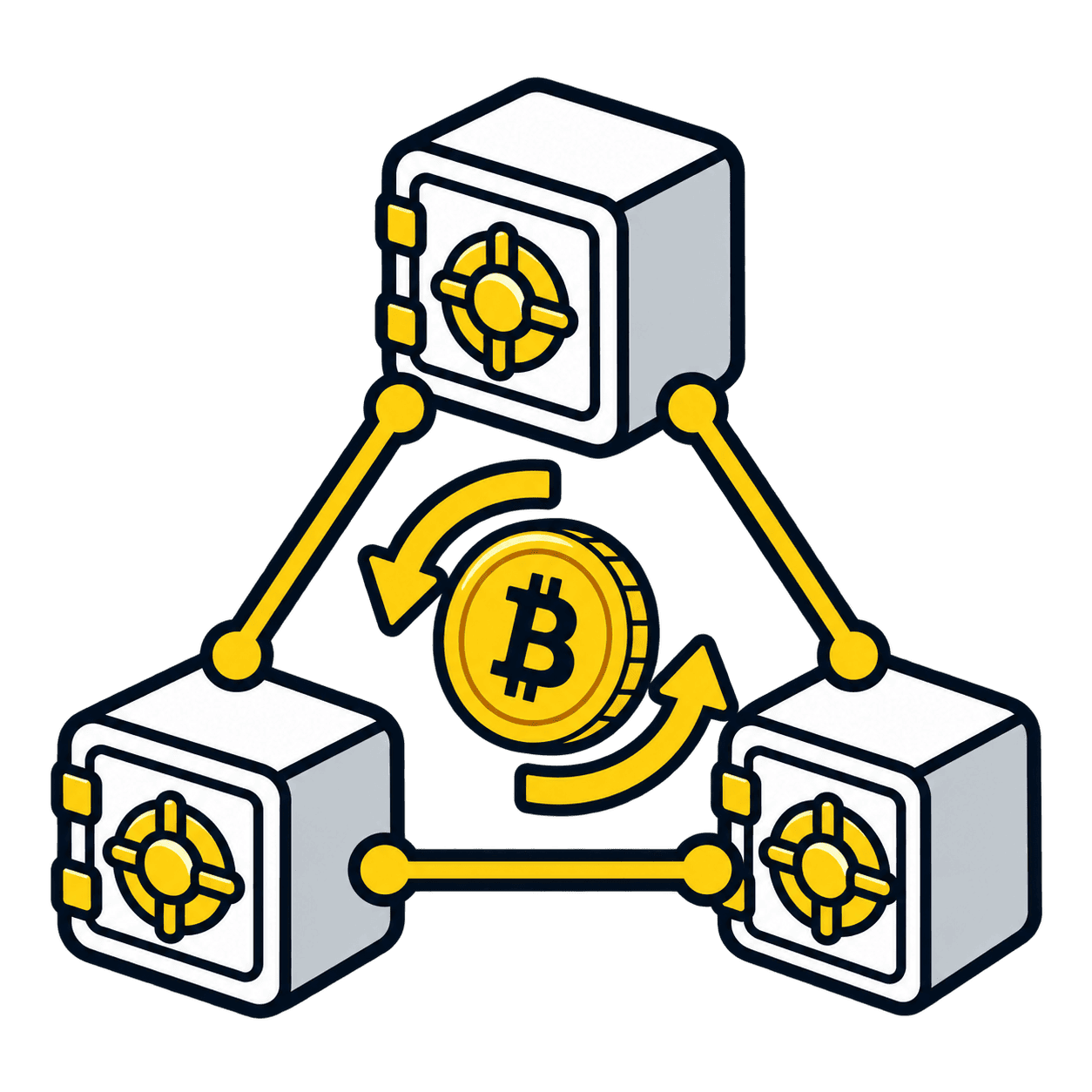
Follow a swap from wallet to result
Choose the network
Use a wallet, asset version and fee token supported by the protocol. A token on another network does not automatically become usable here.
Inspect the quote
Check the input, expected output, minimum received, price impact, route and network fee. Liquidity changes; the displayed quote is not an unconditional promise.
Review permissions
If a token approval is needed, verify the spender and allowance before the swap. Connecting a wallet, approving spending and executing the swap are separate actions.
Verify the outcome
Check transaction status and actual received assets in the correct explorer. Failed transactions can still cost a network fee. Review permissions you no longer need.
Where the return comes from
| Activity | Possible source of return | Main exposures |
|---|---|---|
| Lending | Interest paid by borrowers and, sometimes, incentive tokens. | Bad debt, collateral movements, interest-rate changes and contract risk. |
| Liquidity provision | Swap fees and, sometimes, incentive tokens. | Price changes, impermanent loss, trading activity and contract risk. |
| Staking | Protocol rewards for securing a proof-of-stake network. | Validator performance, penalties, withdrawal rules and any intermediary. |
A product called “staking” may actually be lending or a custodial yield program. Read what happens to the assets. Incentive rewards paid in a falling token can lose value even when the displayed token balance grows.
Worked example: collateral can become insufficient
In a simplified lending position, collateral is worth $1,000, debt is $500 and the liquidation threshold is 80 percent. Health factor = collateral value × threshold ÷ debt. Initially: $1,000 × 0.80 ÷ $500 = 1.60.
If collateral falls to $600 while debt stays $500, the result is 0.96. Under a rule that permits liquidation below 1, part or all of the position can be liquidated, with costs. This is a hypothetical model, not a quoted platform setting.
Interest, oracle prices, multiple collateral assets and protocol-specific rules change the real calculation. A reading above 1 is not a guarantee against a rapid market move. Understand the exit and liquidation rules before borrowing.
Check the whole dependency chain
Interface and wallet
Verify the domain, software source and signing request. A legitimate protocol name can be copied by a phishing site.
Contract and governance
Read audits, permissions and upgrade controls. An audit reduces some uncertainty; it cannot guarantee safety or cover every later change.
Prices, bridges and collateral
Identify oracle dependencies, bridged assets and collateral concentration. A failure elsewhere can affect a protocol that otherwise operates as designed.
Buying a DeFi token is not the same as using DeFi
A governance or utility token does not automatically give you protocol revenue, a deposit claim or protection from loss. Research token rights, supply changes and actual use separately from the protocol’s popularity. DeFi runs across multiple networks; Ethereum’s transition to proof of stake was completed in 2022.
Put this lesson into practice
Practice: trace one hypothetical swap, list every permission and cost, then explain how you would exit. Use the liquidity and wallet lessons before trying an unfamiliar protocol. Our exchange fee calculator estimates exchange trading costs; it does not model DeFi gas, lending risk or liquidation.
Moving from an exchange to a wallet
An exchange purchase is only the funding step. Verify the withdrawal network and destination separately before interacting with a protocol.
Some links are affiliate links. We may earn a commission if you sign up or transact through them.
Sources and verification
Reviewed 25 October 2026. Examples are hypothetical. Check current provider instructions, supported networks and terms before acting.



